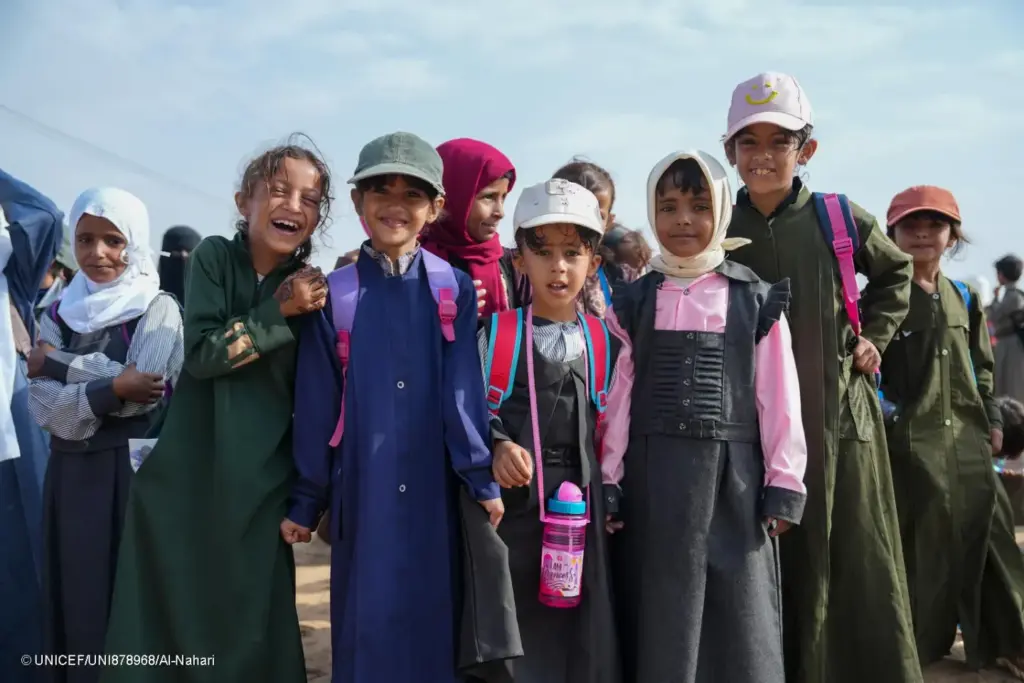
His days are marked by boredom and longing for home, particularly for his school bag and the routine of attending school. Education is currently unavailable to him and countless others; hundreds of schools have shut down due to ongoing conflicts, impacting over 137,000 students, according to UNICEF. The conflict has driven significant displacement; over 57,000 children left their homes in the first two weeks of September alone.
With a focus on survival over education, Ahmed’s family prioritizes basic needs like shelter and food in the camp, shifting their concerns from educational aspirations to mere survival. Mohammed Radman, a displacement coordinator, highlights the dire circumstances faced by these students: schools are closed or overcrowded, and many are used as temporary shelters for displaced families. This situation creates challenges for the Yemeni government and humanitarian organizations alike.
Before the recent escalation, UNICEF reported that 3.2 million children were already out of school. Now, the risk of homelessness, begging, and forced recruitment looms larger for displaced children, emphasizing the long-term repercussions of interrupted education. Abdukarim, a local teacher, stresses that education in war zones suffers as children grapple with fears from nearby violence. The immediate goal is ensuring a safer environment for learning. Sociologist Afrah al-Humaiqani notes that ongoing hostilities threaten to create a “new illiterate generation,” but points to possibilities for intervention through the establishment of secure camps, provision of educational resources, and psychosocial support to mitigate learning loss and vulnerability among children affected by the conflict.