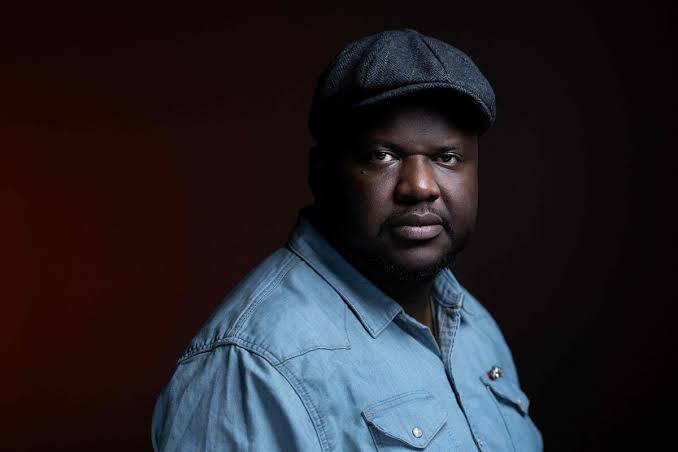
- Thélyson Orélien
For his book C’état ça ou mourir (It Was Either That or Die), 38-year-old Thélyson Orélien won the Prix du Roman Fnac. However, the honour has been eclipsed by allegations that the book was created using artificial intelligence.
An X user called Balance tonne Claude made the accusation, claiming to have used Pangram, an AI-detection tool, to analyse multiple portions from the book.
The company stated, “We tested multiple passages, from different parts of the manuscript, to come up with the same result: 100% AI.” According to the description, Pangram is “by far the most accurate” AI-detection algorithm, with very little probability of error.
However, Oränen refuted the claim that he used AI to create the book, calling it an assault on his writing. “Creation and reading have always been my passions. According to the BBC, he told the French weekly Libüge, “I don’t see why I would feel compelled to use a machine.”
The author said that in order to prove he wrote the book himself, he was assembling a dossier with his French and Canadian publishers. “I have Caribbean and Haitian customs. He declared, “The rhythms, repetitions, and images are the living word; they are my own.”
Grasset, his French publisher, supported him as well, calling the accusations “atrociously injurious to a writer with an exceptional life-story” and maintaining that his writing was potent and unique.
The controversy surrounding Orélien’s debut novel is intensifying as the work gains significant recognition in France. Currently, Orélien is a finalist for notable awards, including the Goncourt and Renaudot prizes, and the novel has also garnered international attention. The narrative centers on a teacher who escapes gang violence in Haiti and eventually finds refuge in Canada, where he experiences what the novel articulates as “the right to breathe without fear.”
Orélien, originally from Gonaïves, Haiti, was born in 1988 and immigrated to Montreal in 2010, subsequently pursuing a career as a journalist in Canada. He revealed to Libération that he completed the first draft of his novel in 2019, which predates the widespread availability of generative AI writing tools. This backdrop has added fuel to ongoing discussions regarding the efficacy and constraints of AI-detection mechanisms, which highlight that the outcomes produced by these tools do not definitively confirm a text’s authorship by artificial intelligence.