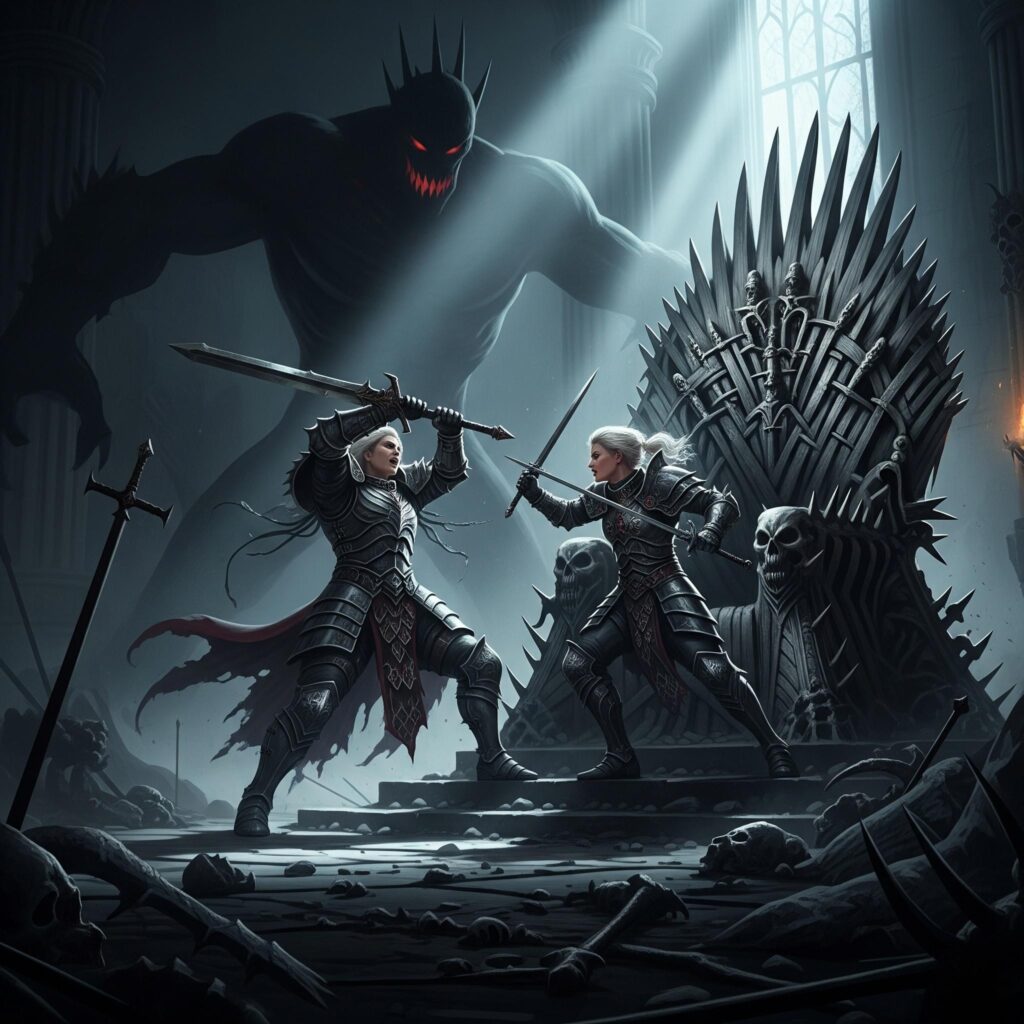
The throne is supposed to be the seat of honor, a father’s legacy, the crown jewel of a dynasty. But in truth, it is often a curse. In the corridors of royalty and the marble halls of wealth, the battle for succession begins long before a king dies or a patriarch is buried.
Siblings who once laughed together at the family table, who shared lullabies and secrets under the same roof, now find themselves transformed into rivals. They no longer fight over toys or attention. They fight over a kingdom. They fight over billions. They fight over who will carry the father’s name into eternity.
The cruel reality is this: your first enemy is not the stranger outside your gates. It is the brother who shares your blood. It is the sister who knows your weaknesses. And it is the family who believes they deserve the throne more than you do.
In the psychology of succession, blood itself becomes a weapon. The child who feels favored demands recognition. The eldest insists that age grants them the right to rule. The younger, often sharper, argues that destiny overrides tradition.
Royal courts throughout history have been stained with this poison of entitlement. Consider the Oyo Empire, where princes battled fiercely, not just with words but with armies, plunging entire towns into conflict. Consider the Ottoman Empire, where it was once law that new sultans executed their brothers to secure the throne.
The logic was brutal but clear: the enemy is within, and until you silence them, you will never truly rule.
Even in modern times, throne rivalry has not disappeared, it has only changed form. Instead of crowns, it is corporations. Instead of kingdoms, it is multinational companies. When patriarchs die, the struggle begins: Which child will control the empire?
We have seen billion-dollar families in Africa and beyond dragged into bitter court cases. The house of wealth becomes a courtroom battleground. Children of privilege hire lawyers, lobby politicians, and even smear one another in public just to secure their father’s seat.
The irony is bitter: strangers envy the throne, but it is the heirs who destroy it.
What fathers dream of as legacy, children often treat as spoils of war. The throne becomes a poisoned gift. It magnifies pride, jealousy, and greed.
The father built it with sacrifice. He denied himself pleasures, labored through sleepless nights, carved influence from nothing, and dreamed of unity after his death. Yet, the moment he breathes his last, the throne transforms into a battlefield.
Brothers glare at each other across funeral grounds. Sisters whisper betrayal behind closed doors. The family mansion no longer feels like home, it feels like an arena where only one can win.
And when the dust settles, there are no victors. Even the one who wears the crown wears it alone, haunted by the ghosts of siblings turned enemies.
African history is littered with tales of throne rivalry. In the Benin Kingdom, the death of an Oba often brought unrest as princes and chiefs fought over succession. Among the Ashanti, royal stools were guarded fiercely because the wrong heir could collapse an entire lineage.
Outside Africa, the story is the same. In England, the Wars of the Roses tore a nation apart because two royal houses, sprung from the same family tree, could not agree on who deserved the crown. In India’s Mughal dynasty, brothers slaughtered each other for the Peacock Throne.
The lesson echoes across centuries: the throne does not unite, it divides.
The most tragic casualty of throne rivalry is not just kingdoms or companies, it is family itself. Love is lost. Trust dies. Brothers become strangers. Sisters become enemies. Blood no longer binds; it burns.
Psychologists call it “the sibling curse of succession.” Studies in wealthy dynasties show that by the third generation, most family businesses collapse, not because of bad markets, but because heirs could not agree.
The same is true in kingdoms. Civil wars often begin not because of foreign invasions, but because princes and princesses could not share power. Thrones create orphans long before swords are drawn.
Today, throne rivalry is not confined to palaces or billionaires. In politics, the same spirit reigns. Fathers who once held political thrones now watch their children tear themselves apart to inherit constituencies, governorships, or even presidencies.
The family name becomes a weapon. Brothers run against each other in elections. Sisters sabotage one another’s campaigns. The people, who should be united under leadership, become pawns in a family war.
Power, whether royal or political, remains the same: a throne that divides blood before it confronts outsiders.
The greatest danger of throne rivalry is not just the family’s self-destruction, but how outsiders exploit it. History shows that when siblings quarrel, enemies sharpen their knives. Colonial powers once used royal succession disputes to weaken African kingdoms. Business rivals often wait for heirs to fight before moving in to buy broken empires.
The father’s throne is not lost by enemies outside, it is lost because family could not stand together.
Every throne carries a heavy lesson: it is not the crown itself that destroys families, but the greed to wear it alone. True legacy is not who sits on the father’s throne, it is whether the father’s vision lives on.
Siblings must learn that thrones are temporary, but family is eternal. To fight over a seat is to lose the love that built the seat in the first place.
Because when blood turns into the first enemy, the throne no matter how golden becomes nothing but a cursed inheritance.