

With a new card, Airtel SmartCash increases payment.
The digital bank said in a statement on Monday that the new…

Why Dangote will be frustrated by fuel importers – Obasanjo
Nigerian President Obasanjo has criticized the Dangote Group for allegedly making efforts…
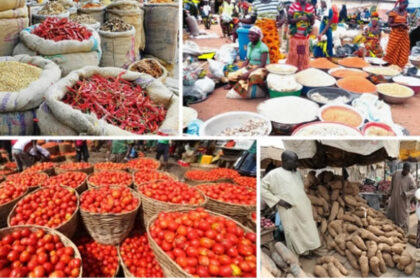
Three months, Nigerians imported food worth N903 billion.
Month-over-month, imported food inflation increased to 36.38 percent in June 2024 from…

Business owners fear that protests may reduce output.
Segun Kuti-George, National Vice President of the Nigerian Association of Small-Scale Industrialists,…
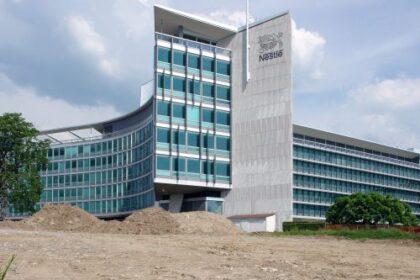
Ten graduates are empowered by Nestle
This was revealed on Wednesday during the "Nestle Technical Training Center graduation" in Ogun State by Ibukun-Olu Ipinmoye, the departing Factory Manager for Nestle Nigeria. Ipinmoye complimented the graduates on their commitment during the previous 18 months, pointing out that they had followed the company's safety procedures and shown character and learning potential. "Since experience ages, Nestle is dedicated to preserving and acquiring new talents in the younger generation. He continued, "The company is dedicated to establishing a circular economy, and we are open to aiding the indigenous people. The training program's wider effects were emphasized by Nestle Nigeria's Managing Director, Wassim El-Husseini, who said, "This brings the total headcount this year to 30." Over 198 persons have completed this program as of right now, and we are happy to report that over 70 of them have found employment. El-Husseini emphasized the company's commitment to funding the advancement of young people. Our program is to give youths better advantages in the business sector by offering employment chances in the form of internships. We have provided job chances to more than 16,000 young people. Through this program, we reach around 25,000 adolescents annually overall," he went on. Alhaji Shakiru, the country HR manager for Nestle Nigeria, emphasized the company's ongoing efforts to train young people. "Perseverance is essential for success."…
Beyond banking, Nigeria needs to develop a $1 trillion economy, according to Afrinvest.
At the 2024 Banking Sector Report's unveiling, which had as its theme "Recapitalization: Catalyst for a $1 Trillion Economy?" Afrinvest's Group Managing Director, Chioke Ike, made this declaration. Prior to revealing the revised bank capital requirements, the apex bank stated that stronger and more stable banks were necessary to power President Bola Tinubu's anticipated $1 trillion economy. Chioke underscored that although the recapitalization initiative would augment banks' ability to cater to the broader economy, augment lending capacity, draw in foreign investments, and foster improved risk mitigation, the banking industry in isolation cannot propel economic expansion. In order to reach a $1 trillion economy, Nigeria must expand its banking industry. The economy must expand in all directions, he said. Citing Mexico, Indonesia, and Turkey as examples, which have attained greater GDP per capita and human capital indices, he emphasized the necessity of human capital development. "For Nigeria to have comparable growth, it must invest in its people. To reach a $1 trillion economy, we need to give human capital development first priority. The macroeconomic climate is difficult, and a nationwide strike may soon break out. He pointed out…

Inflation causes MTN Nigeria to lose N519bn in just six months.
The PUNCH was able to secure an e-copy of the report on…
FG requests a $500 million loan from the World Bank for dam safety and other purposes.
Through the Sustainable Power and Irrigation for Nigeria Project, this loan is anticipated to alleviate the nation's water security issues and increase agricultural production. Project management, irrigation modernization, enhanced dam operations and safety, and institutional strengthening and capacity building are the four main areas that the SPIN project focuses on, according to a World Bank Project Information Document for the proposed project that was posted on its website on Monday. September 26, 2024 is the suggested date of approval for the SPIN project. This sector will support state and federal organizations in charge of managing water resources. It include formulating national standards for dam safety, providing instruction in irrigation and water resource management, and drafting an extensive master plan for hydropower. This is what the document said: "Climate change is making water security concerns worse for Nigeria, endangering livelihoods and economic development. These challenges affect the availability of water for energy, agricultural production, and drinking water. In Nigeria, reducing the effects of climate change and adapting to it need effective use of water storage and dam safety. Protecting against floods and droughts, it is a necessary step toward better water management for irrigation, hydropower production, and water delivery. 59 billion cubic meters of storage are thought to be available across Nigeria's more than 400 dams. FEMA, through River Basin Development Authorities, is in charge of managing 46% of the dams that are held by the federal government. State ministries oversee the management of 48% of the dams under their possession. Rehabilitating about half of the sizable dams constructed in the 1970s and 1980s is necessary, and many of them remain completed.…
NCC restores the SIM connection while irate subscribers demonstrate over NIN connectivity
Less than twenty-four hours after the event, subscribers flooded the offices of…

Lagos landlords harassing female tenants with discriminatory practices
It was argued that the lower ratio of female residential respondents compared…