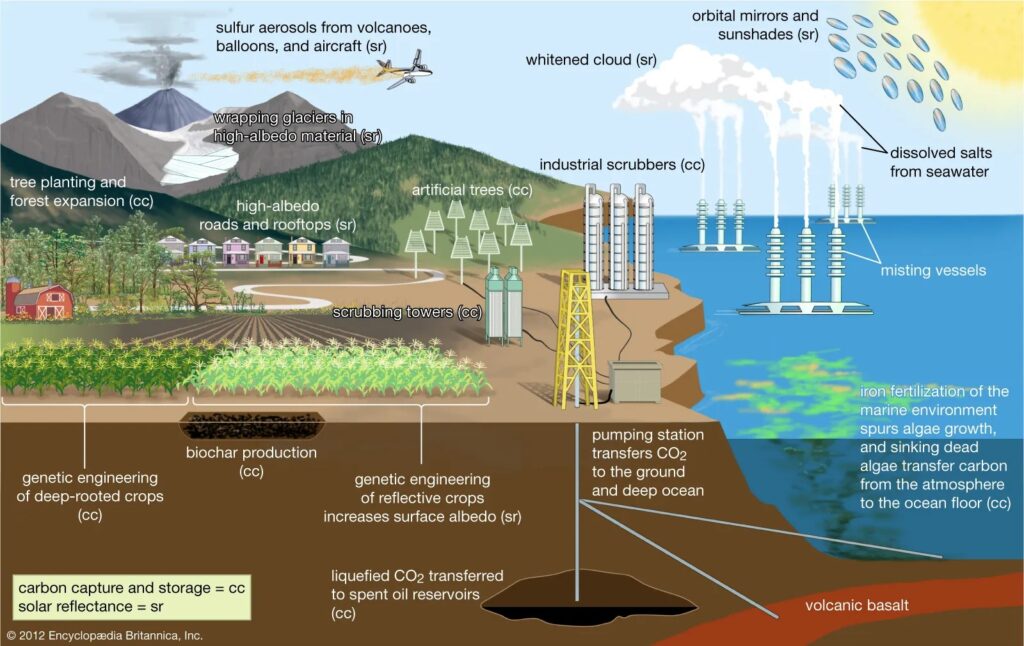
Solar geoengineering, also known as solar radiation management (SRM), involves techniques to reflect a small percentage of sunlight back into space to cool the Earth and counteract global warming. Some potential benefits of solar geoengineering include:
1. Temperature Reduction: By reflecting sunlight, solar geoengineering could help reduce global temperatures, potentially mitigating some effects of climate change, such as extreme weather events and heatwaves.
2. Slowing Arctic Ice Melt: It could help slow the melting of polar ice and glaciers, which are major contributors to sea level rise.
3. Reduced Risk of Extreme Weather: Cooling the planet might reduce the severity and frequency of certain extreme weather events, like hurricanes and droughts, which are exacerbated by higher global temperatures.
4. Protection of Biodiversity: By potentially stabilizing the climate, solar geoengineering could help protect ecosystems and species that are threatened by rapid climate changes.
5. Agricultural Benefits: Cooler global temperatures could reduce the risk of crop failures due to extreme heat and drought, potentially helping to secure food supplies.
6. Supplementary Measure: Solar geoengineering could serve as a supplementary measure while longer-term solutions, such as reducing greenhouse gas emissions, are implemented and take effect.
However, it is important to note that solar geoengineering is not without risks and uncertainties. Potential negative side effects, governance challenges, and ethical concerns make it a controversial and complex area of study.