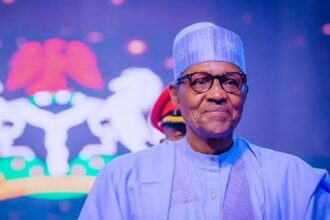
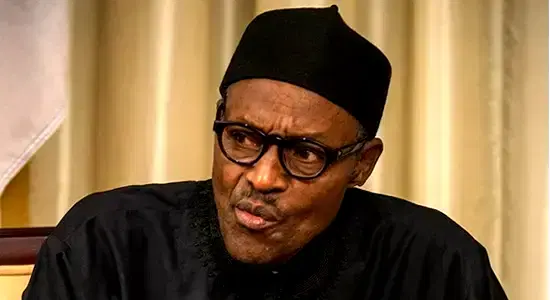
They ran away from the system they were elected to improve but refused to do so, which is a frightening irony. From 2015 till 2023, former President Muhammadu Buhari, who is privileged to be remembered, became the face of Nigeria’s affluent medical tourism industry. During his tenure, he reportedly had therapy overseas for more than 200 days, mostly in London.
Although the specifics of his illness were not made public, his protracted and frequent absences prompted severe questions about the responsibility of the leadership and the level of trust in the local healthcare system. Additionally, General Abdulsalami Abubakar (rtd), a former head of state, recently revealed in public that he was admitted to the same hospital in London as Buhari.
They ran away from the system they were elected to improve but refused to do so, which is a frightening irony. From 2015 till 2023, former President Muhammadu Buhari, who is privileged to be remembered, became the face of Nigeria’s affluent medical tourism industry. During his tenure, he reportedly had therapy overseas for more than 200 days, mostly in London.
Although the specifics of his illness were not made public, his protracted and frequent absences prompted severe questions about the responsibility of the leadership and the level of trust in the local healthcare system. Additionally, General Abdulsalami Abubakar (rtd), a former head of state, recently revealed in public that he was admitted to the same hospital in London as Buhari.
For example, Nigeria’s health budget grew dramatically under the late Buhari’s leadership, rising from ₦ 237 billion in 2015 to ₦ 1.17 trillion in 2023.
This was a 324 percent increase in raw numbers. But the increase was deceptive. The allocation fell short of the 15 percent Abuja Declaration target established by African Union governments in 2001, and it never surpassed 5.75 percent of the national budget.
More than 70% of the whole health budget was allocated to ongoing expenses, primarily for wages and administrative overhead, even if capital expenditures also increased from ¦22.7 billion to ¦404 billion.
This left little for life-saving medical supplies, diagnostic tools, or infrastructure.
Tinubu allocated ₦ 1.23 trillion for health in 2024, which was 5.46 percent of the whole budget.
He suggested ¦ 2.48 trillion in 2025, which is only 5.18 percent, with ¦ 300 billion added for an intervention fund by the National Assembly to fill in urgent shortfalls.
Despite the high numbers, the health sector still receives a small portion of the budget, particularly when considering inflation, the continued exodus of doctors, and subpar public hospital performance.
In the meantime, the billions designated for the Aso Rock Clinic have drawn criticism.
The State House Clinic, which was constructed to serve the president, vice president, and other high-ranking government officials, is among the most ludicrous instances of Nigeria’s healthcare shortcomings. Public funding for the clinic came to around 14 billion between 2015 and 2020 alone.
It received ¦ 3.94 billion in 2015, ¦ 3.87 billion in 2016, and ¦ 3.20 billion in 2017. Allocations in the following years were lower, totaling ¦ 1 billion in 2018, ¦ 823 million in 2019, and ¦ 723 million in 2020.
According to reports, the facility was devoid of necessary medications, medical supplies, and even a power source.
The common Nigerian has little chance of receiving high-quality care in general hospitals in Kano, Ebonyi, or Cross River, among other places, according to critical health observers, if even the Aso Rock Clinic is unable to serve the country’s leaders.
Nigerians in both rural and urban areas continue to lose their lives to preventable and treatable diseases while the nation’s leaders purchase first-class tickets to London and Paris for medical treatment.
Due to a lack of access to basic antibiotics and clean water, cholera and typhoid outbreaks have killed scores of people in most towns throughout Nigeria.
Because hospitals in some states lack obstetricians and electricity for emergency surgery, women in labor often die.
Outrage has been triggered by Buhari’s death in a London hospital and the assertion made by his former media assistant, Mr. Femi Adesina, that he “would have passed on before now” if he had received treatment in Nigeria.
Health experts strongly disagree, claiming that although Nigeria has highly skilled practitioners, the system has been let down by its authorities.
They contend that public officials’ use of medical tourism exacerbates inequality and is both a moral and a policy failing. One of them calls the behavior “shameful and unsustainable,” saying it “sends a message that the rest of us are expendable.” They draw attention to the empty facilities, exaggerated budgets, misappropriated monies, and lack of accountability while officials “jump on jets when they have headaches.”
Prominent human rights attorney Femi Falana (SAN) has advocated for legislative action on numerous occasions, insisting that a legislation be passed requiring all public officials to receive care in Nigeria.
“Why should we vote for leaders who cannot be treated in the hospitals they built?” he argues scathingly.
Dr. Ozuomba Sixtus, Chairman of the Lagos Chapter of the Society of Family Physicians of Nigeria (SOFPON), said that leaders continuing to travel abroad for medical treatment, even for the most basic ailments, was a breach of the public’s confidence.
“Nigeria would be a medical hub in West Africa if our leaders invested just a fraction of their medical tourism budget into the health system,” he says.
For these Nigerians, the health issue is a basic failing of priorities and responsibility rather than a shortage of funding.
AMLSN National President Dr. Ifeanyi Casmier said, “This is a reflection of a healthcare system in crisis.”
The ongoing practice of medical tourism among Nigeria’s political elite, according to Dr. Ifeanyi Casmier, National President of the Association of Medical Laboratory Scientists of Nigeria, or AMLSN, is not just a national disgrace but also a sign of a failing healthcare system.
Public officials’ intentional neglect of medical tourism has continued from the First Republic to the current administration, according to Casmier, a well-known supporter of health sector reform.
He claims that Nigeria’s health system has deteriorated to one of the worst in the world and consistently ranks close to the bottom of international health indexes.
We now have one of the weakest health systems in the world, and it is constantly rated among the worst. It’s appalling. “It is shameful,” he declared.
The national president of AMLSN cited global rankings like Bloomberg’s, which show that Nigeria frequently ranks 189 or 190 out of 192 countries, placing it barely above nations like the Republic of Congo and Myanmar.
Casmier bemoaned the downturn, particularly in light of Nigeria’s history.
People used to seek treatment at University College Hospital in Ibadan, including the Prince of Saudi Arabia. In terms of healthcare, we used to be in the top five in the Commonwealth. Our leaders now travel to London for examinations,” he recalled.
He cited a recent incident in which two previous Nigerian presidents were taken to the same little hospital in London to highlight the scope of the issue.
The AMLSN National President stated, “One was later discharged, only to find out the other had died.”
Buhari was cited by Casmier as a shining example of healthcare leadership gone wrong.
He pointed out that the former Nigerian leader only sought treatment in London during his presidency, despite having previously received care at the Ahmadu Bello University Teaching Hospital in Nigeria before assuming office.
The AMLSN National President stated, “Buhari was unable to restructure the health system or even establish the State House Clinic as a reliable institution for eight years.”
Governors, ministers, senators, and even previous speakers are part of the political elite, according to Casmier.
He mentioned a former governor who is presently on trial and asked the court for authorization to fly overseas to receive treatment for hypertension, even though he claimed to have constructed a top-notch hospital in his village.
The AMLSN National President questioned, “Who is treating the more than 40% of Nigerians who have hypertension here?” “Why won’t he visit his own medical facility?”
According to Casmier, Nigeria is suffering from poor governance rather than a lack of skill or resources.
Some of the world’s top physicians, nurses, and medical laboratory scientists are trained by us, and they are stolen by other nations. This indicates that we have top-notch training. What is the excuse, then?
He linked the origins of the leadership issue to Decree 10, which changed the health sector’s administrative structure in 1985 and gave political appointees, rather than experts, control over it.
“You won’t find medical experts in charge of ministries in nations where our leaders travel for treatment. Doctors can concentrate on providing care because they are run by administratively educated specialists, according to Casmier. “That isn’t the case in Nigeria.”
Tinubu was urged by the national president of AMLSN to address the leadership shortcomings in the health sector immediately.
He believes that stopping government leaders, including the president, from using public monies for medical care abroad—a move frequently associated with the need for a legislative mandate—must be one of the first steps.