
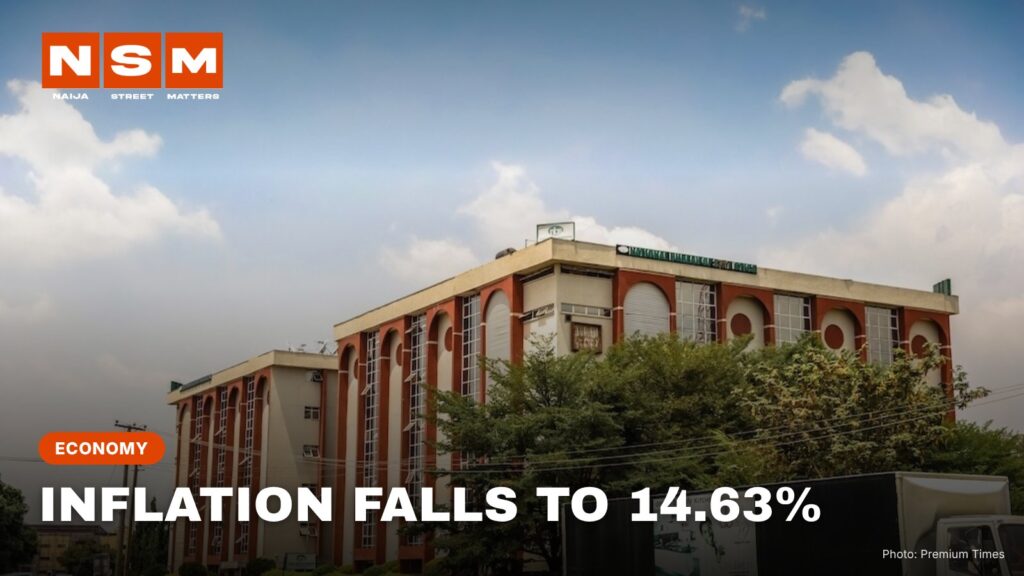
- Headline inflation fell to 14.63% in September from 15.39% in August
- Food prices dropped 1.55% month-on-month, but yearly food inflation is still 19.59%
- Prices are still rising, only at a slower pace
Nigeria’s inflation dropped again in September. The National Bureau of Statistics (NBS) says headline inflation fell to 14.63%, down from 15.39% in August. That is the kind of headline that makes people check their wallets twice, because for many families the market still feels like a boxing ring.
What the new numbers say
The NBS released the September figures on Thursday, 15 October 2026. Here is the quick breakdown:
- Headline inflation: 14.63% year-on-year, from 15.39% in August.
- Month-on-month: prices rose by just 0.06% between August and September, compared with 0.71% the month before.
- Food inflation: 19.59% year-on-year, almost unchanged from August’s 19.57%. But on a monthly basis, food prices fell by 1.55%, according to NBS data reported by Tribune.
- Core inflation (which leaves out farm produce and energy): 12.95%, down from 13.29% in August.
- Urban vs rural: urban inflation stood at 15.64%, rural at 12.46%.
Why this matters to you
Inflation measures how fast prices are rising, not whether they are falling. So a drop from 15.39% to 14.63% means prices are still going up, just more slowly than before. Your money will not suddenly stretch further; it is simply losing value at a slower pace.
The good news is in the monthly figures. A 1.55% monthly fall in food prices suggests some relief at the market, possibly linked to harvest season. And with monthly headline inflation almost flat at 0.06%, September was a much calmer month for prices than August.
The worrying part: at nearly 20%, food inflation is still the heaviest load on ordinary households, especially low-income families, who spend a large share of their income on food.
How we got here
Prices shot up after the government removed the petrol subsidy, devalued the naira and the Central Bank kept interest rates high to fight inflation. Those reforms pushed many households into a cost-of-living squeeze that is still being felt. Inflation has been easing over recent months, and the CBN has repeated that its target is single-digit inflation.
What next?
All eyes are now on the next NBS release and the CBN’s next interest-rate decision. If inflation keeps falling, pressure will grow on the CBN to cut rates, which could make loans cheaper for businesses. Workers will also be watching: the Nigeria Labour Congress (NLC) is already arguing that the ₦70,000 minimum wage has lost value to rising costs.
THE NSM PERSPECTIVE
A falling inflation rate is like a fever that is coming down: welcome news, but the patient is not yet out of bed. The real test is not what the NBS reports but what the market woman charges for a paint of garri.
In seasons like this, the wise do three things. First, they stop spending as if prices will rise forever; panic-buying feeds the very fire people fear. Second, they treat slower price rises as a window to save and invest, because money kept idle quietly loses value even at 14%. Third, business owners who planned for the worst should now plan for recovery: demand returns quietly before it returns loudly.
Leaders, too, must remember that statistics do not eat. Until food inflation follows headline inflation down, the relief remains on paper, and patience in the streets is not unlimited.