Former Kogi West Senator, Dino Melaye, has directed sharp criticism at President Bola Ahmed Tinubu following the latter’s Democracy Day broadcast, deeming it disconnected from the current struggles of Nigerians. Melaye has urged the President to resign in light of escalating insecurity and a marked increase in abductions across the country.
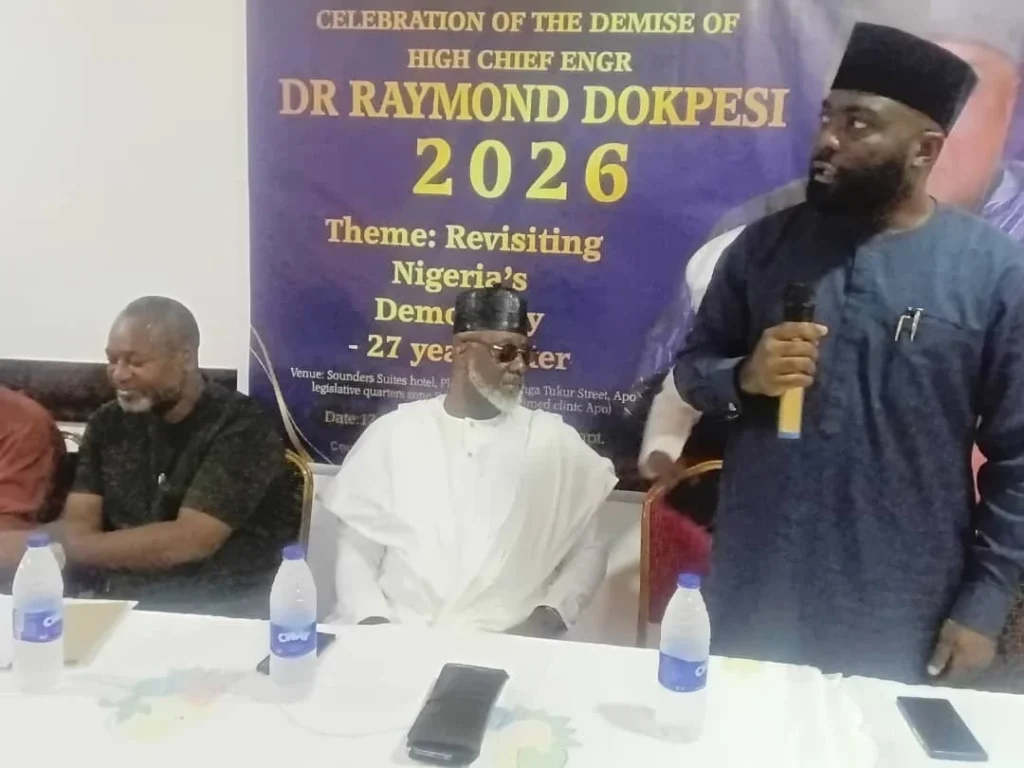
At a colloquium honoring the late Raymond Dokpesi, founder of DAAR Communications, Melaye expressed discontent with Tinubu’s June 12 speech, arguing it lacked authenticity and did not reflect the hardships faced by the populace. He stated, “Truth has no volume,” implying that the President’s statements were misleading and inconsistent with the practical experiences of citizens. Melaye cited severe incidents in Kogi and Oyo states, including recent abductions during WAEC examinations, as indicators of the deteriorating security landscape.
Critiquing the government’s response, he asserted that a declaration of a state of emergency in security was warranted given the alarming statistics. He referenced the murders of three serving generals over recent years, questioning the efficacy of current security measures. Using the framework of Nigeria’s Constitution, Melaye insisted that failure to secure citizens equates to a failure in leadership, indicating that Tinubu is ill-equipped for his role as Commander-in-Chief.
In broader remarks, Melaye attributed the country’s pervasive economic hardships to the administration’s failures. He was echoed by former Nigerian Ambassador to Ethiopia, Nkoyo Toyo, who cautioned Nigerians against assuming the inevitability of Tinubu’s victory in the 2027 presidential elections. She emphasized the importance of active participation in the electoral process and advocating for credible leadership.
Additionally, Alex Ter Adum, a former Attorney-General, lamented the declining democratic space in Nigeria, emphasizing the need for open discourse and tolerance for dissenting views. He invoked the legacy of Dokpesi as a beacon for truth-telling and encouraged continued advocacy for transparency and participation within Nigeria’s democratic framework. Overall, the discussions reflected a collective concern for the political climate and the imperative for citizens to reclaim agency in governance.