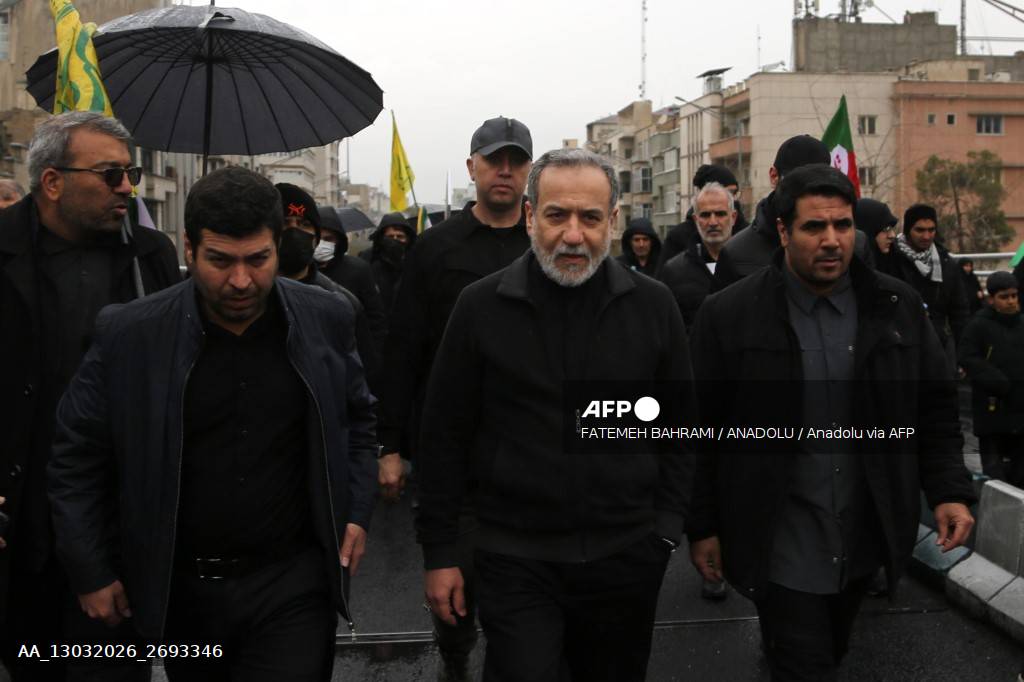
In an interview with Al Jazeera that was broadcast on Wednesday and translated from Persian into Arabic, Araghchi stated, “We receive messages from the American side, some direct and some through our friends in the region, and whenever necessary, we respond to these messages.”
He stated, “There are no grounds for negotiations,” but added that he had spoken with US special envoy Steve Witkoff directly on a few occasions.
Since strikes murdered Iran’s supreme leader on February 28, the country has been at war with the United States and Israel. Since then, the conflict has extended throughout the region.
In an attempt to put an end to the conflict, diplomatic initiatives involving Egypt, Pakistan, and Turkey have lately been initiated.
Two top Pakistani officials said last week that Islamabad had sent Iran a 15-point plan that included suggestions from the US.
According to Iranian media, Tehran presented a five-point counterproposal that demanded an end to what it called “aggression” and assurances that neither Israel nor the United States will start fighting again.
Tehran, according to Araghchi, “has not offered anything in response” to the US plan, and the reported Iranian reactions were “merely guesses” from a media outlet.
Iran and the United States were negotiating Tehran’s nuclear program when the war started.According to Iranian media, Tehran presented a five-point counterproposal that demanded an end to what it called “aggression” and assurances that neither Israel nor the United States will start fighting again.
Tehran, according to Araghchi, “has not offered anything in response” to the US plan, and the reported Iranian reactions were “merely guesses” from a media outlet.
Iran and the United States were negotiating Tehran’s nuclear program when the war started.
The battle is reminiscent of a 12-day conflict that occurred in June of last year when Israel initiated strikes just days before a scheduled round of negotiations between Washington and Tehran. Later, the US joined those assaults, focusing on Iranian nuclear installations.
Araghchi demanded a “complete end to the war” and compensation, claiming that there was “zero” confidence in the United States and that Iran would not accept a ceasefire.
Iran has only permitted a small number of ships to cross the vital Strait of Hormuz since the battle began, which is now in its second month. This has disrupted about 20% of the world’s oil flows.