
In a moment that blended the surreal with the dangerous, Fuji legend K1 De Ultimate found himself grounded (literally). After an unexpected confrontation with airport security turned Abuja’s Nnamdi Azikiwe International Airport into a national talking point.
Now on a no-fly list and facing scrutiny from aviation regulators, the 67-year-old icon is at the center of a heated public debate: Where does celebrity end, and public safety begin?
According to the Federal Airports Authority of Nigeria (FAAN), the clash began when K1 attempted to board a ValueJet flight to Lagos carrying a flask filled with liquid, later flagged as alcohol by security officers.
While international aviation regulations clearly ban liquids over 100ml without medical justification, K1 allegedly refused to surrender the container. Things escalated quickly. He reportedly spilled the contents on a security officer, defied instructions to disembark, and refused to leave the aircraft even after several warnings.
Eventually, AVSEC crime unit operatives escorted him off the plane. He was briefly detained and then released.

Minister of Aviation and Aerospace Development Festus Keyamo didn’t mince words. Confirming the artist’s no-fly status, he described the incident as a “serious violation of international safety protocols.”
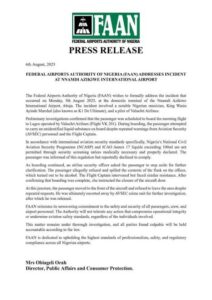
FAAN echoed the stance, citing breaches of Nigeria’s Civil Aviation Security Programme and ICAO Annex 17 – the global standard for airport safety.
“Lives were endangered. Procedures were ignored. This cannot be swept under the carpet,” a FAAN spokesperson stated.
In response, K1’s camp fired back with a completely different version of events.
They insist the flask only contained water from the airport lounge and that the misunderstanding was blown out of proportion. According to their statement, once the proper explanation was given, K1 complied.
Even more controversially, they claimed that ValueJet’s Chairman and Managing Director later apologized and offered the singer a private jet, which K1 declined.
The incident has split public opinion down the middle. On one end, critics argue that K1’s actions reflect a disturbing culture of celebrity entitlement, where public figures feel above the law.
On the other, fans and defenders point to the chaotic state of Nigeria’s aviation infrastructure and suggest K1 was profiled and provoked.

Activist Verydarkman posted a viral video blasting the singer:
“If this happened in the U.S. or U.K., he’d be in jail by now. You don’t just stand in front of a plane like it’s your concert stage. That’s not confidence. That’s madness.”
He added that passengers on board could have been headed for surgeries, funerals, job interviews, real lives disrupted by one man’s ego.
As expected, K1 isn’t planning to let the final word come from the press. He already recorded a Fuji-style musical rebuttal, staying true to a long tradition of Nigerian musicians responding to controversy through rhythm and rhyme.
Beyond the headlines, this episode opens a deeper conversation:
How seriously does Nigeria take aviation safety? Are celebrities ever truly held accountable for their actions in public spaces? And how do we balance cultural reverence with the rule of law?
Whether a case of misjudged security enforcement or a reckless flex, one thing is clear K1 De Ultimate remains a polarizing force, on stage and off.
And for now, he’s grounded; by more than just gravity.