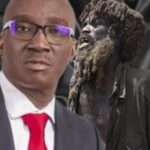
- Peter Obi vs Presidency: Resignation Debate Heats Up as Accountability Question Takes Centre Stage
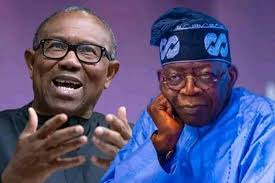
Nigeria’s political temperature has risen again after Peter Obi called on President Bola Ahmed Tinubu to resign over what he described as failure in governance.
The statement immediately triggered a strong response from the Presidency, turning what could have been another opposition criticism into a heated national debate about leadership, accountability, democracy, hardship, and the road to 2027.
According to reports, Obi urged Tinubu to take a cue from British Prime Minister Keir Starmer’s resignation, arguing that leaders who fail to meet public expectations should have the honour to step aside. Obi’s position is that governance should not be reduced to excuses, ceremonies, foreign trips, political blame games, and endless promises while citizens battle insecurity, hunger, unemployment, inflation, and declining trust in public institutions.
But the Presidency did not allow the statement to pass quietly.
Officials and presidential supporters pushed back, describing Obi’s call as childish, hollow, distracting, and anti-democratic. Their argument is simple: Nigeria operates a presidential system, not a parliamentary system. In a presidential democracy, the president is elected for a fixed term and cannot be forced to resign merely because an opposition leader says the government has failed. For the Presidency, Obi’s comparison with the British system was misplaced.
That is where the debate becomes interesting.
On one side, Obi’s supporters see his statement as a bold demand for accountability. They argue that leaders should not hide behind constitutional tenure while citizens suffer. To them, resignation is not weakness; it is moral responsibility when a leader has lost the confidence of the people.
On the other side, Tinubu’s defenders see Obi’s statement as political drama ahead of 2027. They argue that if Obi wants power, he should wait for the next election and convince Nigerians at the ballot box. To them, asking an elected president to resign is not accountability; it is political impatience.
But beyond the noise, this controversy reveals something deeper about Nigeria.
Nigerians are tired.
Many citizens are tired of hearing that reforms will work “soon” while their pockets are bleeding now. They are tired of fuel prices, food prices, transport costs, school fees, rent, insecurity, unemployment, and weak purchasing power. They are tired of leaders asking for patience while ordinary people are running out of strength.
This is why Obi’s statement is gaining attention. It touches a nerve.
Even people who may not fully agree with his call understand the frustration behind it. The debate is not only about whether Tinubu should resign. It is about whether Nigerian leaders truly feel the pain of the people. It is about whether failure has consequences. It is about whether public office is a seat of service or a throne of entitlement.
At the same time, the Presidency’s counterargument also raises a serious point. Democracy cannot become government by social media pressure. Leaders must be criticised, challenged, questioned, and held accountable, but political change must follow constitutional order. If every opposition figure demands resignation after every policy failure, the system could become unstable.
So the real question is not just “Should Tinubu resign?”
The real question is: how should Nigerians hold leaders accountable between elections?
Should citizens wait silently for four years, no matter how bad things become? Should lawmakers become more active in oversight? Should civil society push harder? Should citizens organise better? Should media platforms expose more failures? Should political parties present clearer alternatives instead of only attacking incumbents?
This debate is also a preview of 2027.
Peter Obi is positioning himself as the voice of moral accountability and citizen frustration. The Presidency is positioning him as desperate, distracting, and constitutionally confused. Both sides are speaking to different audiences. Obi is speaking to angry Nigerians who feel abandoned. The Presidency is speaking to Nigerians who believe stability and constitutional order must be protected.
In the middle are millions of citizens who simply want a country that works.
They want security. They want affordable food. They want jobs. They want stable power. They want a naira that does not collapse their dreams. They want leaders who speak less and deliver more.
As the resignation debate continues, one thing is clear: Nigeria’s 2027 political battle has already started. It may not yet be campaign season officially, but the messaging war is already alive. Every statement, every response, every attack, every defence is shaping public perception.
For Tinubu, the challenge is no longer just to dismiss Obi. The bigger challenge is to produce results that silence criticism.
For Obi, the challenge is no longer just to criticise Tinubu. The bigger challenge is to show Nigerians a practical alternative that goes beyond emotional appeal.
For Nigerians, the duty is to listen carefully, ask hard questions, reject propaganda, and remember that democracy is not a spectator sport.
The resignation debate may fade from headlines, but the issue behind it will not disappear.
Nigeria is asking its leaders a simple question: if power is not improving the life of the people, what exactly is it for?
THE NSM PERSPECTIVE
Leadership is not only about occupying office; it is about carrying responsibility. A leader who enjoys the honour of power must also bear the weight of public expectation.
But citizens must also understand democracy deeply. Anger is powerful, but anger must be organised. Frustration is real, but frustration must be channelled through institutions, elections, civic pressure, legal action, media scrutiny, and public accountability.
Peter Obi’s call has reopened an important conversation. The Presidency’s response has also reminded Nigerians of constitutional order. But beyond both sides, the real issue remains the suffering of the people.
A nation does not become great because politicians win arguments. A nation becomes great when leadership produces results and citizens refuse to sleep through history.