- £2 Billion Dream: The New Manchester United Era Begins
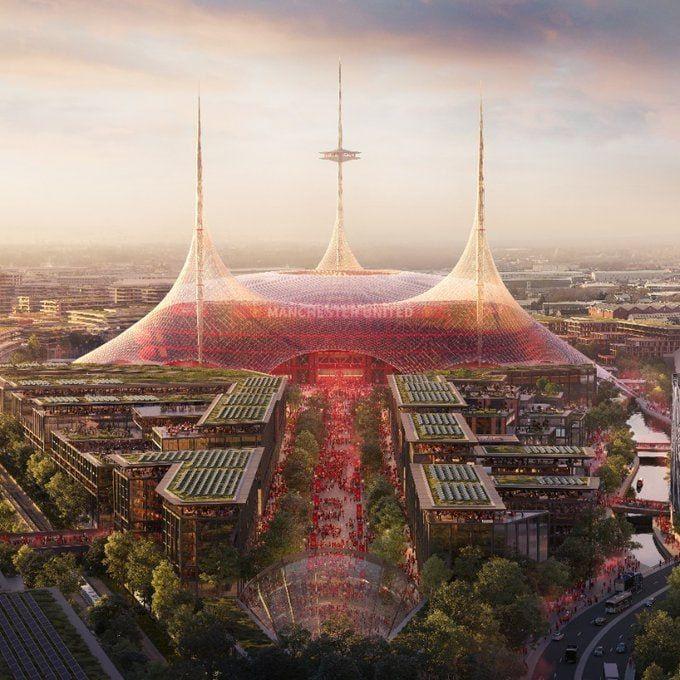
Reports emerging over the past 24 hours reveal that the club is seriously considering building a new 100,000-capacity stadium, a project that would make it the largest club stadium in the United Kingdom.
For over a century, Old Trafford has stood as more than just a football ground, it is a symbol of legacy, dominance, and identity. But in recent years, that legacy has been overshadowed by reality.
Fans have complained about leaking roofs, outdated facilities, and a declining matchday experience compared to Europe’s elite clubs. While rivals are building futuristic arenas, Old Trafford has struggled to keep up. Now, under the influence of Jim Ratcliffe and his INEOS group, the conversation has shifted from renovation to revolution. The proposed stadium is not just about seats it is about power.
A 100,000-capacity arena means:
-
- More ticket revenue
- Bigger global events
- Stronger commercial partnerships
- A complete entertainment ecosystem
In simple terms, it positions Manchester United not just as a football club, but as a global sports empire.
However, the idea of leaving Old Trafford is deeply emotional. For many fans, the stadium is sacred. Legends were made there. History was written there. Walking away feels like abandoning a part of the club’s soul.
This is why the debate has exploded across social media, from Manchester to Lagos. Some fans argue that progress is necessary. They believe a new stadium signals ambition and a return to elite status. Others strongly disagree.
They insist that the real problem is not the stadium, but performances on the pitch. To them, investing billions in infrastructure while results remain inconsistent is a dangerous gamble. There are also serious financial questions.
Building a stadium of this scale could cost over £2 billion, raising concerns about:
- Player transfer budgets
- Ticket price increases
- Long-term debt
And then comes the biggest question of all:
Will a new stadium actually bring success?
History has shown that while infrastructure can elevate a club’s brand, trophies are won on the pitch, not in the stands.
For now, no final decision has been made. But one thing is certain:
Manchester United are standing at a crossroads between preserving history and chasing the future.
Whatever they choose will define the next generation of the club.