The Minister of Foreign Affairs, Bianca Odumegwu-Ojukwu, disclosed this in a situation update shared via her X handle on Sunday. She explained that the evacuation plan is part of wider diplomatic and security efforts being coordinated with Nigerian missions in South Africa.
According to the minister, the move follows directives from Bola Tinubu, who ordered closer monitoring of developments and stronger measures to safeguard Nigerians abroad.
“The President has made it clear that the safety of our citizens remains the top priority,” she said, adding that arrangements are ongoing to compile details of Nigerians willing to return home through voluntary evacuation flights.
“So far, about 130 individuals have completed registration with our mission,” she noted, adding that the number is expected to rise as more people indicate interest.
Odumegwu-Ojukwu also confirmed that the ministry summoned South Africa’s Acting High Commissioner over the unrest, while diplomatic engagements continue with authorities in the country.
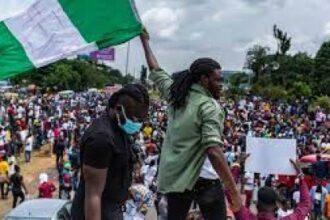
The development comes amid renewed anti-immigrant protests in cities such as Pretoria and Johannesburg, raising concerns over the safety of foreign nationals, including Nigerians.
“There is growing anxiety over repeated anti-foreigner demonstrations, some of which have targeted Nigerians in specific locations in recent weeks,” she said.
She added that President Tinubu had expressed serious concern after receiving briefings on the situation and had called for more effective intervention by local security agencies.
While South African authorities, including President Cyril Ramaphosa, have condemned acts of violence, disturbing images circulating online have continued to draw global attention.
“The visuals seen across traditional and social media platforms, showing violence and xenophobic attacks against foreign nationals, as well as inflammatory rhetoric at protests, have triggered widespread condemnation,” the minister stated.
She explained that demonstrations held between April 27 and 29, 2026, were largely peaceful but still required heavy police presence.
“The protests, led by a local anti-migration group in Pretoria and Johannesburg between April 27 and 29, were mostly peaceful, with heavily armed police on ground. Teargas was occasionally used to prevent any escalation into violence,” she said.
She further clarified that no Nigerian casualties or destruction of Nigerian-owned property were recorded during those particular protests.
However, the minister confirmed two separate incidents involving the deaths of Nigerians, both allegedly connected to encounters with security personnel.
“Amamiro Chidiebere Emmanuel passed away on April 25, 2026, due to injuries sustained from an assault by members of the South African National Defence Force on April 20 in Port Elizabeth,” she said.
She also revealed that “Nnaemeka Matthew Andrew died following an alleged encounter with officers of the Tshwane Metro Police, and his body was later found at the Pretoria Central Mortuary on April 20, 2026.”
Describing both incidents as unacceptable, Odumegwu-Ojukwu stressed that Nigeria is demanding justice.
“These incidents are deeply troubling and unacceptable. The Nigerian High Commission is closely monitoring investigations, and we expect justice to be served,” she said.
The minister added that another round of protests is expected between May 4 and May 8, 2026, prompting intensified diplomatic and security coordination between both countries.
She noted that Nigerian missions are working closely with South African authorities to ensure the safety of citizens while evacuation plans continue.
Highlighting historical ties, she said Nigeria played a significant role in South Africa’s liberation struggle, a fact that should be better appreciated by younger generations.
“Nigerian lives and businesses in South Africa must not continue to be endangered. We remain committed to working with authorities to put an end to recurring xenophobic incidents,” she added.
She also pointed out that such tensions tend to resurface, particularly during election periods, when anti-foreigner sentiments are sometimes exploited for political gain.
The minister concluded by noting that both countries recently signed an agreement focused on early warning systems to better protect citizens during periods of unrest.