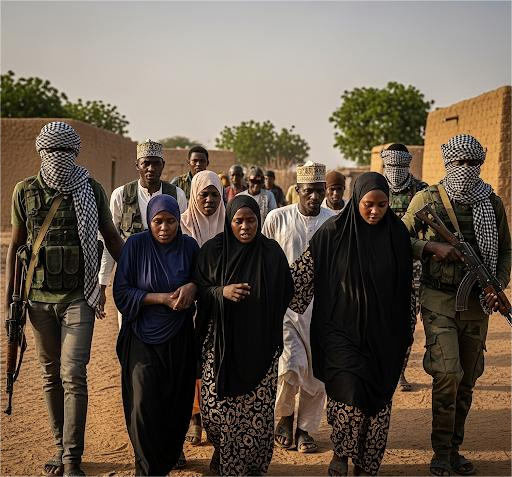
In Katsina State, northern Nigeria, the line between relief and sorrow was once again blurred. The Nigerian military announced the successful rescue of 76 hostages, men, women, and children, from the grip of armed gangs. For days, these families had lived as pawns in a cruel trade of ransom and violence. Their release should have been a moment of unbroken joy. But amid the celebration, one tragic note silenced the cheers: a child, caught in the chaos of the operation, did not survive.
The freed hostages had been held in a remote hideout, the kind of camp that has become all too familiar in the nation’s troubled north. The military described its intervention as a precision airstrike, aimed at dismantling the kidnappers’ stronghold while sparing innocent lives. For 76 people, the gamble worked, chains of fear were broken, and a return to their families beckoned. But for one grieving household, the outcome was devastating. Their child’s life became the unspoken cost of a mission otherwise hailed as a success.
Stories like these highlight the fragile balance Nigeria faces in its war against kidnapping syndicates. On the one hand, decisive military action is desperately needed to end a culture of impunity where bandits roam freely, abducting entire villages and demanding millions in ransom. On the other, each operation carries the risk of collateral damage. For the people on the ground, “victory” is never clean-cut; it comes stitched with grief, trauma, and the haunting memory of lives lost along the way.
The families reunited with their loved ones will carry scars beyond the physical. Children forced to witness captivity will return home with nightmares. Mothers, though relieved, will grapple with how close death loomed over them and their children. And for the family who lost their child in the rescue, the pain may forever cloud the relief of others. Their story is a reminder that statistics of “rescued hostages” mask the very human cost of insecurity, where each number is a face, each operation a gamble with life.
As Nigeria continues its fight against kidnapping, the nation is left with difficult questions: How can operations be both effective and safe? How do we ensure that every child, every mother, every father returns home alive? For now, the freed families will try to rebuild, while one family buries its child, a tragic symbol of the price of freedom in a country still struggling to protect its most vulnerable.