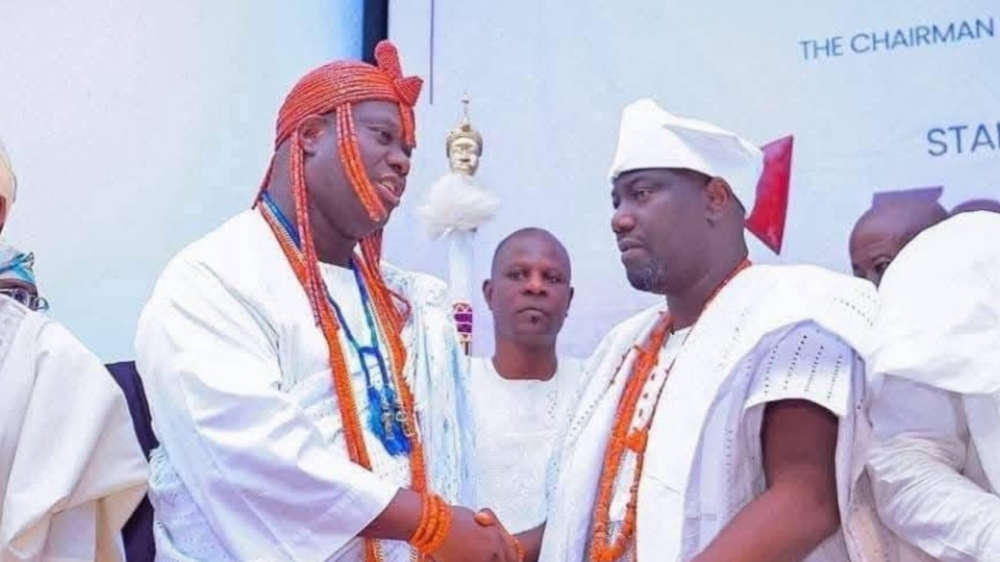
The current dispute started when Chief Dotun Sanusi, a business magnate from Ibadan, was given the title by Oba Enitan Adeyeye Ogunwusi, the Ooni of Ife. Oba Abimbola Akeem Owoade, the Alaafin of Oyo, responded quickly and fiercely, demanding that the title be revoked immediately and giving a 48-hour ultimatum.
In a statement, the Alaafin’s palace claimed that only they had the authority to grant any chieftaincy title that would apply to all of Yorubaland. Citing an alleged Supreme Court decision and Ooni’s instrument of office, the statement asserts that his customary jurisdiction is restricted to his immediate territory.
Since then, the Alaafin’s ultimatum has been rejected by the Ooni’s palace as “empty,” opting to disregard the order and let public opinion decide the issue. The long-running “supremacy” conflict between the two ancient thrones, which has frequently simmered beneath the surface and occasionally boiled out, is reminiscent of this most recent encounter.
The political rivalry that defined their relationship with their predecessors, the late Ooni Oba Okunade Sijuwade and the late Alaafin Oba Lamidi Adeyemi III, is still present in the conflict between the two stools. The monarchs fought over a comparable Yoruba-wide title in the early 1990s, and the conflict attracted national attention as both sides threatened and counter-threatened.
The historical and cultural significance of their separate thrones is the source of this ongoing rivalry. Ile-Ife is the sacred land where the Yoruba people’s ancestor, Oduduwa, first descended, according to Yoruba history and legend. As a result, many people view the Ooni of Ife as the most important traditional ruler since they are the spiritual leader and guardian of this legacy.
On the other hand, the political and military power of the former Oyo Empire is the foundation of the Alaafin of Oyo’s claim to dominance. At its height, the Oyo Empire was a powerful political force that ruled over a sizable area, encompassing parts of the modern-day Republic of Togo and Benin and present-day Yorubaland. The Alaafin claims the power to bestow titles of pan-Yoruba significance based on this history of imperial domination.
As “the one who is dear to the hearts of all Yorubas,” the title “Okanlomo of Yorubaland” itself is at the heart of this conflict. Although a traditional leader may bestow a title such as “Okanlomo” inside their own town or kingdom, its extension to “of Yorubaland” has become a source of conflict and a representation of the conflicting claims to power.