
Instead of doing the usual drop on Spotify or Apple Music, the Nigerian hip-hop legend decided to go off script.
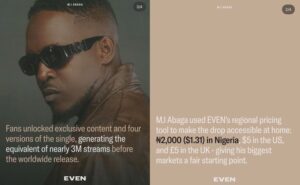
He released his new single Mr Fantastic directly to fans on the artist-first platform EVEN, selling four versions at:
- ₦2,000 for Nigerians (about $1.31)
- $5 for U.S. fans
- £5 in the UK
No middlemen. No delay. Just MI, his fans, and a link.
Within days, the veteran rapper reportedly earned the equivalent of three million streams, without waiting months for streaming payouts or splitting tiny royalties with a dozen digital distributors.
It’s a smart play and a loud one. Because while Afrobeats is racking up global numbers, the money isn’t always following the streams.
In Nigeria, a million Spotify plays might bring in just $300 after cuts. But 1,000 fans paying ₦2K? That’s ₦2 million straight to the artist’s pocket. No label. No percentage game.
For MI, whose core fan base predates the streaming era, this move makes perfect sense. But it’s not just a nostalgia flex, it’s part of a growing global shift.
From Bandcamp to DistroKid, OnlyFans to Ditto Music, artists are increasingly taking the music economy into their own hands. They’re selling songs, sneak peeks, ticket presales, and even unreleased demos straight to their communities.
“This is about creating a real economy around your fans,” says Feyi Ajayi, a Lagos-based music business consultant. “You’re not just pushing music. You’re offering value…and people will pay for value.”
That value might come in the form of:
- Bonus tracks
- Merch drops
- Behind-the-scenes voice notes
- VIP concert access
In this system, community is the product, and the fan isn’t just a listener, they’re an investor.
MI himself said it best on Instagram Live:
“Labels will always chase numbers. But artists can now chase value.”
Let’s not ignore the elephant in the studio: Nigeria’s economy is rough.
Inflation is high. Youth unemployment is brutal. Many fans can barely afford food, let alone a ₦2K single.
“Direct sales only work if you’ve built a core audience that sees your music as more than just background noise,” says Ayotunde Kareem, a Lagos-based A&R. “It’s for artists with real community, not just vibes and virality.”
So yes, MI can do it. So can Show Dem Camp. Or Asa. Or Odumodublvck.
But for the average up-and-comer with a hit on TikTok? It’s a tougher ask.
Still, those who build something real might find that quality fans will always outpay quantity streams
By going direct, artists skip the usual mess:
- Labels demanding commercial hits
- Distributors taking percentages
- DSP algorithms burying indie voices
It’s a cleaner, more artist-first model. But it’s also riskier. You now need to market, manage, and monetize your own community.
Not every artist wants to be a tech founder in disguise but the ones who do might be the future.
MI’s Mr Fantastic rollout wasn’t just a sales strategy, it was a statement.
He proved that Nigerian fans can and will pay for music if you ask them the right way, offer something personal, and treat them like more than data points.
The game is changing. The question isn’t, Will this work? It’s: Which artists are brave enough to try? Because if streaming made artists global, direct sales might just make them wealthy.