On the 3rd and 4th of August 2025, Lagos experienced what many are calling one of the most disruptive stretches of rainfall this year. From the early hours of Saturday through Sunday night, the sky over Lagos Island, particularly the Lekki-Ajah axis seemed to open its floodgates without pause. It wasn’t just rain; it was a heavy handed warning from nature. Streets became rivers, homes transformed into shallow pools, and drainages, clogged and overwhelmed, spilled their contents into people’s lives. The endless downpour trapped residents indoors and paralyzed daily activities across several parts of the city.
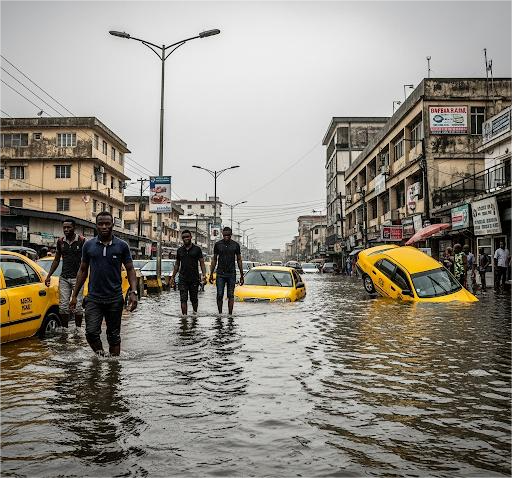
No area was hit harder than the Island. In Lekki, Victoria Island, and down to Ajah, major roads were swallowed by rising waters, creating scenes that looked more like coastal erosion than urban flooding. Vehicles, both parked and in motion, were submerged up to their headlights or floated like abandoned rafts in some areas. Pedestrians waded through waist-deep water, their trousers rolled, shoes in hand, eyes filled with resignation. For the less fortunate, homes were invaded by floodwaters that ruined furniture, electrical appliances, and in some cases, entire livelihoods. Lagosians are no strangers to rain, but this time, it felt different. It felt endless.
As Lagosians tried to resume normalcy on Monday morning, many found that the city had not yet recovered. Workers reported late to offices, some calling in entirely due to flooded streets and impassable roads. Public transport was in chaos: Danfo buses broke down in murky waters, while ride hailing services skyrocketed in price, with drivers hesitant to brave the roads. Schools delayed resumption or closed entirely. “I left Ajah by 5 a.m., and I was still stuck in traffic by 9 a.m.,” said Chuka, a civil servant who works on the Mainland. “Every route was waterlogged. Every option felt like a dead end.” It was not just rain, it was disruption on a massive scale.
Beyond the immediate chaos, the flood laid bare deeper issues that Lagos has long struggled to address. Poor drainage systems, unchecked urban planning, and insufficient waste management have turned many parts of the city into flood traps. Lekki and Ajah once seen as Lagos’ highbrow real estate zones now seem like precarious investments each time it rains. Many residents have voiced their frustration online, sharing videos of floating cars and submerged walkways while calling on the government to implement lasting solutions. For a city that prides itself on ambition and economic growth, the inability to manage predictable seasonal rainfall raises serious questions about its priorities and preparedness.
Now that the skies have cleared temporarily, Lagos is left to pick up the pieces. Damaged vehicles line the roads, some still half-submerged. Construction workers have begun repairing washed out roads, and residents are drying out their soaked belongings under the hesitant sun. But the emotional and economic toll will linger. Many are demanding that this be a turning point, a time for government agencies, developers, and the citizenry to confront the hard truths about living in a flood-prone mega-city. The rain has stopped, but the question remains: what will it take for Lagos to stop sinking?