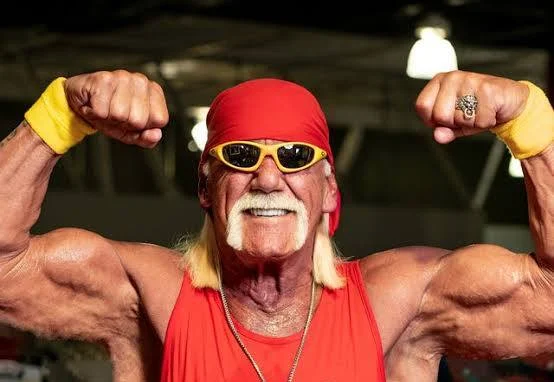
His death marks the end of an era for wrestling fans, pop culture followers, and anyone who ever flexed in front of a mirror shouting, “Whatcha gonna do, brother?!”
Long before he was body slamming giants in front of sold out stadiums, Hogan was just a lanky teenager in Tampa who played the bass guitar and idolized wrestlers on television. Born August 11, 1953, in Georgia but raised in Florida, he entered the wrestling world almost by chance, spotted training at a local gym, a promoter saw potential in him not just as a wrestler, but as a star and he was right.
In 1984, Hulk Hogan defeated the Iron Sheik to win his first WWF Championship. That night, “Hulkamania” was born, an explosion of yellow tights, red bandanas, and impossible charisma. Hogan wasn’t just a wrestler. He was a superhero without a cape, telling kids everywhere to “say your prayers and take your vitamins.”
He headlined eight WrestleManias, lifted the immovable André the Giant, and helped transform professional wrestling from a niche sport into a global spectacle. Fans screamed his name. Children dressed like him. Adults, even cynics, couldn’t look away.
Outside the squared circle, Hogan starred in films like Rocky III and Mr. Nanny. His larger than life persona carried into reality TV with Hogan Knows Best, where viewers saw not just the hero but the father, husband, and man navigating fame, but life wasn’t always scripted.
Hogan endured a very public divorce, legal battles, and health struggles including dozens of surgeries on his back, knees, and neck. He also faced serious backlash over a racial slur scandal in 2015. He apologized, did the work, and was eventually reinstated into the WWE Hall of Fame. He wasn’t perfect. But in the ring and in life, he kept getting back up. To his friends, Hogan was loyal to a fault. Wrestling legend Ric Flair called him the real deal. His longtime manager Jimmy Hart, who stood beside him through the highs and lows, once said:
“Terry never stopped believing in people, even when he had no reason to.” To his fans, he was everything: a childhood memory, a cultural icon, a safe place where good always triumphed over evil.
“He taught me to believe in myself,” one fan tweeted. “I’m crying like I lost an uncle.”
Hogan is survived by his wife Sky Daily, whom he married in 2023, and his children Brooke and Nick, whom he loved fiercely. Just days ago, friends assured fans that Hogan was “in great health.” His passing came as a shock, and tributes have poured in from the wrestling world to Hollywood to everyday people who grew up on Hulkamania.
WWE called him “one of the most iconic and beloved superstars of all time.”
Terry Bollea was more than the muscles, more than the belt, more than the catchphrases. He was a generation’s hero, a man who told millions of kids that they were strong, they were brave, and that doing the right thing mattered.
He made people believe in something bigger than the fight. And as his theme song once asked, “When it comes crashing down and it hurts inside…” millions are now feeling that pain. But millions more will remember the joy he gave, the spirit he shared, and the fight he never gave up on.
Rest in power, Hulkster. We’ll never forget you.