- Why Money Without Freedom Is Still a Beautiful Prison
- Why Money Without Freedom Is Still a Beautiful Prison
The Morning Test of True Wealth
There is a question that exposes the real condition of a person’s wealth more than their bank balance, car key, house address, office title, or social media image.
When you wake up in the morning, can you say, “I can do whatever I want today”?
Not because you are lazy. Not because you have no responsibility. Not because you have no ambition. But because your life is no longer controlled entirely by fear, bills, debt, pressure, toxic employers, emergency demands, or the desperate need to say yes when your soul is begging you to say no.
That is wealth.
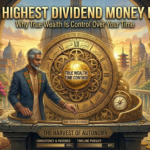
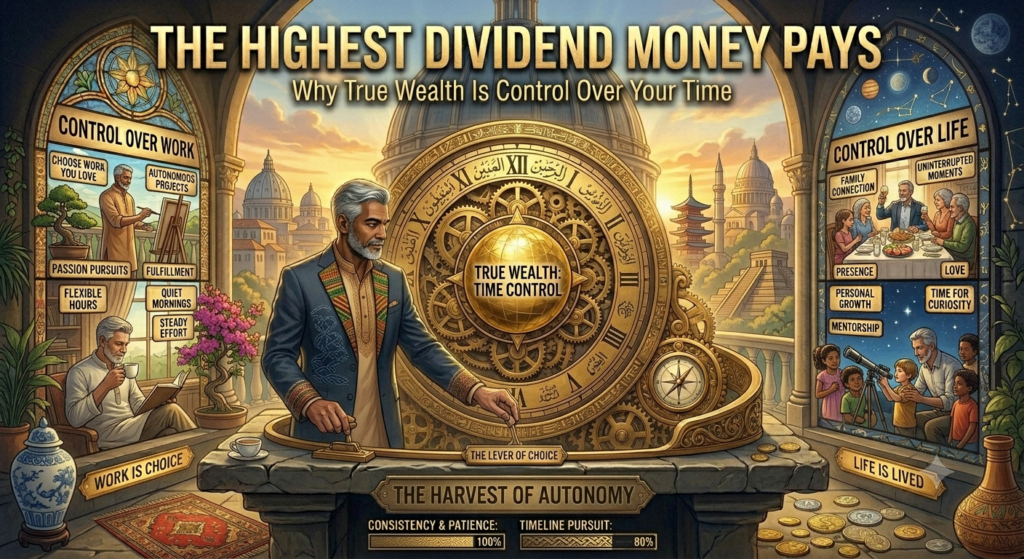
The highest form of wealth is not the ability to buy luxury watches, designer clothes, expensive cars, or first-class tickets. Those things may be pleasant, but they are not the deepest dividend money pays. The highest form of wealth is control. Control over your time. Control over your energy. Control over your choices. Control over your movements. Control over your mornings. Control over your seasons.
“Money is most powerful when it buys back the hours of your life.”
A man may earn millions and still be poor in freedom. A woman may look successful and still be trapped in a life she cannot pause, question, or redesign. A person may live in a big house and still wake up every morning feeling like a prisoner of obligations.
So we must ask a deeper question: are you building wealth, or are you merely building a more expensive cage?
The Core Philosophy: Money’s Greatest Value Is Freedom
The ability to do what you want, when you want, with whom you want, for as long as you want, is priceless. It is not merely a lifestyle statement. It is the soul of financial freedom.
This does not mean reckless living. It does not mean abandoning discipline. It does not mean spending without wisdom. It means money has done its highest job when it gives you options.
Options are wealth.
The option to rest when your body is tired.
The option to leave a toxic workplace without your family collapsing.
The option to reject a dishonest deal because you are not desperate.
The option to spend time with your children while they still want your attention.
The option to care for your health before sickness becomes severe.
The option to start a business slowly instead of rushing under pressure.
The option to retire when you want, not only when your body has been broken by years of forced labour.
The option to say, “No, thank you,” without hunger punishing your courage.
That is the highest dividend money pays.
“The true dividend of wealth is not cash flow alone; it is life flow.”
Many people misunderstand money because they only see it as a tool for consumption. They think money is mainly for buying things. But money is deeper than that. Money is stored time. Money is stored choice. Money is stored peace. Money is stored dignity. Money is the ability to protect yourself from being controlled by circumstances that can humiliate your spirit.
When you have no money, almost everything becomes urgent. Every bill becomes a threat. Every illness becomes a financial crisis. Every delay becomes panic. Every employer becomes a master. Every customer becomes someone you must tolerate even when they disrespect you. Every family emergency becomes a war against your savings.
But when you begin to build even a small amount of wealth, life changes. You may not be rich yet, but you gain breathing space. You can take a few days off work when you are sick without breaking the bank. You can repair a car without begging. You can help family without destroying your own household. You can think before making decisions. You can negotiate from strength, not desperation.
This is why money matters.
Not because it makes you superior.
But because it gives you control.
The Psychology: Why Control Is the Universal Fuel of Joy
If there is a common denominator in happiness, it is that people want to control their lives.
People want to decide how they spend their days. They want to choose meaningful work. They want to spend time with people they love. They want to rest without guilt. They want to travel without begging for permission. They want to raise their children without being absent from their childhood. They want to pursue purpose without every decision being dictated by survival.
A strong sense of control over one’s life is one of the most dependable foundations of well-being. You can have education and still be miserable if you have no control. You can have income and still be unhappy if every naira is already captured by debt, lifestyle, and obligations. You can live in a developed country and still feel trapped if your time belongs entirely to others. You can live in a beautiful city and still be emotionally poor if you have no freedom over your day.
This is the psychology of autonomy.
Human beings are not machines. We were not designed only to wake up, enter traffic, work under pressure, pay bills, sleep tired, and repeat the cycle until old age. We need agency. We need dignity. We need the feeling that our lives belong to us.
When people lose control over their time, they often lose joy. They may still smile publicly. They may still dress well. They may still perform success. But inside, there is a quiet exhaustion.
“A life without control may look productive, but it often feels like slavery with a salary.”
This is why some people earn more and feel worse. Their income rises, but their control does not. Their responsibilities multiply. Their expenses expand. Their debt increases. Their lifestyle becomes expensive. Their job becomes more demanding. Their phone never rests. Their weekends disappear. Their children see them mainly through transfers and instructions. Their body is tired. Their spirit is dry.
They have money, but they do not have freedom.
And money without freedom is incomplete wealth.
The Nigerian and African Context: Why Time Freedom Is a Serious Financial Goal
In Nigeria and across Africa, many people are not merely working; they are surviving. The economy pushes people into constant hustle. Inflation eats income. Rent rises. School fees climb. Fuel prices bite. Electricity problems force people to buy fuel, inverters, solar systems, generators, and repairs. Black tax pulls from every direction. Family members expect support. Health emergencies arrive without warning. Business owners battle unreliable infrastructure, staff issues, customer debt, and government pressure.
In such an environment, control over time can feel like luxury.
But that is exactly why it must become a goal.
For the Lagos worker spending four hours daily in traffic, wealth is not only a bigger salary. Wealth may be the ability to work remotely, move closer to work, start a side income, or eventually choose a career that does not swallow the day.
For the small business owner who cannot leave the shop for one week without everything collapsing, wealth is not only more sales. Wealth is building systems, staff capacity, records, processes, and cash flow strong enough to allow rest.
For the father who never attends his children’s school events because he is always chasing money, wealth is not only paying school fees. Wealth is having the freedom to be present.
For the mother who keeps working through sickness because one missed week means financial trouble, wealth is not only income. Wealth is savings, insurance, support systems, and planning.
For the young Nigerian dreaming of Japa, wealth is not only moving abroad. Wealth is not exchanging one form of economic pressure for another form of time slavery. If you travel but your time remains fully captured by survival, you have changed geography, not necessarily freedom.
“Do not only ask how much you are earning. Ask how much of your life your earning is costing you.”
This question is urgent.
Some people are using their health to buy money, then later using money to beg for health. Some are using their marriage to buy status. Some are using their children’s childhood to buy career advancement. Some are using their peace to buy public applause.
But what is wealth if the things it was supposed to protect are destroyed in the process?
The Danger: Mistaking Luxury for Freedom
One of the biggest traps of modern life is confusing luxury with freedom.
Luxury is what people see.
Freedom is what you feel.
Luxury can be rented, borrowed, financed, staged, exaggerated, or posted. Freedom is harder to fake. Freedom is quiet. Freedom is waking up without financial panic. Freedom is being able to ignore pressure. Freedom is not shaking when one customer delays payment. Freedom is not being trapped in a job you hate because every month is already consumed before salary arrives.
A person can drive an expensive car and still be financially fragile. A person can wear designer clothes and still be one emergency away from shame. A person can live in a big apartment and still be afraid of rent renewal. A person can post vacation pictures and still return to debt anxiety.
This is why social media has confused many people. It has made visible consumption look like financial success. It has taught people to admire spending more than control. It has made people chase applause instead of autonomy.
But money spent to impress others often reduces your freedom.
Every unnecessary debt is a chain.
Every lifestyle upgrade you cannot sustain is a chain.
Every financial decision made for image is a chain.
Every purchase that forces you to keep working in fear is a chain.
“If what you buy steals your future choices, it is not a blessing; it is a decorated burden.”
This does not mean you should never enjoy money. Enjoyment is part of life. Buy what brings genuine value. Celebrate milestones. Travel if you can afford it. Live well. Honour your labour. But never let consumption destroy control.
The wise person asks, “Will this purchase increase my freedom or reduce it?”
That question can save your financial life.
The Mechanics: How Money Buys Time
Money buys time in several powerful ways.
First, savings buy breathing space. An emergency fund is not just money in an account. It is a wall between you and humiliation. It means if sickness comes, you can rest. If work delays payment, you can survive. If business slows down, you can think. If a family emergency arises, you can respond without destroying your future.
Second, investments buy future independence. Every productive asset you own is a small worker. It may be a business, shares, real estate, treasury bills, mutual funds, intellectual property, digital products, or any asset that can produce value. The goal is simple: gradually make your money work so that your body is not the only engine of income.
Third, low debt buys flexibility. Debt may be useful when handled wisely, especially for productive purposes. But unnecessary consumer debt can steal your future time. When you owe too much, your future income already belongs to lenders. You may be working today for yesterday’s appetite.
Fourth, skills buy options. A valuable skill gives you mobility. It allows you to earn in different ways, serve different markets, and adapt when life changes. Skills in sales, writing, technology, finance, logistics, design, leadership, data, marketing, engineering, healthcare, or business operations can increase control because they reduce dependence on one source.
Fifth, simple living buys peace. The lower your compulsory expenses compared to your income, the more control you have. This is not poverty thinking. It is freedom thinking. A person earning ₦1 million and spending ₦950,000 every month may have less freedom than a person earning ₦600,000 and spending ₦300,000.
“Financial freedom begins when the gap between your income and your appetite starts widening.”
The Blueprint: How to Build the Highest Dividend Money Pays
Start by defining freedom for yourself. Do not copy another person’s version. For one person, freedom may mean retiring early. For another, it may mean working on meaningful projects. For another, it may mean being available for family. For another, it may mean relocating. For another, it may mean running a business without daily physical presence. Your financial plan must serve your own life, not society’s scoreboard.
Next, build an emergency fund. This is the foundation of time control. Even before you become rich, a few months of living expenses can change how you feel. It gives you courage. It gives you patience. It gives you the ability to make better decisions.
Then reduce financial chains. Pay down toxic debt. Avoid lifestyle inflation. Stop buying things mainly to prove you are doing well. Stop allowing other people’s expectations to design your budget. Freedom requires discipline.
After that, invest consistently. Do not wait for perfect conditions. Start with knowledge. Start with small amounts. Choose assets you understand. Diversify. Think long term. Let compounding help you buy future time.
Also, build income that is not completely tied to your physical presence. This may take years, but it is important. A business with systems, investments, royalties, digital products, rental income, dividends, or scalable services can gradually reduce dependence on active labour.
Finally, protect your health and relationships. What is the point of controlling your time if your body is broken or your family is distant? Time freedom must not be postponed until the people you want to enjoy it with are gone.
The Benediction: May Your Money Buy Back Your Life
May you not become rich only to remain trapped.
May you not chase money so hard that you lose the life money was supposed to improve.
May you not spend all your strength building a lifestyle that gives you no rest.
May you not impress people and disappoint your own soul.
May you build wealth that gives you options, peace, dignity, and time.
The greatest reward money offers is not luxury but control. It gives you control over your mornings, your decisions, your health, your family time, your work, your pace, and even the seasons of your life. In the end, the highest dividend wealth pays is the freedom to live on your own terms.
A small amount of wealth can give you a few days of rest when you are sick. A larger amount can give you months of breathing space. Greater wealth can give you the power to retire when you want instead of when life forces you. But at every level, the principle is the same: money is most meaningful when it returns your time to you.
So build wisely, spend with intention, and invest with patience. Guard your freedom by avoiding the chains that quietly steal your options, and never let the pursuit of luxury become more important than the preservation of liberty. Do not confuse busyness with wealth, income with freedom, or applause with peace. The aim is not merely to accumulate more money, but to create more life within your life—to make room for meaning, breathing space, and genuine freedom. That is the true dividend, the highest form of wealth, and the kind of financial freedom that still has a soul.
Subscribe to Naija Street Matters for regular news update and click on the Whats-app green button below to join our community.