
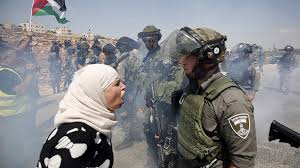
After nearly a year of relentless fighting, bombings, and humanitarian despair, the world finally exhaled on October 10, 2025, when a U.S.-brokered ceasefire between Israel and Hamas came into effect. Streets that had long been empty and littered with rubble began to hum again, this time not with the roar of drones, but with the tentative footsteps of people returning home. Yet, while the truce has paused the violence, it has not ended the war. The situation in Palestine remains delicately balanced between hope and heartbreak, reconstruction and ruin.
A WAR THAT SHOOK THE WORLD
The recent Gaza conflict has been one of the most devastating in decades. Entire neighborhoods were reduced to ashes, thousands were killed, and millions displaced. Hospitals struggled under the weight of casualties, while humanitarian organizations pleaded for access to deliver aid. The violence sparked international outrage, mass protests, and global calls for a permanent ceasefire.
Israel, citing security concerns and the need to dismantle Hamas’ military infrastructure, launched a full-scale offensive that ravaged much of Gaza. Hamas, on the other hand, continued to fire rockets into Israeli cities, deepening a cycle of retaliation that seemed without end. For many Palestinians, survival became a daily miracle; for Israelis, fear and uncertainty became constant companions.
By mid-2025, diplomatic pressure had mounted. The United States, Qatar, and Egypt led intensive negotiations that eventually yielded what is now being called the “October Ceasefire Agreement.”
TERMS OF THE TRUCE
The ceasefire, though fragile, brought with it several key terms aimed at restoring stability and rebuilding trust.
- Hostage and Prisoner Exchanges: Both sides agreed to a phased exchange, Hamas releasing Israeli hostages in return for Palestinians detained in Israeli prisons.
- Humanitarian Access: Israel consented to allow more humanitarian aid into Gaza, including food, water, and medical supplies, under international supervision.
- Return of Displaced Persons: Palestinians who had fled the most affected areas began returning to what was left of their homes.
- Monitoring Mechanism: International observers, primarily from the UN and Arab League, were deployed to oversee adherence to the ceasefire.
Despite these developments, mistrust runs deep. Both parties have accused each other of minor breaches. Sporadic gunfire, restricted aid routes, and delayed prisoner exchanges serve as reminders that peace is still a work in progress.
LIFE AFTER THE CEASEFIRE
For the people of Gaza, the truce offers a bittersweet relief. Families have emerged from shelters to search for relatives or salvage belongings from the ruins. Markets are reopening slowly, and children can be seen playing again in the streets, a sight long unseen.
Yet, beneath these glimpses of normalcy lies a grim reality. More than half of Gaza’s infrastructure has been destroyed, including schools, hospitals, and power facilities. The United Nations estimates that billions of dollars will be needed to rebuild the enclave. Clean water remains scarce, medical care is still limited, and thousands of families are struggling to find shelter.
In Israel, the atmosphere is equally complex. The ceasefire has provided a respite from rocket sirens and fear, but many Israelis remain skeptical. The scars of the October 2023 Hamas attacks still linger, and the question of security continues to dominate political discourse.
POLITICS AND PEACE
One of the major challenges now is governance. Who will control Gaza once the dust settles?
Talks are ongoing about whether the Palestinian Authority which governs parts of the West Bank—should take over administrative responsibilities in Gaza. Israel supports this idea, while Hamas strongly resists it. Some international mediators are pushing for a joint transitional administration, backed by Arab states, to oversee reconstruction and maintain stability.
Another contentious issue is disarmament. Israel insists that Hamas must fully disarm before long-term peace can be achieved. Hamas, however, sees its weapons as essential leverage in any negotiation. Until this deadlock is resolved, the ceasefire will remain fragile, more like a pause button than a peace treaty.
THE HUMAN STORY
Beyond politics and military terms, the real story lies with the people. Families are reuniting, children are returning to classrooms that barely have walls, and aid workers are risking their lives to deliver food and medicine. Hope, though battered, still breathes through the rubble.
In a small neighborhood in southern Gaza, a woman named Mariam Al-Sayed recently returned to what used to be her home. “I know it’s dangerous,” she says, standing before the collapsed walls. “But this is where my memories live. If I leave again, I leave my soul behind.”
Her words echo the sentiment of many Palestinians people who have lost everything yet refuse to surrender their sense of belonging.
A CROSSROAD FOR THE REGION
The ceasefire has also reshaped regional dynamics. Egypt and Qatar, long seen as mediators, are now pushing for a comprehensive peace framework that could include the rebuilding of Gaza, the reopening of the Rafah crossing, and renewed dialogue on a two-state solution. Meanwhile, Western nations are pledging reconstruction funds, hoping stability will prevent another escalation.
Still, history warns of the fragility of such truces. Previous ceasefires between Israel and Hamas have collapsed under the weight of mistrust and political maneuvering. Whether this one endures depends on how sincerely both sides pursue diplomacy over destruction.
As of now, the world watches cautiously. The guns are silent, but the war is not over. The Palestine ceasefire of October 2025 represents both an end and a beginning—an end to immediate bloodshed, and the beginning of what could either become a lasting peace or another chapter in a long, painful saga.
For millions of Palestinians and Israelis, the hope is simple: that this time, the silence will last long enough for healing to begin.