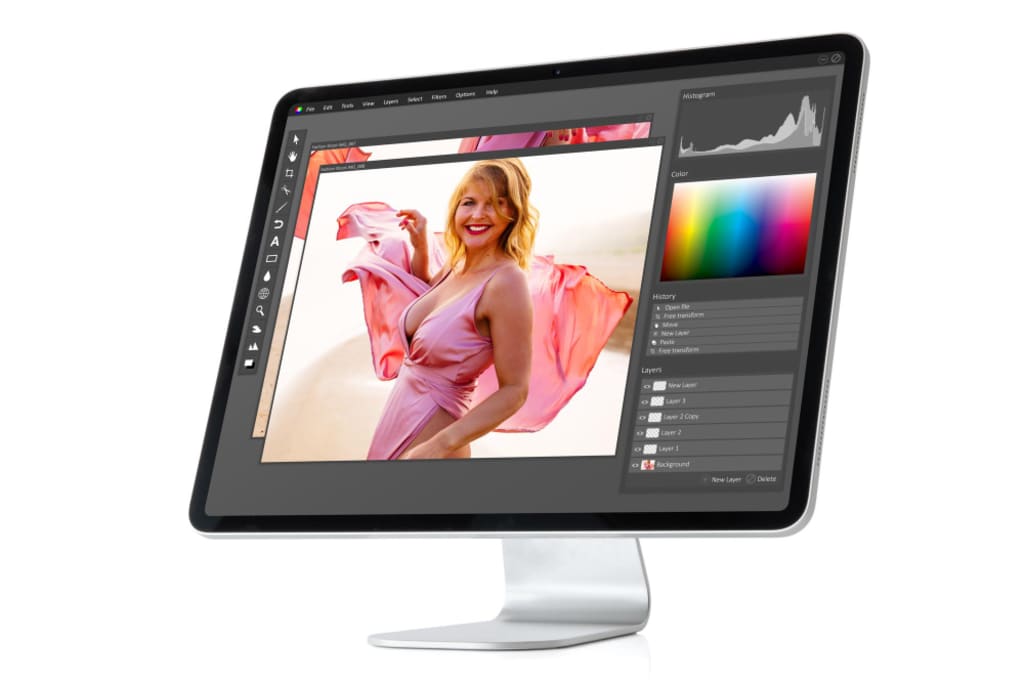
Photoshop also transformed the design workflow by introducing non-destructive editing, allowing designers to make changes without permanently altering the original image. The ability to automate tasks using actions and batch processing features significantly increased efficiency.
Photo retouching has become the go-to tool for photo retouching in industries like fashion, advertising, and entertainment, influencing everything from magazine covers to product marketing. Photoshop has become the de facto standard in the design industry, with virtually all professional designers expected to be proficient in it. Its file format flexibility ensures that it is compatible with other design tools and platforms, making it integral to the graphic design workflow.
The influence of Photoshop extends beyond traditional graphic design into fields like web design, motion graphics, and digital art. Web designers use Photoshop to create mockups and wireframes, while digital artists use it to create detailed illustrations and paintings. The integration with other Adobe tools like Illustrator and InDesign has enhanced cross-disciplinary design work.
However, there are challenges and criticisms associated with Photoshop. Ethical concerns have been raised about the excessive retouching of images, particularly in fashion and advertising, and the potential for skill dependency. The focus on digital design might overshadow traditional design principles like sketching or hand-drawing.
In conclusion, Photoshop has fundamentally transformed graphic design by giving designers powerful tools to enhance creativity, streamline workflows, and expand their creative possibilities. However, it also raises questions about ethical use and over-reliance on digital tools.