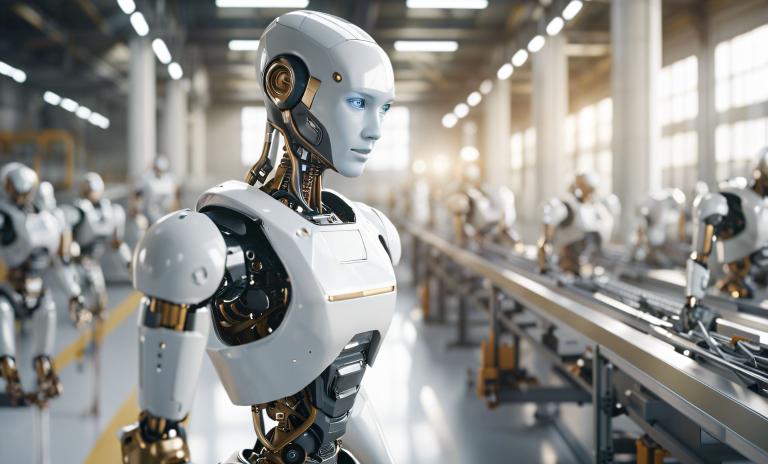
In my future career as a pilot, I envision a fully automated personal robot that can perform household chores and manage every aspect of my life. The robot should be wheel-driven for easy locomotion, equipped with a laser range finder and stereo camera to recognize surroundings and assess job success. It should also be equipped with responsive artificial intelligence to assist in kitchen tasks such as dish washing and cooking, serving breakfast, and cleaning the house.
The robot should also be useful in situations where people are not in the condition to perform household chores on their own, such as laundry, vacuum cleaning, and outdoor lawn mowing. To avoid accidents caused by robots, a safety awareness device, lockdown mechanism, and sensing device will be installed to prevent accidents.
However, robots lack a soul and emotional feelings like humans, making them a friend in modern society. They lack speech and cannot express themselves through gestures and facial expressions. In home settings, social rules are complex, making it difficult for personal robots to pass for humans. Additionally, robots rely on orders given to them by humans, making them vulnerable to damage and degeneration over time.
The idea of safe interaction between the robot and humans makes robots more of a machine than human. They lack human detection and motion planning, making them more likely to cause accidents. Personal robots also cannot plan tasks like humans and rely on instructions to function. Furthermore, humans are highly adaptable and creative, qualities that are apparently lacking in robots.
In conclusion, while robots are useful in performing many household chores, they can be a source of worry for humans in the future. Personal robots that do everything for an individual like cooking and cleaning may make humans lazy. The efficiency and high productivity of robots may lead employers to resort to using robots instead of human labor, replacing millions of workers worldwide. Massive unemployment will increase crime and insecurity, and robot armies can be designed, including super soldiers for war against enemy nations.
The autonomy technologies granted to robots, especially those designed for war, pose risks to humans, as they can work independently and even against the intentions of the person who designed them. This poses potential problems as robots may turn out to be rogue agents.
In conclusion, while robots are useful to humans for their merits outweigh their demerits, they also present challenges. Autonomous robots may take actions without orders from the individual who designed them, potentially acting defiantly against their architect. Despite these challenges, robots continue to play a crucial role in our lives, making life simpler and more efficient.