- Giants Rise, Underdogs Fight Back: Why World Cup Fever Is Taking Over Again
- Goals, Shocks and African Pride: The World Cup Stories Fans Cannot Stop Talking About
World Cup fever has taken over again.
From viewing centres to WhatsApp groups, from betting shops to office arguments, from TikTok edits to football banter pages, fans are living inside the beautiful madness of the game. Every match is producing a new story. Every goal is producing a new debate. Every surprise result is reminding the world why football remains the most emotional sport on earth.
This is no longer just a tournament. It is a global theatre.
In the latest round of matches, the giants came out with authority, the underdogs refused to disappear, and African teams gave fans a mixture of pride, heartbreak and hope.
The Netherlands sent a loud message with a commanding 5–1 win over Sweden. It was not just the scoreline that caught attention; it was the manner of the victory. The Dutch played with pace, confidence and sharp attacking movement. Brian Brobbey and Cody Gakpo both delivered big performances, turning the match into a statement of intent. Sweden, who had impressed earlier in the tournament, suddenly looked exposed against a side that smelled weakness and punished it.
Germany also showed the mentality of a football giant. Against Ivory Coast, the Germans had to fight from behind before winning 2–1 through a dramatic late goal. For Ivory Coast, it was painful. They were close to holding one of Europe’s heavyweights, but football at this level punishes even small lapses. For Germany, it was another reminder that big teams do not always need to dominate from the first whistle; sometimes they only need to survive the storm and strike when the moment opens.
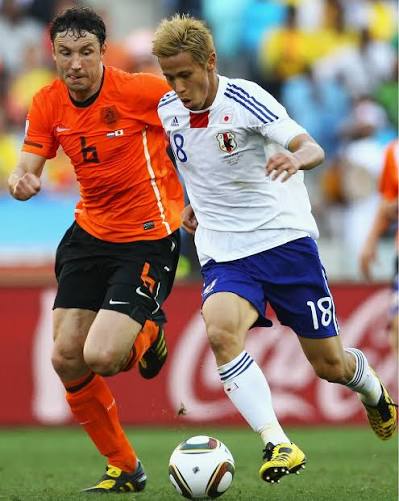
Japan also became one of the major talking points after a ruthless 4–0 victory over Tunisia. The Samurai Blue were disciplined, fast, intelligent and clinical. Their performance showed why Japan can no longer be treated as a football outsider. They have structure. They have rhythm. They have confidence. They have a football identity that has been built over years, not overnight.
For Tunisia, the result was painful. African fans wanted a better showing. The defeat became another reminder that passion is not enough at the World Cup. Energy must meet organisation. Talent must meet tactical discipline. Desire must meet execution.
But the underdog story is still alive. Curacao, the smallest nation ever to qualify for the World Cup, held Ecuador to a 0–0 draw in a match that showed the beauty of football’s unpredictability. After suffering a heavy defeat earlier, many expected Curacao to collapse again. Instead, they fought, defended, suffered, survived and earned a historic point. That is why the World Cup is special. It gives small nations a stage where courage can become history.
Cape Verde is also carrying the underdog flag for Africa. Their World Cup debut has become more than football. It has become a symbol of belief for small nations, island nations and African teams that often enter global tournaments with little attention but big dreams. Their earlier draw with Spain already told the world that they did not come to take pictures; they came to compete.
For Nigerian fans, this World Cup is emotional in a different way. Nigeria is not on the stage, and that absence is painful. A country with so much football talent should not be watching from outside while others write history. Every African match brings mixed feelings. When Morocco stands strong, when Ghana fights, when Cape Verde inspires, when Ivory Coast pushes Germany, Nigerians feel continental pride. But they also feel the painful question: where are the Super Eagles?
That is the deeper lesson of this tournament.
The World Cup does not reward noise. It rewards preparation. It rewards structure. It rewards football systems that plan years ahead. Countries that are rising today did not wake up suddenly. They invested in academies, coaching, scouting, discipline, player development, sports science and proper administration.
Nigeria has talent. Nobody doubts that. But talent without structure is like a powerful engine without a steering wheel. It can make noise, but it may not reach the destination.
As the tournament continues, fans should expect more drama. Spain, Belgium, Uruguay, Cape Verde, Egypt and other teams still have important matches ahead. The group stage is entering a dangerous phase where one mistake can change everything. Some teams are already fighting for qualification. Some are fighting for survival. Some are fighting for pride.
That is why World Cup fever is getting hotter.
The giants are waking up. The underdogs are refusing to bow. African teams are showing both promise and pain. And football fans around the world are once again being reminded that in the World Cup, reputation may open the door, but performance decides who stays inside.
THE NSM PERSPECTIVE
Football is not just entertainment. It is a classroom.
The World Cup teaches nations what preparation looks like. It teaches leaders that systems matter. It teaches young people that discipline can carry talent farther than noise. It teaches businesses that branding, visibility, organization and performance must work together.
Curacao’s fight, Cape Verde’s courage, Japan’s structure, Germany’s mentality and the Netherlands’ ruthlessness all carry lessons beyond sport. Small nations can compete when they believe and prepare. Big nations stay big because they keep improving. African teams can rise, but only if passion is supported by planning.
For Nigeria, the message is clear: football greatness cannot be built on emotion alone. The Super Eagles must return not only with talent, but with structure, discipline, leadership and a long-term football vision.
The World Cup rewards countries that prepare before the whistle blows.