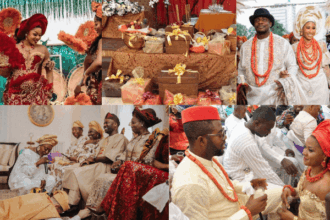
In a statutory marriage, a man and a woman can only be wed to one another at a time, making it effectively a monogamous union. It is subject to the rules and regulations of the Marriage Act; this kind of marriage is also referred to as marriage under the Act. For the couple, as well as their offspring, it confers significant advantages and privileges concerning inheritance, wills, and other family-related problems. In Nigeria, a legally sanctioned marriage must begin at the Marriage Registry and may conclude at any permitted public location, including places of worship.
What is statutory marriage’s legal framework?
The following federal laws govern statutory marriage in Nigeria:
- The Marriage Act: In Nigeria, this law regulates the signing and commemoration of legally mandated marriages.
- The Matrimonial Causes Act: These acts governs and decide issues pertaining to statutory marriages in Nigeria, such as divorce, separation, custody, and support
- The Matrimonial Causes Rules: These are a set of rules established by Nigeria’s High Courts in accordance with the Matrimonial Causes Act to handle and decide issues involving statutory marriage in the country.
Nigeria’s High Courts are located in every state, including the Federal Capital Territory of Abuja, according to the country’s constitution.
1. You must obtain a “Notice of Marriage” from the Marriage Registry to be filled, signed, and returned to the Registrar of Marriages (Section 7 of the Marriage Act [MA]);
2. The Registrar shall enter the notice of marriage into the “Marriage Notice Book” and affix a copy of the notice on the outer door of his office for all to see until the “Marriage License” has been granted or until 3 months have elapsed (Section 10 of MA);
3. If, after 21 days, there are no objections to the granting of a Marriage Certificate by members of the public and the prescribed fees having been paid to the Registry and appropriate affidavit of facts has been made, the Registrar shall then issue a “Registrar’s Certificate” to the couple, which will allow them to publicly celebrate their marriage in the Marriage Registry, a licensed place of worship or at any other licensed public place. (Section 11 of MA);
4. The marriage can then be celebrated within three months from the date of notice in any of the approved places (the marriage registry, a licensed place of worship or at any other licensed public place). If the marriage does not take place within three months, the notice as well as all other subsequent proceedings will no longer be valid. In such circumstance, for a valid marriage to be contracted, the entire process must be repeated, unless a waiver is obtained through a special license from the Minister of Interior. (Section 12 of MA).
B. Marriage Celebration in a Place of Worship (commonly known as church wedding)
3. One of the duplicate marriage certificates will be given to the couple by the clergy, and they have seven days to send the other copy to the district’s registrar of marriages, who will file the certificate in his office (per Section 26 of the MA).
4. The marriage certificate in question is a federal government of Nigeria document that bears the Nigerian coat of arms perpetually. It should not be mistaken for simple certificates made and issued under the names of religious institutions, centers, or groups. A more reliable evidence of statutory marriage is the federal government-issued marriage certificate described above.
C. Celebration in a Registrar’s office (commonly known as court wedding)
1. A marriage can take place in the office of the Registrar of Marriage in the presence of two witnesses and between the hours of ten in the morning and four in the evening (Section 27 of the MA) after obtaining a “Registrar’s Certificate,” authorizing a public celebration (wedding)
D. Marriage Celebration Outside the Marriage Registry and A Licensed Place of Worship
If the Minister of Internal Affairs thinks it appropriate, he may authorize a couple to get married without requiring a Registrar’s Certificate and a Notice. As long as all the procedures are followed and a copy of the marriage certificate is sent to the Registrar’s office, the license also permits a marriage to occur someplace other than a place of worship or the Registrar’s office (Section 13 of the MA). The marriage certificate in question was issued by the federal government of Nigeria and will always bear the country’s coat of arms.
E. Circumstances That Will Render a Statutory Marriage Invalid (Section 33 of MA)
1.If any of the parties (persons) to a marriage is already married to another person under any customary law, before the statutory marriage;