
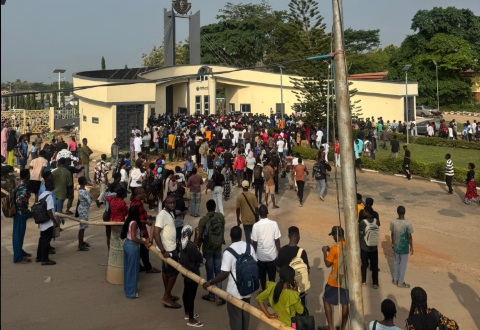
In a statement released on Tuesday by the institution’s spokesperson, Abiodun Olarewaju, the university confirmed that the decision was approved by the Senate after protests by students intensified beyond control.
According to the statement, students are to proceed on the break immediately, giving both the school and its students time to cool off after the situation escalated.
The management explained that the protests, which were triggered by concerns over a newly introduced transportation system and broader welfare issues, began to affect normal life on campus. Major roads were blocked, and some road users reportedly faced harassment as tensions grew.
Despite attempts by the university to calm the situation through dialogue, authorities said the unrest began to pose serious risks to the safety of students, staff, and members of the public.
The break, they noted, is not just a pause but an opportunity — a chance to engage in meaningful conversations with stakeholders and restore peace and order within the university community. Students were also urged to remain calm, responsible, and law-abiding during the period.
The protest itself was driven by the Students’ Union, with large numbers of students taking to the streets to demand urgent attention to transportation struggles, accommodation concerns, and ongoing challenges linked to the school’s e-portal upgrade.
At a congress held in Awo Café, the union had agreed on the protest, maintaining that it would be peaceful but firm. Their goal was clear — to push for immediate solutions, even if it meant disrupting access to the campus until their voices were heard.
Students also expressed frustration over plans to evacuate residents of Awolowo Hall mid-semester, as well as technical issues with the e-portal, which they said had delayed course registration and access to academic results weeks into the semester.
The transportation crisis, however, appeared to be the breaking point. The introduction of compressed natural gas-powered buses — donated by Oluremi Tinubu to improve mobility — instead led to long queues, delays, and growing dissatisfaction among students.
What was meant to be a solution quickly turned into another challenge, fueling anger that eventually spilled into open protest and forced the university into this temporary shutdown.
For now, the campus goes quiet — but the issues raised remain loud, waiting for resolution.