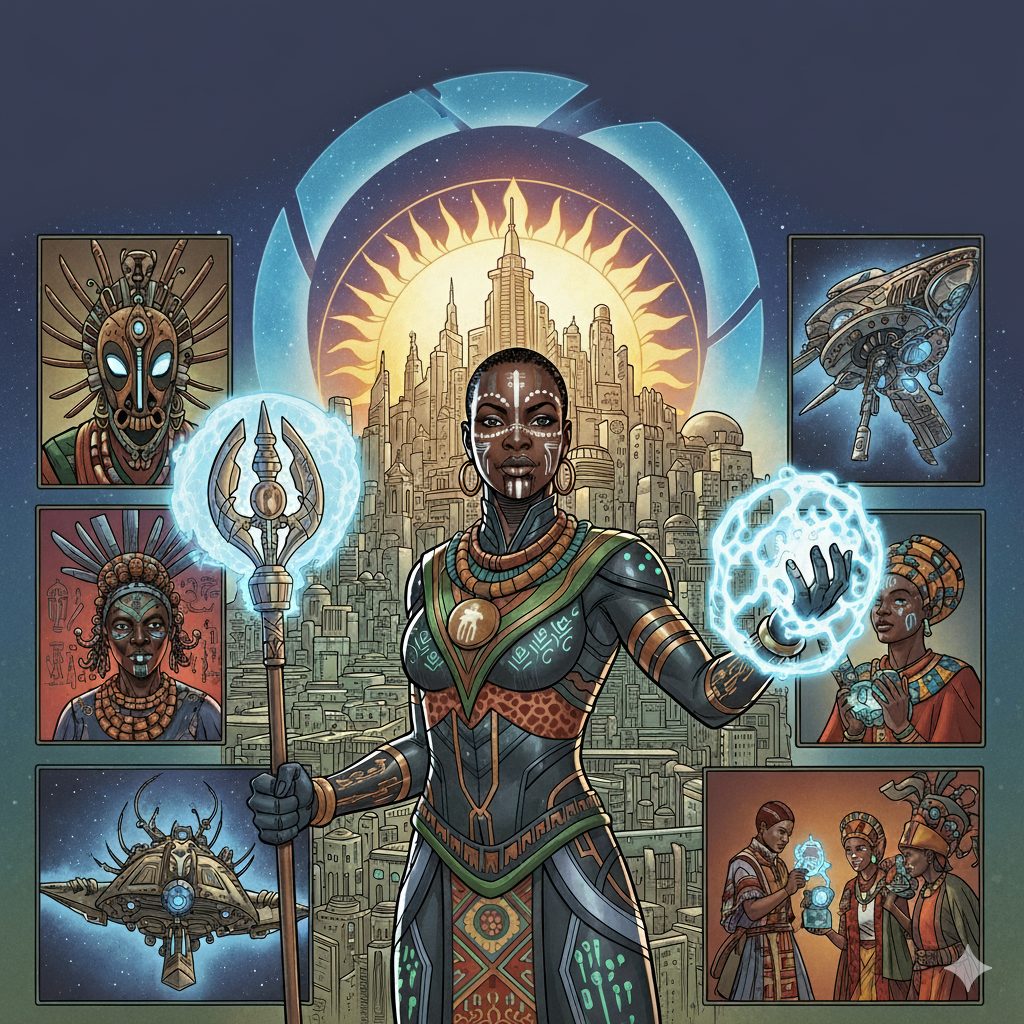
In the heart of Africa’s creative boom, a quiet revolution is unfolding on the pages of comic books and the screens of animations. Nigerian creators are weaving Yoruba mythology, Igbo cosmology, and Hausa legends into futuristic narratives that reimagine Africa not as a backdrop for poverty or conflict, but as the birthplace of superhuman strength and cosmic destiny. This movement, known as Afro-Futurism in comics, offers a new lens of self-discovery to children who, for generations, consumed stories where heroes looked nothing like them.
From Wakanda in Marvel’s Black Panther to homegrown creations like Strike Guard by Vortex Comics, E.X.O: The Legend of Wale Williams by Roye Okupe’s YouNeek Studios, and Lake of Tears by VX Animation under Somto Ajuluchukwu, black superheroes are no longer side characters, they are the narrative. This representation is more than aesthetic; it speaks to the soul of African children who now see themselves reflected in capes, cosmic battles, and heroic journeys. For a child in Lagos, Abuja, or Kano, flipping through a comic book where the protagonist draws power from Sango’s thunder or Eze Nri’s mystical wisdom is a silent affirmation: you are enough, you are powerful, your culture is valid.
Creators like Somto Ajuluchukwu, founder of VX Animation, have been at the forefront of this shift. Through projects like Lake of Tears, which reimagines local folklore with futuristic layers, and Akuko Comic Shop, the first comic book store in Lagos, Ajuluchukwu has built bridges between tradition and the global digital marketplace. Similarly, Roye Okupe, through YouNeek Studios, has taken Nigerian-inspired superheroes like Wale Williams into international spaces, securing deals with companies like Dark Horse Comics to distribute African narratives worldwide. Meanwhile, Kugali Media has collaborated with Disney on Iwájú, an Afro-Futurist animated series set in Lagos, showing young creatives that local myths can thrive globally when repackaged with vision and boldness.
The cultural significance of this movement cannot be overstated. Where once colonial textbooks and foreign cartoons erased or distorted African heroes, today’s comics restore balance by centering our deities, warriors, and ordinary dreamers. A young girl in Ibadan might find courage in a heroine who merges the powers of Oya with futuristic armor. A boy in Maiduguri may discover pride in a hero shaped by Hausa epics, piloting machines powered by ancestral knowledge. These stories nourish self-esteem, positioning African children not as passive consumers but as active participants in the narrative of the future.
As Afro-Futurism in comics continues to rise, it challenges not just the entertainment industry but the world at large to rethink representation. It is proof that imagination rooted in heritage can break borders, turning local myths into global icons. From Somto Ajuluchukwu’s Lagos comic hubs to Roye Okupe’s international publishing partnerships, from Kugali Media’s Disney collaborations to grassroots Nigerian illustrators experimenting with NFTs, the next generation of African superheroes is already here standing tall between the past and the future, reminding the world that Africa is not only history, but destiny.