
Inua Ellams, the Nigerian-born playwright and poet, has opened a new conversation about one of Nigeria’s most infamous exports 419 scams. Through his multimedia exhibit titled The 419, now on display at Somerset House in London, Ellams explores the world of email fraud not as a caricature of crime, but as a layered human story. For decades, the term “419” has conjured up images of deceit and shame, but in Ellams’ work, it becomes a lens through which we examine poverty, desperation, and creativity under pressure.
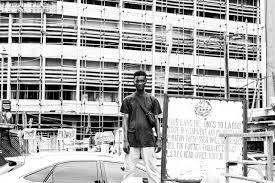
The exhibition blends poetry, photography, and performance to unearth the humanity often hidden behind digital deceit. Collaborating with photographer Oluwamuyiwa “Logor” Logo, Ellams presents striking portraits of Nigerians whose lives embody both the stigma and the survival mechanisms linked to scamming. These images, paired with a crown of interwoven sonnets, remind audiences that behind every fraudulent email lies a human being shaped by a system of inequality and fragile social safety nets.
Ellams does not glorify fraud, nor does he excuse it. Instead, he invites audiences—both Nigerian and global—to sit with the uncomfortable truth that scams flourish in broken societies. With unemployment, poor governance, and economic hardship pushing many into desperation, scamming becomes a distorted form of ingenuity, a tragic innovation born of survival. The artistry of The 419 lies in its refusal to flatten the narrative. It acknowledges the harm while probing the human need driving it.
By situating the exhibit in London, Ellams also flips the mirror back on the West, where these scam emails are received and mocked. His work poses difficult questions: Why do so many fall prey? What stereotypes are reinforced each time a scammer is exposed? And how do colonial histories and global inequalities create the very environments that make such fraud thrive? In doing so, The 419 becomes not just about Nigeria but about the world’s complicity in uneven systems of wealth and survival.
Ultimately, the exhibit insists that stories of fraud are also stories of resilience, shame, and hope. It asks us to look beyond the punchlines of “Nigerian prince emails” and instead see human beings navigating survival in a harsh landscape. Through Ellams’ vision and Logo’s lens, audiences are reminded that art is not just for beauty, it is for reckoning, for empathy, and for rewriting narratives that the world too often oversimplifies.