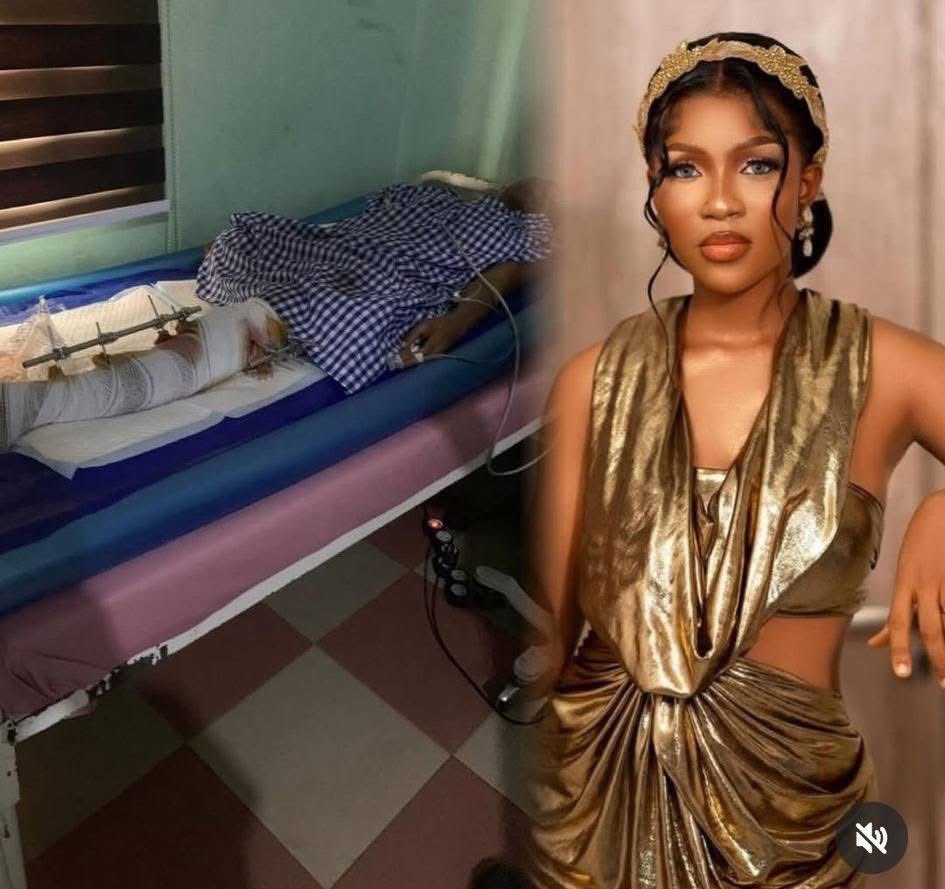
Ruth Otabor’s laughter used to fill her family’s home in Edo State. Friends describe her as kind, spirited, and deeply supportive of her elder sister, Ijeoma “Phyna” Otabor the reality TV star who captured millions of hearts when she won Big Brother Naija in 2022.
On Sunday night, that laughter was silenced. Ruth died in hospital days after being struck by a truck reportedly owned by the Dangote Group, one of Africa’s largest conglomerates. She had already endured the amputation of her leg in emergency surgery.
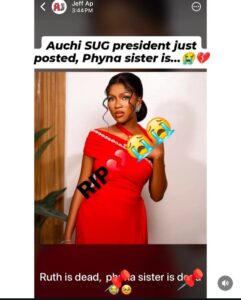
The Student Union Government president of Auchi Polytechnic, where Ruth once studied, confirmed her passing in a somber Instagram post. “We have lost one of our own,” he wrote, alongside crying emojis and the words Rest in Peace.
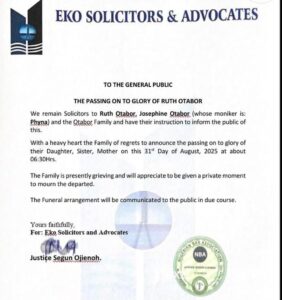
For Phyna, the loss is personal and public. Her lawyers; Eko Solicitors announced it. The reality star has used her platform not just to share her grief, but also to call for accountability.
“He has money, but he is not God,” she wrote in a post that quickly went viral, accusing the Dangote Group of trying to conceal details of the truck involved. Though these claims remain unverified, they have sparked heated debate about corporate responsibility in Nigeria.
In another message, Phyna expressed the torment of watching her sister suffer. “These past few days have been emotionally draining,” she said. “We prayed, we hoped, but…” her words trailed off, the sentence unfinished, the pain palpable.
In a statement released last week, the Dangote Group said it was “deeply concerned” and committed to covering all medical costs, providing comprehensive support, and ensuring compensation for the victims of the crash.
The company’s message of “wishing Ruth a speedy recovery” now feels hauntingly out of sync with the reality of her death. Phyna herself questioned how recovery was possible after amputation.
For many Nigerians, Ruth’s death is more than a private family tragedy; it is a mirror of the dangers that haunt the country’s highways. Heavy-duty trucks, many belonging to powerful corporations, dominate Nigeria’s roads. According to the Federal Road Safety Corps (FRSC), such vehicles are responsible for a significant share of fatal crashes each year.
Activists argue that wealth and influence often shield companies from accountability, leaving families to grieve with little justice.
On social media, messages of support for Phyna have poured in. Fans describe Ruth not as “Phyna’s sister,” but as a young woman with her own dreams and friendships. “She was so full of life,” one friend wrote. “We still can’t believe she’s gone.”
For Phyna’s family, the pain is raw. For Nigeria, Ruth’s story is now part of a larger conversation ; about road safety, about accountability, and about the value of every single life lost too soon.
At its core, this is not just about a famous name or a powerful company. It is about a young woman, Ruth Otabor, whose story ended abruptly on a road where safety and responsibility are still in short supply.