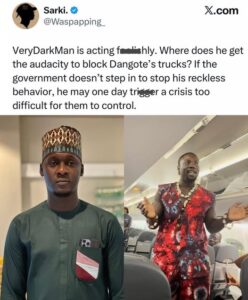
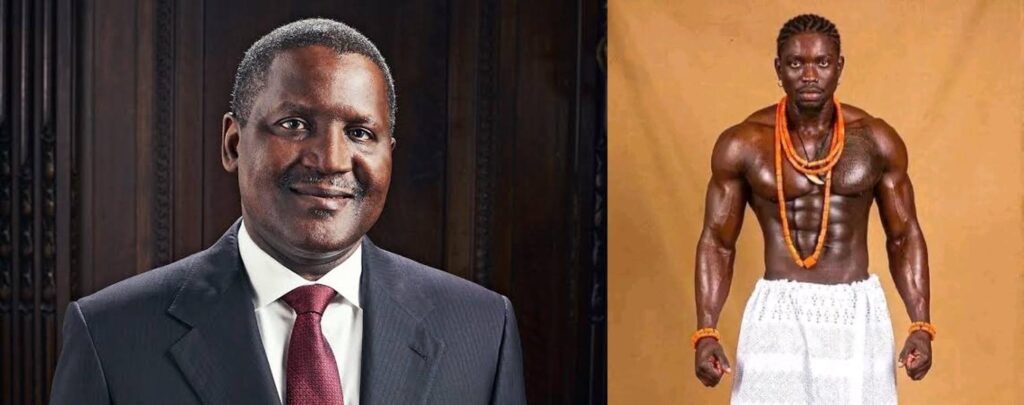
For several days, social media has been buzzing with outrage over yet another tragedy linked to Dangote trucks. The recurring accidents—some fatal—have triggered heated debates about corporate responsibility, government negligence, and the role of activists like Vincent Martins Ote, better known as VeryDarkMan (VDM), who has taken it upon himself to mobilize youths in Auchi to audit Dangote trucks for valid licenses and roadworthiness.
While some Nigerians praise his courage, others fear his approach could spark uncontrollable crises if not handled strategically. Yet beneath the noise lies a deeper, uncomfortable truth: road safety in Nigeria is a ticking time bomb, and truck owners like Dangote Group cannot be absolved of accountability.
The Crisis of Road Safety in Nigeria
Every Nigerian knows the sight of Dangote trucks—massive, ever-present, and often reckless. From highways to urban roads, these vehicles dominate the transport space, carrying cement, sugar, and other products that fuel Nigeria’s economy.
But their dominance comes at a price. Lives have been lost, properties destroyed, and families thrown into grief. In many cases, victims are left uncompensated while the system looks away. The absence of strict road monitoring and enforcement by FRSC (Federal Road Safety Corps), state traffic agencies, and transport ministries worsens the tragedy.
Road safety should never be optional. Yet in Nigeria, trucks with questionable roadworthiness continue to operate freely—sometimes without valid licenses or insurance—endangering innocent lives.
The Responsibility of Truck Owners
The Dangote Group, as Nigeria’s biggest conglomerate, shoulders a moral and corporate responsibility to ensure its trucks are roadworthy. No company that values human life should run a fleet without:
- Regular and verifiable inspections of vehicles.
- Proper training and vetting of drivers.
- Adequate insurance coverage for victims of accidents.
- Swift compensation mechanisms for families affected by tragedies.
In the short term, Dangote should publish an immediate audit of its trucks, grounding any unfit vehicles. In the long term, it must invest in modern fleet management systems, technology-driven safety tracking, and transparent accountability reports to rebuild public trust.
Government’s Failing Duty
The Nigerian government cannot continue to fold its arms while activists, rather than regulators, fight to save lives. Agencies like FRSC, police traffic units, and state ministries of transport must enforce strict compliance with road safety standards.
The question Nigerians are asking is: Why does it take an activist like VDM to expose what the government should already know? If the government fails to act, it indirectly licenses recklessness on the road.
Public outrage, like that of Aunty Adunni, reflects growing distrust: if leaders cannot secure lives from trucks, how can they secure the nation?
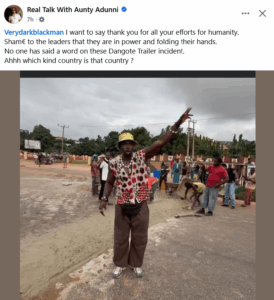
VDM’s Role: Between Heroism and Recklessness
VeryDarkMan’s activism reflects the frustration of ordinary Nigerians tired of blood on the roads. His mobilization of youths in Auchi shows that the people will not wait forever for government action.
However, while his intentions are noble, his methods must evolve. Blocking trucks could escalate into violent clashes or even be exploited by political actors to discredit his cause.
Instead, VDM should:
- Channel his movement into structured advocacy—lobbying FRSC, legislators, and the presidency with petitions and legal actions.
- Build alliances with civil society groups, journalists, and lawyers to amplify accountability.
- Mobilize public support with financial transparency, as suggested by Kehinde Kayode Lewis, ensuring his activism does not fall to compromise.
Activism without structure can win sympathy but lose momentum. Nigeria has seen this before; for VDM to succeed long-term, his movement must outlast social media trends.
Conclusion: Who Will End This Drama?
The Dangote truck crisis is more than a corporate scandal—it is a national emergency. Truck owners must enforce safety. Government must regulate with firmness. Activists like VDM must organize strategically. And Nigerians must refuse to normalize tragedy on our highways.
The question remains: how many more lives must be lost before action is taken?
Until responsibility is owned, the roads will remain killing fields, and citizens will continue to live in fear of trucks that should serve, not destroy.
👉 Now over to you:
Do you think VDM’s bold activism is the wake-up call Nigeria needs, or do you fear his method might create the chaos critics like Sarki warn about?