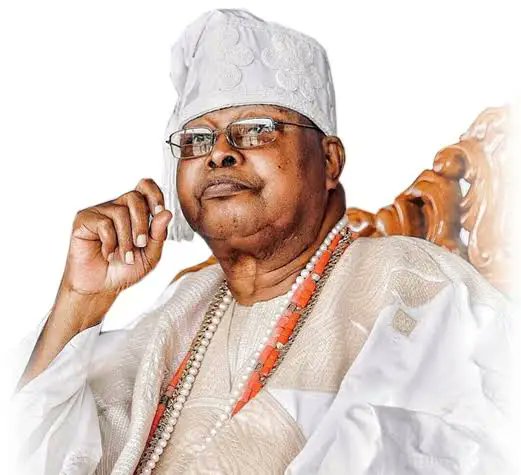
That was in 1960. It’s possible that the kingmakers anticipated their task for vigor, inventiveness, and modernism. They want change. In addition to being transformational, he was also reformative and important because of his longevity, which the good Lord bestowed upon him. He served as the Awujale of Ijebuland for 65 years before his death at the age of 91. During that time, he was able to blend office with service and controversy, color with regal splendor, and perform at high levels. He died a god, and he was born to reign.
In 1960, Nigeria was bustling with activity. The spirit of emancipation was at the top of the list. There was a strong sense of independence. The future was bright in our hands, according to men of all colors on the stump. The bug was caught by the Ijebus. There would be a new monarch to proudly and dignifiedly carry the land, surrounded by a revitalized family. The Ijebus were prepared to soar into a new and superior realm with a new king.
The Chiefs around Oba Sikiru Kayode Adetona, who were all old enough to be his father or grandfather, put him to the test as soon as he took office. Because he was young, the Chiefs believed they could push him around, hold him by the nose, pocket him, and guide his course. They quickly discovered that there was only one monarch, and that he was bold, independent, young, firm, and clear-sighted. The combination of youth and bravery had given the Ijebus an immediate symbol, marking the start of his people’s love for him.
The nation became more interested in him as a result of that brave deed. From the beginning, he assumed control of his crown and maintained it until the very end. His narrative started when a new ruler arrived in town.
When I was a little child growing up in Ijebu-Ode, Oba Daniel Adesanya, his predecessor Gbelegbuwa II, would go see Alhaji Kadiri Borokinni, the Chief Imam of Ijebuland, who lived across the street from my grandfather’s house at Ita Ntebo. When the monarch appeared, I saw that every man in the area fell to the ground, and every woman knelt down. That was authority and respect. The king was held and handled with such devotion that it was a sight to behold. It was uncommon to see the king back then.
Therefore, seeing the king when he came around as a small boy was a unique blessing for me. The town crier, who sounded the gong to announce the king’s secret words or called the town for a king’s assignment—typically road construction or community repairs—was the city’s primary means of communication with the king. The king’s area of control extended throughout the city, and he resided in his palace in the heart of the town. The king was a very, very far away dot from me.
Coincidentally, whenever Oba Adetona visited Ibadan for cabinet or House of Chiefs meetings or other social events, he would temporarily stay on Adeniji Street, just across from my parents’ home. Other than knowing that my parents would go to pay respects to the monarch whenever he was in the area out of obligation and habit, I was never aware of what went on in the house. All I could see was that, even from a distance, the king always strolled confidently to his car and exuded elegance. He was tall, beautiful, and stately. He had a certain vibe about him. You looked at him with respect, adoration, and gratitude because of his carriage. From a distance, I hopped his carriage.
A circle of devoted young men surrounded Oba Adetona in addition to the statutory Chieftaincy councils that were at his disposal to offer support and advice during his tenure in office. These individuals served as an inner court to exchange ideas, act as business acolytes, or provide play, a bon viveur, and a schoolboy atmosphere as a way to release youthful exuberances. Recall that, regardless of the protection to the crown, youthfulness would manifest itself because he ascended to the throne at the age of twenty-six. Among them was a little bit of Las Vegas. Everything they did stayed in its original location. The community scowled at them and took a very gloomy view of their behavior when their excesses occasionally made their way to the town.
But they were limited to scowling and complaining. He persevered despite the land’s disapproval.
He recognized early on that the crown had a great deal of prestige and responsibility, but it lacked the funding necessary to maintain and grow the position.
The situation had shifted. For instance, the monarch wanted to come out and bring the crown closer to the people, while the people yearned to see the king. A large wardrobe was necessary for this. That was modestly catered for and costly in and of itself. He would have to fend for himself or go cap in hand pleading with the state for financial support. The latter was his choice. The land resisted his attempts to operate a business. Being involved in commerce was completely humiliating to the position and anathema to the king, who was also an Awujale. There was no turning back from the stormy resistance to the king and the loud noise of his unorthodoxy.
The young monarch refused to back down. He conducted business successfully, which may have contributed to his eventual financial independence and set the stage for his golden period.
The rise to power of the Awujale may have taught the Oyo Kingdom some valuable lessons. Like the Ijebus, they also elected Oba Lamidi Adeyemi, a young, intelligent man, as monarch in 1970. Oba Adetona sought guidance from the late Chief Emmanuel Oyedele Ashamu, the Maye of Oyo, a prominent figure and businessman in Oyo, behind closed doors. He was supposed to take the initiative and organize well-known Oyo men to create a private and encouraging account that the young Alaafin could use. The purpose of this fund was to help the Alaafin become more independent and to give him more food. Oba Adeyemi loved Awujale Adetona because of this counsel and the way the idea was pursued. Their monarchs’ formidable powers never publicly argued about anything.
The astute observer could have noted that there was never any overt conflict between the Alaafin and the Awujale over territory.
Now that he was financially independent, his character could be shown. The state was not going to hold him accountable. His voice would boldly cut through ice, thick, and thin. He was to be a man of his own creation, a courageous orator, a monarch of his own fate, a fearless leader of his subjects, and a king who was forward-thinking and modern. In addition to carrying out his duties as king on a daily basis, he was going to diligently consider, handle, and shape his duties in order to serve his constituents.
Royal fathers are frequently accused of being apolitical or subtly political, but it was well known that Oba S.K. Adetona was involved in politics and that his views frequently conflicted with those of his kingdom. Here, however, was his distinctive mark. He was prepared to stand by himself and oppose the grain of the land. He just escaped their vice by the scruff of his neck since the political forces were desperate to tame him for this reason. His deposition was saved by fate.
Later in life, he would rise to urge coalitions of parties to help triumphs and progress, to calm egos to help compromises, to build bridges across the nation, or to reconcile forces within and between state and national political rivalry. Behind the scenes, he was a strong man who could enter politics without any problems. In times of national crisis, he was truly a guy to turn to.
When civilians or politicians were persecuted, they frequently sought safety under his protection. To some, the Awujale stood protectively upright, defying the authorities to impose arrest beneath him, while others sought refuge in his castle. They were afraid.
Despite lacking an army or police force, the Awujale’s moral strength and position prevented him from being overthrown. Awujale was not convinced, in contrast to General Abacha, who had intimidated numerous traditional and opinion leaders into agreeing to a dubious movie on false accusations of a “coup” against his deputy, General Oladipo Diya. In addition to not being convinced, he was frank in his request that Diya’s life be saved in front of the head of state. In this sense, Awujale was a brave and unique voice.
When the late Olubadan of Ibadan, Oba Oloyede Ashanike, visited his palace, he once gazed at a small Abacha and exclaimed in the salty Ibadan dialect, “it is you, this small man, that is so tormenting and fearsome.” Seeing Abacha as a featherweight must have made Awujale feel the same way. A featherweight and a heavyweight would never be paired for a physical combat by the Boxing Council. Both literally and figuratively, Awujale was a heavyweight. Diya was also spared by fate, and his execution was postponed.
Now that he was financially independent, he addressed the problem of his home.
He discovered his palace to be outdated, run-down, unsuitable, and uncomfortable. It is easy to see how his exposure abroad and his work in the cabinet would have brought the palace’s shortcomings to light. Since the land was slow to respond, he moved ahead and, using his resources and independence, replaced the palace with a residential home at Igbeba, Ijebu-Ode, that would suit his tastes and function as his administrative office. He had planted a seed. After many years, the land realized its mistake and banded together to demolish the ancient palace and construct a new, contemporary one for the Awujale.
He was involved in the planning, design, construction, and decoration of this new palace. This came across as a man with a keen sense of taste and attention to detail. He made provisions for the future. In order to fulfill its historical presence in the town center, he desired something grand and exquisite—a appropriate landmark. He made the decision that individuals who came after him would have a fantastic place to live and work without having to pay a lot of money. His goal was to establish a position of authority and distinction.
In Ijebu-Ode, the Awujale’s Palace is a landmark structure. Oba Adetona relocated to a new home in his twilight years that was small enough for his responsibilities and appropriate for his immobility. He exhaled his final breath here.
Looking back, he acknowledged that he needed to grow up to be an Oba. In his memoirs, he summarized his reign as follows: “There were first, the formative years, then the turbulent years, and finally, the years of steady sail and growth.” He needed to plan and act wisely as he began his years of success and steady sailing. He intended to restore the crown and establish the highest standards for duty.
He began by addressing the kingdom’s authority, the Ijebu Traditional Council. Through effective leadership, he intended to unite the Ijebu dominions, which were dominated by history, culture, and geography, into a single, unbreakable Council.
Council members provide both grassroots mobilization and upper-crust communal leadership. The Awujale occupied the top spot and was associated with all of the Council members, who are the monarchs of their separate Ijebu territories.
Notwithstanding his absolute power, he maintained the Council’s unity by upholding democratic norms; established a lasting relationship between them; established a peer assembly to exchange ideas and experiences; promoted a growth territory through constructive competition; strengthened their treasury and provided them with financial support from an ever-increasing financial purse. This powerful faction supported the Awujale’s leadership, preservation, and dominance via tradition and tact. They continue to be the highest echelon of Ijebuland’s leadership, representing solidarity and a unified front to approach the government. Among Nigeria’s traditional councils, the Ijebu Traditional Council is regarded as an example. The Awujale was undoubtedly the guy behind the Council.
The age groupings in the land, referred to as the Regberegbe, came next for the Awujale. A hierarchical chain of cohorts makes up the Regberegbe community. The Regberegbe has traditionally been an age-related band, but Awujale Adetona gave it a fresh lease on life by turning its yearly gathering in Ojude-Oba into an international carnival. We witness splendor when the cohorts magnificently turn out at the Ojude-Oba once a year. However, there is much more to the yearly spectacle. The different groups come together to strengthen their ties as citizens, to promote the advancement of the land, to remain proud of the land, and to stand firmly behind their king.
The Awujale regained vigor around two years ago when his health was deteriorating and the Ojude-Oba was drawing near. Like an elixir, the Ojude–Oba provided a revitalizing boost. He had his attire, which was typically made from fabric that was donated annually by the late Otunba Subomi Balogun, sewn. He would be there. He radiated happiness and smiled throughout the ceremony. You would never have realized how seriously ill he was.
As a result, men and women came to honor the Awujale once a year, all extravagantly clothed, swaying to music and displaying a swagger. Together, they create a unique personality, a kaleidoscope of color and flair, that draws crowds of tourists to Ijebu-Ode every year.
The focal point of the event is the Awujale, who engages with the attendees, calls them to a shared goal, and motivates them to give back to the community. He acknowledges that the world has come to watch and celebrate with the Ijebus, therefore he addresses the world there, much like the Pope does in his urbi et orbi. Ijebu is the place to make merry, and Awujale Adetona was cheerful. They performed on this day.
When the late Prof. Akin Mabogunje proposed a plan to reduce poverty in Ijebuland, the Awujale enthusiastically accepted it and saw it through to completion. He gave it capable leadership, first from the late Chief A.K. Degun, the previous Head of Service for Ogun State, and subsequently from another administrative mainstay, Chief Olu Okuboyejo.
Through revolving loans and concessional financing, the Awujale became the face of the initiative to combat poverty, boost the local economy, and distribute prosperity. This program has significantly improved business skills and decreased poverty in Ijebuland. It is cited by academics as an inspiration and a brilliant illustration of a local plan to reduce poverty and maintain economic progress. A financial plan of this kind for the average person to foster wealth could not be further from grassroots development.
No one in Ijebuland participated in fund-raising events for Ijebu causes such as Awujale Adetona. He led from the front, made a significant contribution, supported deserving projects, and served as both the main fundraiser and a cheerleader. Examples include the restoration of St. Saviour’s Cathedral church, the Central Mosque in Ijebu-Ode, the Awujale Palace, the Ojude-Oba Arcade, and, more recently, the Vice-Chancellor’s lodge at Olabisi Onabanjo University (OOU), Ago-Iwoye. He expressed his dismay at the Vice-Chancellor’s lodge, questioning how a university could function without the Vice-Chancellor having a formal residence on campus. The gauntlet was taken up by him.
He confidently told me that he would organize 10 to 15 people to acquire the necessary monies to construct the building. With ten contributors, he finished the building in record time. If he wanted to, he might as well have used one. The Awujale was that. He conveyed the joy of giving by doing it with ten.
He had some philosophical beliefs that shaped who he was. There was a time I visited him in the palace. Unaccompanied, I passed the building’s door, the hallway, and the administrative offices before approaching his secretary, who let me in.
I worried that he had no security surrounding him when I sat down and that I had crossed the building to him without any problems. He told me that excellent governance is the best security for any man in power, and that security may be both apparent and unseen. He believed that he could not be hurt physically. He cried, “O se ewo!” Abomination. For me, that idea did not explain perverts. He dismissed the issue when I brought it up. He was motivated by his sacred mission, and after dedicating himself fully to his people’s advancement, he adopted the belief that they would defend him before, during, and after an attack.
He believed that the remedy for breaches in personal security was strong governance.
He once attended an event in Ibadan as a VIP guest. It was rare for him to arrive so late. I saw that he was wearing slippers instead of shoes as he greeted the receptionist outside his car. He drew me aside as I was whispering my observation, explaining that he had become terribly ill over night and that his feet were so swollen that a doctor had been called right away. The prescriptions for medication and rest were strict.
He wore the slippers because his feet were so swollen that they would not fit into his shoes. He defied his doctor’s orders to stay in bed and traveled to Ibadan to attend the event, despite the fact that it was extremely dangerous for him. I responded that, considering his health, he was under no need to go. He dismissed me and claimed that regardless of his health, he was obligated to fulfill his duties when they arose. That sense of obligation and accountability was innate. He was destined to rule.
He requested me to see him one day. I readied myself for the customary discussion of state, national, and international issues. “Kolade, I hope that ideas are already being given to who will succeed me when I am gone,” he stated as he sat down. Since I’m not a kingmaker, the topic took me by surprise. I muttered to myself that I wasn’t there to talk about his death. According to him, the Awujale office is focused on the past, present, and future. For me, that interconnectedness was a novel idea.
He was obviously different from the rest of us, and I could see it. Aware of his imminent death, he was ahead, thinking of the office behind him. Other than marveling at how seriously he took his task, I had nothing to contribute. He then made a full circle and discussed leadership. I was informed that he was wearing a rein around his neck. My senses were all stimulated, confused. He reiterated that if he did something wrong, only a select few could pull the rope around his neck. The purpose of the pull was to get him to think, to warn him, to give him contradictory advice, and to lead him.
According to him, a hunting dog’s survival depends on its ability to react to a recall whistle. He then looked up and declared that I was one of his reins. That was humble. Being seen as an adviser by that far-off dot to the crown is incredibly humble.
The late Prof. Adebayo Adedeji, the former Executive Secretary of the United Nations Economic Commission for Africa and Asiwaju of Ijebuland, personally recommended that we meet formally. I contributed to one of Adedeji’s foundational works. In the United Kingdom, Zed Publishers released this. The Awujale requested that I come over and be interviewed for the job because they were looking for a publisher.
How were we going to approach it, he inquired? He was satisfied with the profile I gave him. He asked me what I needed to make it successful and signed me on right away. I informed him that I needed reassurance that he would dedicate time and effort to the project. That was acceptable to him. “Next,” he said. I informed him that in order to give the book its proper authenticity, I needed the truth—the pure truth and nothing else. He promised that his integrity was at stake and that he would only write or speak the truth. “Next,” he repeated.
I lifted my head, met his gaze, and told him that I didn’t appreciate being kept waiting and that I would prefer him to meet his appointments. He laughed and dismissed my insult, saying that time was valuable and that we would meet as soon as we decided on a time. “Next,” he repeated. He promised to hold me to my word once I ran out of things to say. He adhered strictly to his word during the activity. As a result, I was able to get to know him intimately, learn from him, and develop a friendship.
When the book was written, I begged a favour from him. The unseen hands working on a book, my coworkers in the office, were eager to meet him. I politely requested that he give them a fifteen to twenty minute audience. We were all thrilled about the chance when he consented. Surprisingly, he offered lunch on the scheduled date in addition to the meeting. We were completely overwhelmed. As we approached the table, he gave each of us a dish and insisted that he was going to feed us, much to our shock and discomfiture.
He whispered to me when I objected. He claimed that since we had helped him with the book’s creation, it was now his turn to help us when he arrived at the palace. After that, he served us all. My colleagues trembled at the table in awe, despite the fact that the food was delicious. We learned a lesson we will never forget.
He didn’t read very much. He used to say to me informally: I know people, and you know books. He did, in fact, know people. There was a constant flow of people visiting the castle, and each one had their own stories, which I believe will be collected into countless volumes. In any case, books are human beings’ stories and records—living souls.
He was inundated with anecdotes from the never-ending flow of guests. He had the ability to read people like a book. When someone delivered him a document, he read it slowly or had it read to him. He listened carefully and meticulously as it was read, and as a result, he was able to catch up on both the substance and the subtleties and spot inconsistencies with ease. He was impossible to play. His mind was sharp and analytical. It nearly made you question if he was trained in law. That penetrating mind was all it was.
His continuous concerns were leadership and governance in many areas of our society. He believed that if we had the right people in charge of the country, we would undoubtedly make steady progress. Then, after a presentation, renowned historian Prof. Toyin Falola delivered a suggestion. He recommended that he enroll in a university to deal with the issue of governance. The challenge was accepted by Oba Adetona. It seemed as though he had been waiting his entire life to establish a specialized organization with an emphasis on governance and place it within a university for supplementary education.
A Professorial Chair in Governance was established in the Department of Political Science at Olabisi Onabanjo University, Ago-Iwoye, with assistance from the late emeritus Prof. Ayo Banjo, former Vice-Chancellor of the University of Ibadan, Prof. Saburi Adesanya, Prof. Ganiyu Olatunde, former Vice-Chancellors of the Olabisi Onabanjo University, and a few others. Awujale Adetona provided all of the funding. And that was only the start.
He frequently discussed how Nigerian society suffers from poor leadership. His school, the Oba Sikiru Kayode Adetona Institute for Governance Studies at Olabisi Onabanjo University, was born out of this distressing suffering. It is a huge project situated on a large plot of land at OOU. Its main tenet is that it will produce mature students who can practice public policy, administration, governance, and leadership both domestically and abroad. This institution is a unique gift from Oba Adetona to the country and the world. Although it hasn’t fully blossomed yet, I am reminded that Alfred Nobel’s will didn’t materialize into a globally recognized prize award until five years after his passing.
In Nigeria, no single donor has contributed as much to a public organization. Scholars have already taken the initiative to research him, examining his methods for reducing poverty and governing communities in an effort to perhaps solve some of our nation’s enduring issues. The study of the Awujale and many others will continue forever because academia has no boundaries.
The Awujale found intergenerational friendship in the youthful “Turks” who suddenly encircled him as his old guard started to dwindle or become incapable due to aging. When he took the throne, he was the youngest among them. He was the eldest in the group, which ultimately led to his death. In a reversal, he could have passed for their father, grandfather, or older brother. He rose to become a magnificent, fatherly monarch who was further admired for his insight, knowledge, and good understanding of human nature. He was also regarded as a mysterious character. His exceptional qualities—integrity, sagacity, courage, kindness, and jolly—attracted the attention of both his people and non-indigenous people.
He was always a pleasure to talk to. He delighted as a raconteur with his keen memory and depth of understanding.
The Awujale had a cheerful, pleasant, and captivating personality for the most part. However, I have a suspicion that while he had a bright mind in old age, some of his childhood acquaintances experienced various stages of dementia. And because of their poor condition, they made mistakes that he could not understand or accept. The Awujale quickly became irritable and disassociated almost violently and irreparably, ostracizing anyone who crossed the boundary, whether they were an ally, friend, or blood.
Ever-organized, Kabiyesi prepared his bed and resting place as death drew closer, remained steadfast in his religious convictions, and bravely faced death. Shortly after sunset on Sunday, July 14, 2025, darkness permanently closed his sight. There was no longer the mighty Awujale. I write in remembrance of him as a witness to his story of using his throne to make history.