
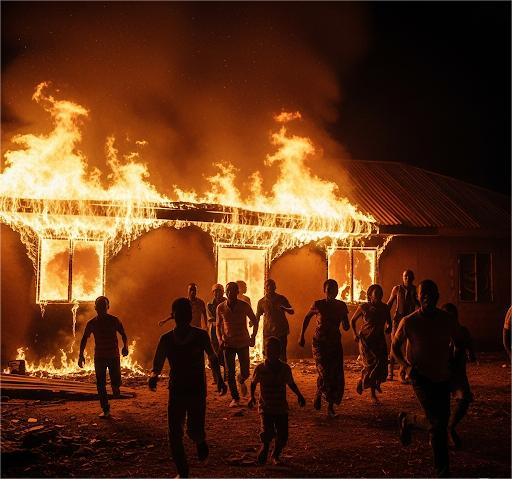
It was a night of unimaginable sorrow in Yobe State when a fire outbreak engulfed a family’s home, claiming the lives of two young children. The blaze, which started in the late hours of Sunday, spread quickly through the residence before neighbors could mount a rescue effort. Despite desperate attempts to save those trapped inside, the inferno’s intensity proved overwhelming. By the time the flames were subdued, two innocent lives had already been lost, leaving their parents inconsolable and their community in mourning.
Witnesses described the incident as both swift and devastating. “We tried to break into the house, but the fire was too strong,” said one resident who had joined others in a frantic rescue attempt. The children, who were said to be asleep when the fire started, had little chance of escape. While some members of the family survived, the loss of the two children has cast a heavy pall of grief over the neighborhood. The charred remains of the home stand as a painful reminder of the tragedy, as neighbors and sympathizers troop in to console the bereaved family.
Preliminary reports suggest that the fire may have been sparked by an electrical fault, though investigations are still ongoing. Fire incidents linked to faulty wiring and poor safety standards are not uncommon in many parts of Nigeria, where limited infrastructure often leaves families vulnerable. In Yobe and other northern states, weak access to firefighting services compounds the danger. Many communities are left to fend for themselves in the face of such disasters, relying on buckets of water and sheer determination to fight back flames that professional equipment could have easily contained.
Beyond the immediate grief, the fire raises broader questions about safety and preparedness in rural and semi-urban communities across Nigeria. The tragic loss of two young lives underscores the urgent need for improved fire safety education, better housing standards, and stronger governmental support in emergency response. Community leaders are already calling for preventive measures such as regular electrical checks, provision of fire extinguishers, and the establishment of rapid response units to prevent similar disasters in the future.
For now, however, the focus remains on the grieving family and the community struggling to come to terms with their loss. Candlelight vigils are being planned, and local religious leaders have offered prayers for the departed children. As Yobe mourns, the tragedy serves as a somber reminder that beneath every headline statistic lies the human cost of fragile systems and overlooked safety measures. The memories of the two children will linger, urging both leaders and communities to act before another fire snuffs out more young lives too soon.