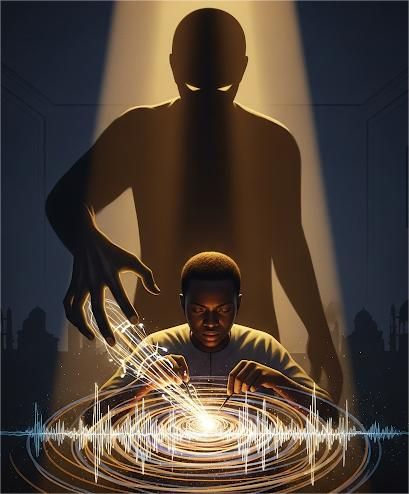
In the flashing lights of Nigeria’s entertainment scene, where music videos trend overnight, skits go viral by dawn, and blockbuster movies flood cinemas, one crucial question often gets lost: who owns the work? Behind every catchy hook, every scene-stealing performance, and every viral line is a creator, often unpaid, unknown, and unprotected. Copyright in Nigeria is supposed to safeguard artists’ intellectual property, ensuring they retain rights to their creations and receive royalties when those works are used or monetized. Yet in practice, the system is either too weak, too complicated, or too ignored. For most creators, particularly in music and film, securing ownership is like chasing wind. The dream of getting paid for your work over time, across platforms, and beyond your control is one that only a few realize.
The root of the issue is both structural and cultural. Many artists are not even aware of their rights. Contracts are often signed in desperation, verbal agreements, handshake deals, or ambiguous paperwork that favors producers, labels, or platform owners. Young musicians, eager to “blow,” trade their masters for visibility. Screenwriters and directors surrender all rights the moment they hand in a script or step off set. And with streaming platforms and digital stores booming, unregistered works are quickly exploited by middlemen. In Nollywood, actors often get paid a one time fee with no backend royalties, regardless of how many platforms or countries the film travels to. It’s not uncommon for a creative’s life work to become a company’s lifelong asset.
Royalties meant to be the lifeline of long-term creative income are nearly non-existent in Nigeria’s entertainment economy. While global bodies like ASCAP, BMI, and PRS manage performance rights for artists abroad, Nigeria’s equivalents like COSON (Copyright Society of Nigeria) have been mired in controversy, in-fighting, or poor enforcement. Many broadcasters, event organizers, and streaming companies do not pay royalties consistently, if at all. The result? Our legends die broke. Our rising stars hustle forever. Our veterans fade without reward. It is a system that glorifies the output but forgets the person behind the pen, mic, or lens.
This neglect goes beyond individual losses; it’s a cultural wound. When creatives do not own or profit from their work, there is little incentive to invest in originality. Art becomes disposable. Trends are recycled. Creativity is reduced to a survival tool rather than a legacy. Worse still, this opens the door to piracy and exploitation, foreign companies repackage Nigerian art abroad without credit or compensation, while local marketers mass-produce content they did not create. Without strong enforcement and education on copyright and ownership, the Nigerian entertainment industry risks losing not just money, but memory, its history, stories, and voices.
But there is hope. A new generation of creators is rising, tech-savvy, self-managed, legally aware, and unafraid to challenge contracts. Digital distribution now allows artists to own their masters, publish independently, and track analytics. Advocacy groups, entertainment lawyers, and collective bargaining organizations are emerging. Still, lasting change requires a deeper cultural shift: valuing the intellectual property as much as we value the performance. Until then, the Nigerian entertainment dream will remain bittersweet, a place where talent can shine bright, but ownership is always up for grabs.