
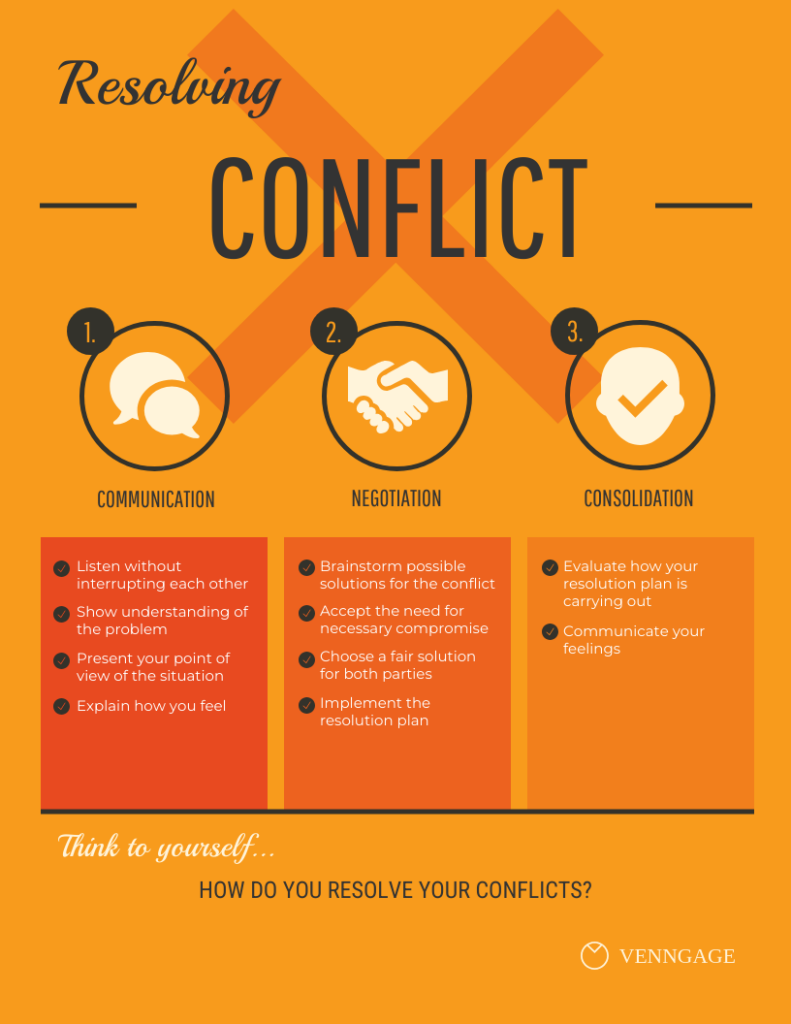
Know the Primary Cause: the fundamental cause of the conflict is the first step to effective conflict resolution. To identify fundamental problems, such as differing values, miscommunication, or unmet needs, one must go beyond surface symptoms. Managers are capable of addressing real problems instead of mere symptoms by comprehending the core of the issue.
A candid and open communication with all parties involved is essential in order to discover the fundamental cause. Assigning probing questions, actively listening, and establishing a safe environment where employees can voice their concerns without fearing retaliation are some examples of this.
Open communication: To resolve conflicts, open communication is essential. Employees should feel comfortable talking about their problems with management and with each other. In order to ensure that issues are addressed before they become serious issues, it can be beneficial to promote a culture of dialogue and transparency.
By allowing conflicting parties to listen to one another and express their points of view, managers should foster discussions between them. Through this process, misunderstandings can be resolved, common ground can be found, and a mutually acceptable solution can be established.
Mediating and Facilitating: A neutral third party, like a manager or HR professional, may mediate conflicts to ensure all voices are heard and reach a resolution, focusing on the issue and encouraging collaborative problem-solving to preserve workplace relationships.
Collaborative Problem Solving Implementation: A powerful method of conflict resolution is collaborative problem-solving. This approach encourages all parties to collaborate to come up with a solution that satisfies everyone’s needs instead of adopting a win-lose mentality. To come to a consensus, negotiating, brainstorming, and compromising may all be part of this process.
Managers can give employees the opportunity to take ownership of the solution, which can result in more sustainable and satisfying outcomes, by enabling them to participate in the problem-solving process. Additionally, collaborative solutions tend to enhance a feeling of teamwork and cooperation, which contributes to a more positive work environment.
Clarifying Policies and Expectations: For avoiding and resolving conflicts, clear policies and expectations are essential. Employees should be aware of what is expected of them in terms of communication, teamwork, and behavior. When conflicts arise, a framework can be established by establishing a code of conduct and conflict resolution policy.
Training managers and employees on conflict resolution techniques can also be advantageous. Companies can reduce the likelihood of conflicts escalating and guarantee that issues are resolved quickly and effectively by equipping staff with the abilities to handle conflicts constructively.
Positive work environment: A significant reduction in the frequency of conflicts can be achieved through a positive work environment. A culture of teamwork, respect, and inclusion is part of this. Through respectful conduct and encouraging cooperation, managers should exemplify.
A healthy workplace culture can also be strengthened by identifying and rewarding positive behavior. When workers feel respected and valued, they are more likely to engage in constructive communication and less likely to conflict.
Promptly Addressing Conflicts: Addressing problems immediately is one of the most crucial elements of conflict resolution. Resentment, lower morale, and a more difficult resolution process can result from leaving conflicts to continue. Managers should be proactive in detecting potential conflicts and intervening promptly to avoid escalating the situation.
Companies can maintain a positive work environment and prevent minor problems from becoming major disruptions by quickly addressing conflicts.
For maintaining a productive and cohesive work environment, conflict resolution is a critical skill. Business leaders can effectively handle conflicts and turn them into opportunities for growth and improvement by recognizing the fundamental causes of conflicts, promoting open communication, mediating disputes, establishing a collaborative problem-solving culture, and encouraging open communication. Conflict resolution can improve relationships, improve team dynamics, and contribute to a more successful organization if it is properly handled.
#naijastreetmatters
To see more of our content, like, comment, and subscribe