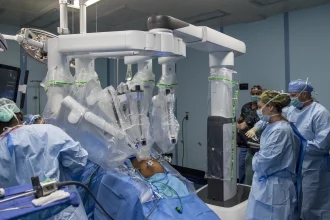
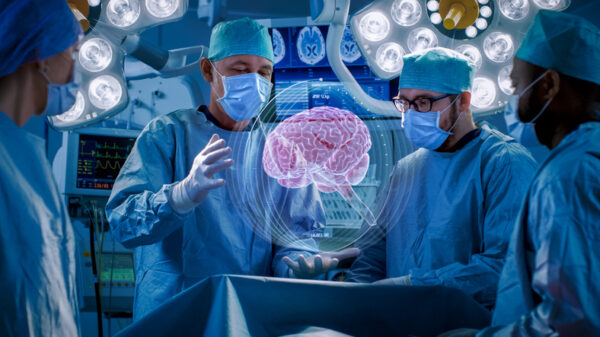
AR-Assisted Surgery allows surgeons to overlay 3D images of patients’ anatomy during surgery, providing real-time insights into critical structures like blood vessels, nerves, and organs. This technology also aids in performing minimally invasive surgeries by offering detailed visuals that guide surgeons through tiny incisions, reducing recovery time and tissue damage.
In medical training and education, AR helps medical students and professionals visualize complex anatomy in 3D, enabling immersive learning experiences. Virtual Anatomy Learning tools like Complete Anatomy provide interactive models of the human body, allowing students to study organs and systems in unprecedented detail. Simulated Surgeries allow students to perform virtual surgeries, providing hands-on practice without risk.
Patient education and empowerment are another significant benefit of AR. It can help doctors explain complex conditions or treatment plans by displaying 3D models of the patient’s anatomy, leading to better decision-making and adherence to treatment protocols. AR can also be used in rehabilitation and physical therapy, creating interactive exercises that guide patients through movements and provide real-time feedback.
Augmented Reality is also being used in diagnostics, such as CT scans, to locate tumors, fractures, or other issues more accurately. Applications like AccuVein use near-infrared imaging and AR to project a map of veins onto the skin’s surface, helping healthcare professionals find veins for injections or blood draws with greater precision.
In mental health treatment, AR is used in exposure therapy, helping patients confront fears or triggers in a controlled AR environment. Additionally, AR applications can create calming environments for meditation, relaxation, and stress relief, helping patients manage symptoms of anxiety or depression. As AR technology continues to advance, its role in healthcare will likely grow, leading to even more innovative applications that improve patient care and outcomes.