Marriage Customs in Igbo
Matrimony is a multi-phase procedure with multiple rites in Igbo culture. The Igba Nkwu, or wine-carrying ceremony, is one of the most important occasions. Wearing traditional clothing, the bride searches among the guests for her fiancé while holding a cup of palm wine. When she finds him, she bows down to him and offers him the wine, which he accepts as a sign of their engagement. This gesture is a potent representation of the bride’s devotion to and regard for her future spouse. The formalization of the couple’s union is marked by the elders bestowing blessings upon them.
Yoruba Customs Regarding Marriage
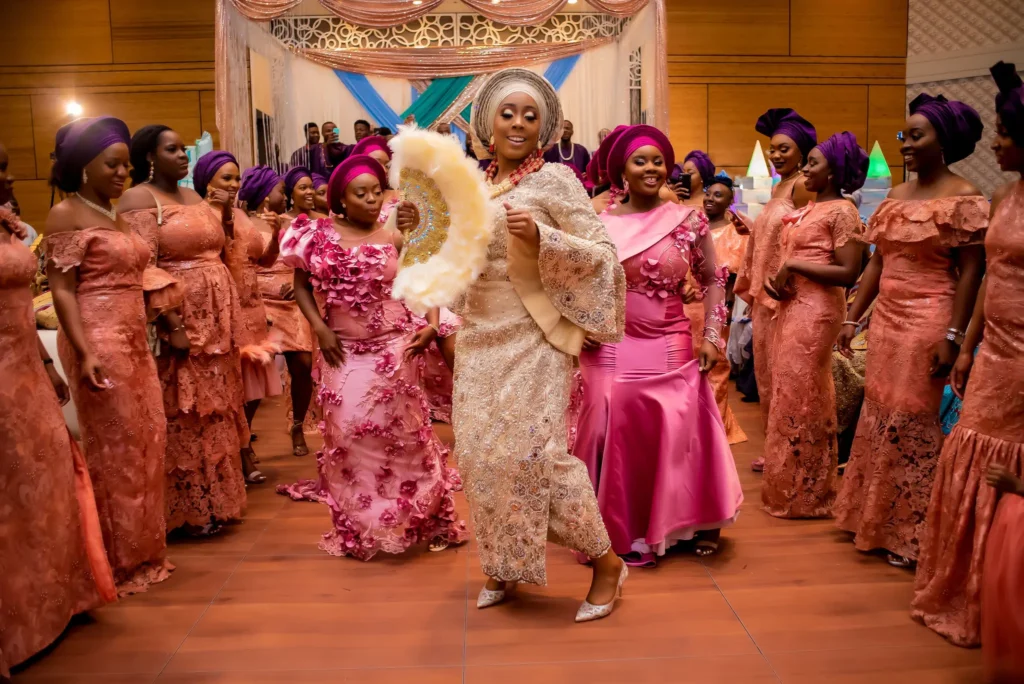
The traditional Yoruba marriage ritual called the engagement is a vibrant and exuberant event. The bride’s family receives gifts from the groom’s family at the start of the ceremony. These gifts frequently consist of cash, clothes, and food. The bride’s family then calls her out to meet and be blessed by the groom’s family. The letter reading, in which a member of the groom’s family reads a letter of intent asking the bride to marry him, is one of the main customs. The bride’s family then reacts by expressing their acceptance. Next, as a sign of respect and preparedness for marriage, the bride and groom kneel before their parents to receive blessings.
Traditions of Hausa-Fulani Marriage
The family of the bride and groom frequently arranges marriages in Hausa-Fulani culture. The bride’s family receives gifts from the groom’s family, including jewels and clothes, at the Kayan Zance, which marks the start of the procedure. The Islamic custom of the actual wedding ceremony, called Fatihah, entails the community and families of the couple coming together at the bride’s house or a mosque. Prayers are said for the couple when they agree and sign the Sadaki, or marriage contract. The bride and groom’s representatives, who are mostly male family members, attend the ceremony on their behalf rather than the actual couple. The pair is regarded as married following the Fatihah, and festivities take place.
Efik Customs for Marriage
The Efik people of Nigeria have a distinctive marriage custom known as Mbopo, which involves the bride being sequestered. The bride spends time in seclusion prior to the wedding, receiving guidance and teachings from more experienced women regarding marriage, parenthood, and womanhood. This time, which can range from a few weeks to several months, is intended to help the bride get ready for her new position as a wife on all levels, mentally, emotionally, and physically. The bride and groom wear lavish traditional garb, and the actual wedding ceremony is highlighted by traditional dances, music, and feasting.
Ultimately, Nigerian marriage customs are as varied as the nation’s ethnic groups, but they ultimately center around the values of respect, civic engagement, and cultural pride. Beyond merely commemorating a couple’s union, these customs uphold the cultural values and social bonds that have been passed down over the years. Marriage customs in Nigeria, such as the Hausa-Fulani Fatihah and the Igbo wine-carrying ceremony, are an essential component of the country’s cultural legacy.
Naijastreetmatters
To see more of our content like, comment and subscribe