
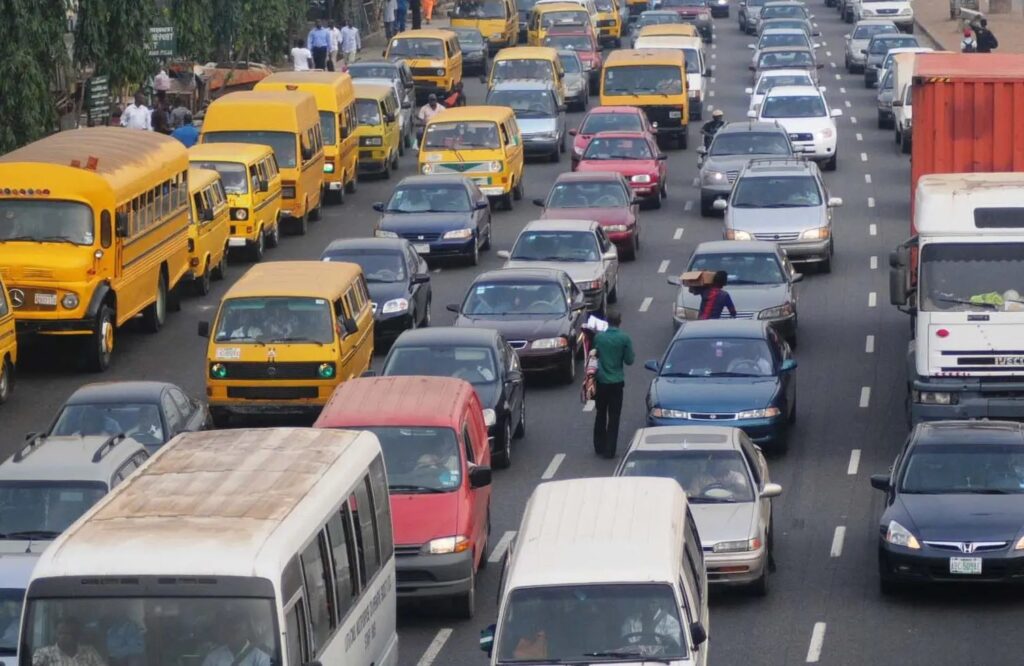
Traffic conditions in African cities have worsened by mid-2024, leading to longer commutes and decreased productivity. This is due to population growth and the pursuit of economic opportunities, which outstrips infrastructure development, resulting in chaotic urban mobility, reduced quality of life, and lower economic productivity. Numbeo’s traffic index assesses commute time, dissatisfaction with traffic, CO2 emissions, and overall system inefficiencies.
The top five African countries with the worst traffic congestion by mid-2024 include Lagos, Nigeria, Nairobi, Egypt, Pretoria, and Cape Town. Lagos has a high Traffic Index of 354.5, indicating severe congestion, with an average commuter spending approximately 68.8 minutes in traffic each day. Factors contributing to traffic woes in Lagos include high population density, poor road conditions, frequent potholes, inadequate maintenance, and overcrowded public transport systems. Nairobi’s rapid urbanization without corresponding infrastructure development has led to urban sprawl, straining its road networks. Cairo, Egypt’s capital, is notorious for its traffic congestion, with an average of 49.9 minutes spent in traffic.
Pretoria, South Africa’s capital city, faces significant traffic challenges with a Traffic Index of 228.1 and an average commute time of 45.0 minutes. The city’s status as a governmental and administrative center attracts a large number of daily commuters, but the public transport system is often insufficient, leading many to rely on private vehicles. Rapid urban growth without matching infrastructure development further compounded the issue.
Cape Town, South Africa, also faces significant traffic congestion, with an average commute time of 42.5 minutes daily. Seasonal fluctuations can lead to sudden spikes in traffic, and limited road networks and inadequate public transport options further exacerbate the problem.