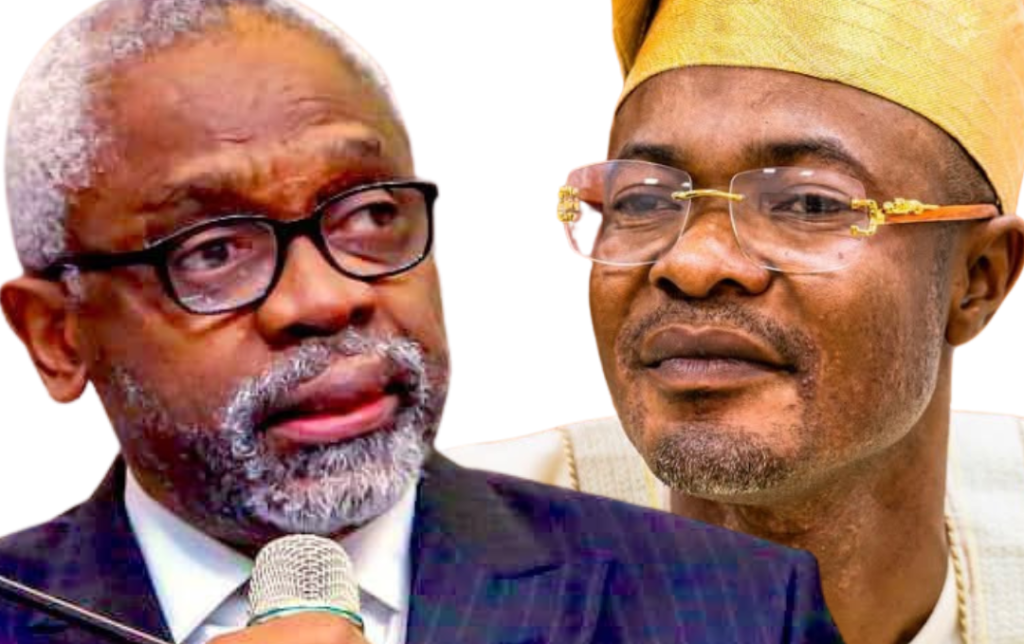
Adeyemi asserts he received an appointment letter from the Chief of Staff to the President, Mr. Femi Gbajabiamila, though investigations revealed that the purported agency was fictitious, despite being allocated N1.302 billion in the 2026 Federal Budget. The police arrested Adeyemi on October 27, 2025, and recovered forged documents from his office and residence.
Bayo Onanuga, a presidential spokesperson, reported that allegations against Adeyemi included using fake appointment letters bearing official signatures to misrepresent himself as a government official. Adeyemi’s supposed accomplice, Dolapo Babatunde Tanimola, was deceased prior to Adeyemi’s arrest, complicating the case. Gbajabiamila denied the existence of the agency and Adeyemi’s appointment, reinforcing claims of impersonation against Adeyemi, which has raised questions about how the agency’s budget was included in national appropriations.
In response, Adeyemi challenged the government’s position, questioning how his agency could be funded if it did not exist and demanding transparency in the budgetary process. He insists on his innocence and is prepared to face legal proceedings to clear his name, while expressing doubts about the legitimacy of the budgeting process regarding an agency he claims has operational accounts.
The text elaborates on the controversy surrounding the alleged Presidential Foreign Intervention Promotion Council (PFIPC) and includes statements from individuals involved in this matter. The speaker, who has received a letter of appointment, acknowledges the ongoing court proceedings and expresses illness, while affirming his appointment. He challenges claims regarding the non-existence of the agency, asserting that anyone attempting to operate credibly in government roles would not have the audacity to do so without legitimate authority.
Former Vice President Atiku Abubakar critiques the government’s handling of the PFIPC scandal, suggesting that it highlights a state compromised by fraud. He argues that rather than remedy the situation, the government’s efforts reveal a systemic deterioration of institutional integrity. Atiku rhetorically questions how a single individual could forge presidential documents and orchestrate fraudulent activities without internal complicity, asserting that the level of deception requires a leap of credulousness that far exceeds the scandal itself.
He points out inconsistencies within the government’s narrative, particularly regarding public records that earmark approximately N1.3 billion for the PFIPC in the 2026 Budget. This raises questions about the processes that allowed for its appropriation, implicating several actors, including the National Assembly who failed to detect the irregularities. Atiku also critiques the Central Bank of Nigeria (CBN) and the Economic and Financial Crimes Commission (EFCC) for selective enforcement in anti-corruption efforts.
Atiku emphasizes that irrespective of whether the scandal is a result of fraud or governmental failures, it illustrates a breakdown in governance, urging that a government incapable of safeguarding its budget cannot be trusted by Nigerians. He calls for a thorough independent investigation into the matter while rejecting the notion that one individual can bear the full weight of responsibility without acknowledging the systemic failures that facilitated such actions.
This episode serves as a representation of the current administration’s failings and underscores the need for Nigerians to oppose an administration perceived as incompetent and characterized by entrenched decay, demanding accountability, and the restoration of governance effectiveness.