Ask almost anyone who flies regularly and they’ll likely have a story about a drunk passenger.
An argument over armrests. Someone refusing to follow crew instructions. A mid‑air shouting match that leaves the entire cabin on edge. In more serious cases, attempted door openings, physical confrontations or harassment.
Across thousands of in‑flight incident reports, one factor keeps surfacing: alcohol.
When criminology professor Lynne M. Vieraitis at the University of Texas at Dallas reviewed more than 1,600 complaints filed with the Aviation Safety Reporting System, she found a clear pattern.
“Alcohol. Alcohol. Alcohol,” she said.
Together with colleague Sheryl Skaggs, Vieraitis analyzed reports submitted by pilots, gate agents and flight attendants. Alcohol was repeatedly cited in cases ranging from minor non‑compliance to more serious physical altercations.
The data reflects what many travelers already feel. A study by the Institute of Alcohol Studies found that 60% of adults in the United Kingdom say they’ve encountered drunk passengers while flying, and more than half believe intoxicated behavior on planes is a serious problem.
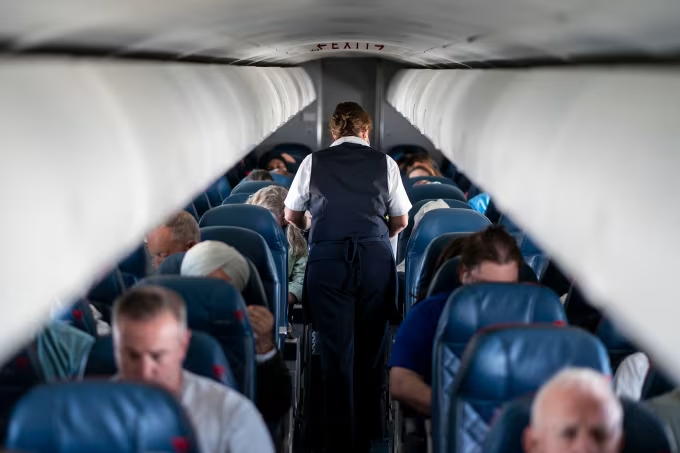
Unlike a bar or restaurant, an airplane offers no easy exit once trouble begins. At 30,000 feet, flight attendants must manage disruptive behavior in a confined space while also handling safety checks, meal service and passenger needs.
“You can’t kick somebody out of the bar,” Vieraitis notes.
Air travel itself can heighten emotions. Smaller seats, limited overhead bin space, delays and rising fees have made flying more stressful for many passengers. Add alcohol consumed either at airport bars or onboard, and tensions can escalate quickly.
Some travelers say they drink to calm nerves or help them sleep. Others admit delays or long layovers can lead to more drinks than planned. Dehydration and cabin pressure may intensify alcohol’s effects, sometimes leaving passengers more impaired than they expected.
That’s where consensus breaks down. Flight attendants often argue that visibly intoxicated passengers should be stopped before boarding. Airlines have, at times, pointed to airport bars and restaurants for overserving customers. Airports, meanwhile, rely heavily on alcohol sales as a major source of revenue.
Irish low‑cost carrier Ryanair has repeatedly pushed for a two‑drink limit at airports, especially on routes to party destinations. Its CEO, Michael O’Leary, has linked substance use directly to aggressive outbursts onboard.
Major US airlines have generally declined to detail their alcohol policies publicly, though they maintain that disruptive behavior will not be tolerated.
In the United States, the Federal Aviation Administration has the authority to fine passengers for misconduct. The agency has issued record penalties in recent years, and airlines can also impose lifetime bans on individuals.
Still, enforcement alone may not solve the problem. Alcohol sales remain a lucrative part of the aviation ecosystem. Premium tickets often include complimentary drinks, and airport bars are among the most profitable retail operations in terminals worldwide.
Public opinion appears to be shifting. According to the Institute of Alcohol Studies, about two‑thirds of respondents support drink limits at airports, and many would even accept breathalyzer tests before boarding.
Despite broad agreement that intoxicated passengers can pose safety risks, there is no unified global approach to addressing the issue. Airlines, airports, regulators and hospitality providers all have different responsibilities and different financial incentives.
As global passenger numbers continue to climb, so does the urgency of the debate.
For now, the question lingers in cabins around the world: can the aviation industry reduce mid‑air disruptions without cutting off one of its most profitable revenue streams?