
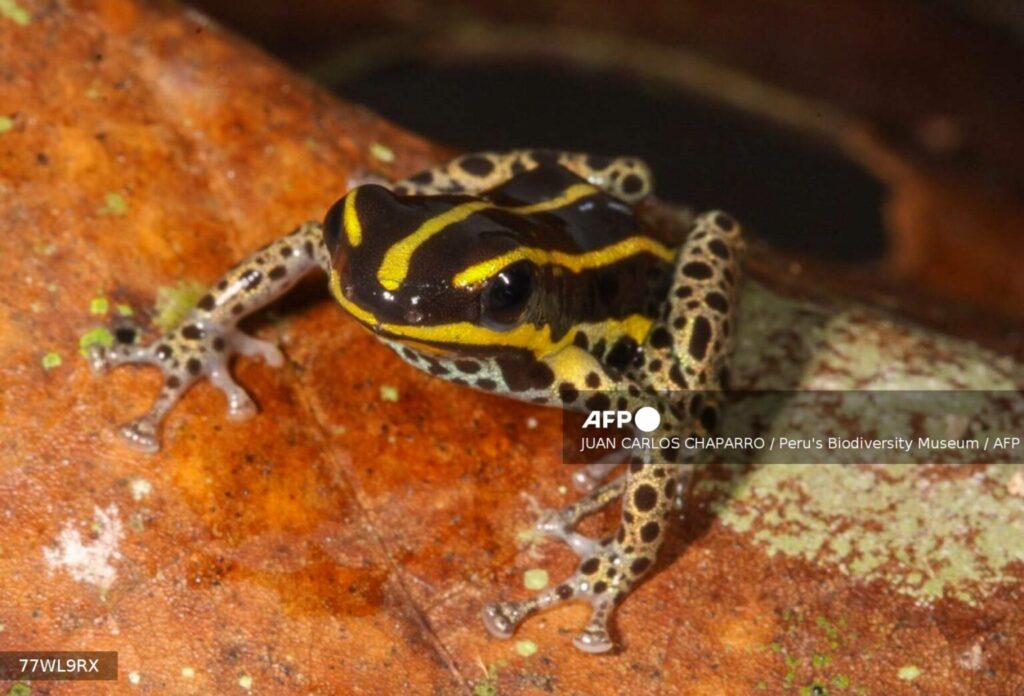
The State’s National Service of Protected Natural Areas (Sernanp) stated in a statement on Monday that the new species, Ranitomeya hwata, is only “15 mm long.” The statement did not say when the species was discovered.
According to Sernanp, it is the smallest species in the Ranitomeya genus, which is distinguished by its vivid colors and unusual reproductive habits, where males attract “multiple females per breeding site.”
The Guadua genus’s bamboo woods are the only habitat for the small frogs, who reproduce by using the plant’s hollow stems, which retain rainwater.
The new species was found in eastern Peru, close to the Brazilian border, in Alto Purus National Park.
“This finding emphasizes how important protected natural areas are as havens for biodiversity and rare species,” Sernanp stated.