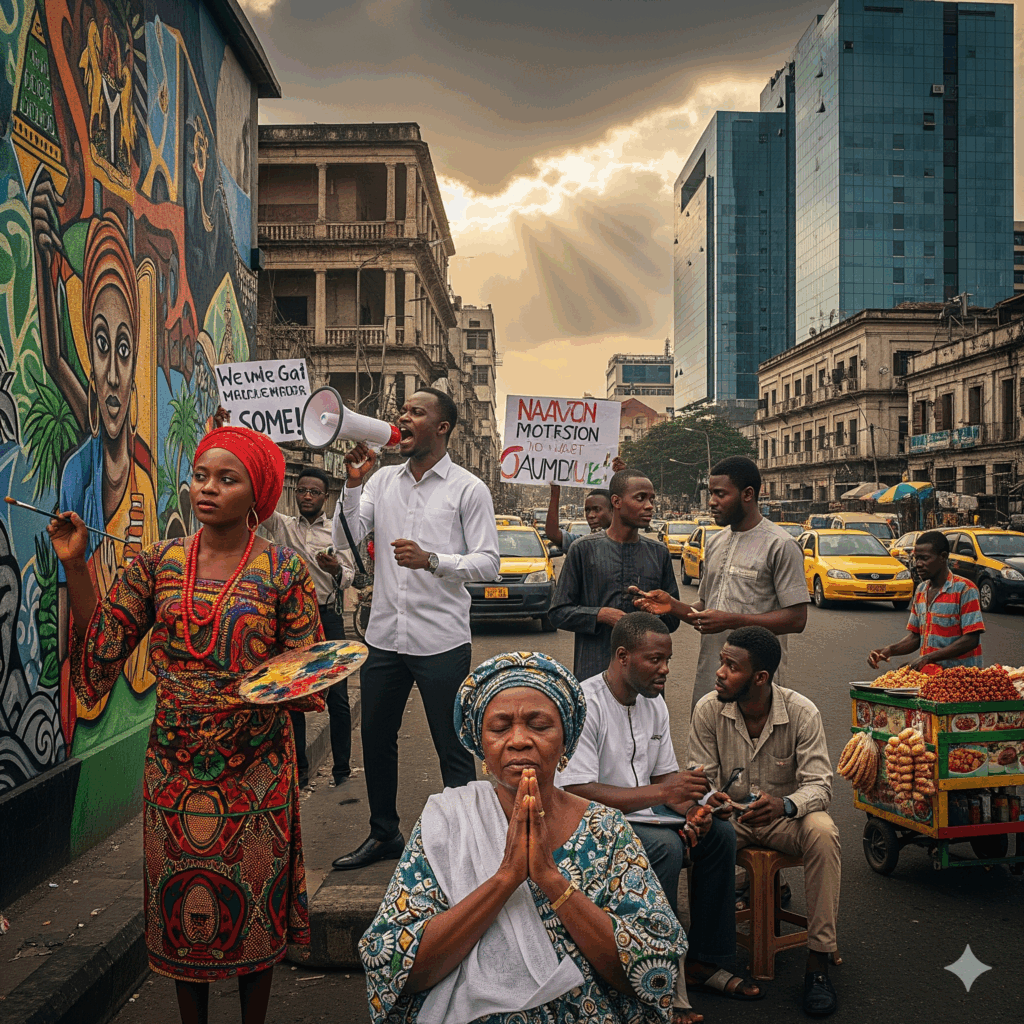
Nigeria woke up today to a swirl of headlines that reflect both its resilience and its fragility. From the bustling energy of the stock market to the sobering reality of classrooms losing support, each story captures the contradictions of a nation still fighting to define its future. Ecobank, for instance, chose to celebrate the legacies of Nigerian art icons, reminding citizens that culture remains one of the country’s strongest currencies. Yet, in the same breath, reports of U.S. aid withdrawal from schools in the northeast remind us of how fragile education remains for thousands of children already scarred by conflict.
The economic front delivered a rare note of optimism. The Nigerian Stock Exchange surged past ₦26 trillion in value within just eight months, a milestone many analysts believe could foreshadow a future market worth ₦100 trillion. Paired with a modest strengthening of the naira at the close of August, the financial indicators offer hope. But Nigerians know too well that numbers on paper do not always translate into food on the table. A Business Insider Africa report highlighted this contradiction, pointing to the ongoing food crisis that cannot be solved by prayers alone. It was a reminder that behind every graph and market figure lies the daily struggle of households to afford rice, beans, or cooking oil.
Technology and security also dominated today’s news. Cybercrime, once perceived as the work of a few desperate youths, has now grown into a sophisticated enterprise with foreign nationals increasingly playing a role. This rising threat has spurred Nigeria’s communications regulators to launch a new cybersecurity framework aimed at protecting telecom infrastructure. At the same time, Nigeria is wooing Chinese tech giants with hopes of becoming Africa’s next big data frontier. It is a paradox of modern Nigeria, while it invites global investment, it must also guard against the risks that openness brings.
Culture, as always, remained at the heart of the Nigerian conversation. Beyond Ecobank’s artistic homage, Nigeria and Switzerland opened talks on the repatriation of looted artifacts. For many, this is not just about bronze, ivory, or terracotta, it is about memory, identity, and justice. A live tracker was also introduced to measure the performance of Nigeria’s creative industries, a bold step towards making art and storytelling as measurable as oil production or telecom expansion. These cultural shifts suggest that Nigeria is learning to see its heritage and creativity not as afterthoughts, but as critical engines of national pride and economic growth.
Yet, the day’s headlines were not without controversy. The American Veterans of Igbo Descent (AVID) petitioned former U.S. President Donald Trump, seeking sanctions on Nigerian judges over the trial of Nnamdi Kanu. It was a story that echoed Nigeria’s ongoing struggles with justice, politics, and international perception. As Ripples Nigeria noted in its roundup, the possibility of polytechnic lecturers embarking on strike looms as well, signaling that education, once again, may be caught in the crossfire of broken trust. Today’s news made one thing clear: Nigeria is a nation that dances between progress and crisis, beauty and struggle, with each headline revealing another layer of its restless story.