He said there is growing hope for a more wealthy country and that his economic reforms are starting to show dividends.
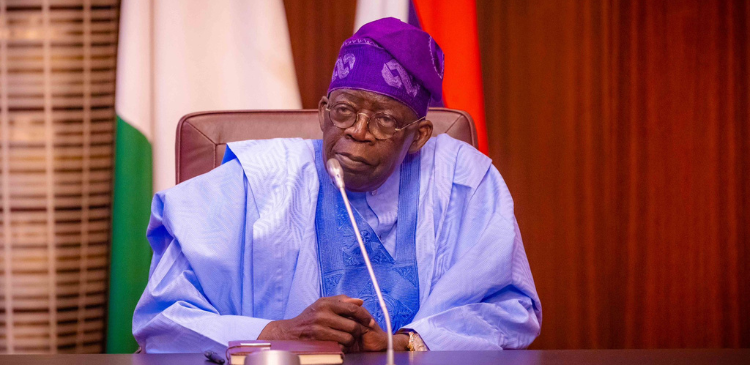
In his nationwide address commemorating the nation’s 65th anniversary of independence, Tinubu claimed that since taking office in May 2023, his administration has chosen “the path of tomorrow over the comfort of today” and that Nigerians are now starting to notice noticeable changes.
We have finally turned the corner, and I am happy to share this. I say the worst is over.
“Relief is replacing yesterday’s suffering. I applaud your perseverance, understanding, and support.
The President declared, “I will keep working for you and prove that I am worthy of the trust you placed in me to guide our country to a safe harbor.”
Tinubu praised Nigerians’ tenacity, stating that the nation has weathered political upheavals, military control, and civil war and is still working to create “a more perfect union.”
According to him, the 65th anniversary is an opportunity to consider the sacrifices made by the country’s founding fathers as well as the advancements made since gaining independence in 1960.
Nigeria has expanded from two tertiary institutions at Independence to 274 universities, 183 polytechnics, and 236 colleges of education by 2024, the President noted, highlighting accomplishments in healthcare and education.
Tinubu defended his economic changes, saying they put a stop to decades of rent-seeking and distortions. These reforms included the elimination of fuel subsidies and the harmonization of foreign exchange rates.
He said that these tough choices freed up funds for social programs, healthcare, education, and infrastructure.
He maintained, “We ended the corrupt fuel subsidies and multiple foreign exchange rates that created massive incentives for a rentier economy, benefiting only a tiny minority, in order to reset our country for sustainable growth.”
“By allocating funds to national security, education, healthcare, agriculture, and vital economic infrastructure, our administration has steered the economy in a more inclusive direction.”
The president listed 12 economic achievements during his two years and four months in power.
According to him, inflation dropped to 20.12%, the lowest level in three years, and Nigeria’s GDP expanded by 4.23 percent in the second quarter of 2025, the quickest growth in four years.
The President went on to say that foreign reserves had grown to $42.03 billion, non-oil revenue had climbed significantly, debt payment expenses had decreased, and the tax-to-GDP ratio had increased to 13.5%.
Additionally, he pointed out that Nigeria has reported trade surpluses for five straight quarters, with non-oil exports now accounting for 48% of overall trade and manufactured exports up 173%.
He said that local refining had resumed for the first time in forty years, aviation fuel exports had resumed, and oil output had recovered to 1.68 million barrels per day.
According to Tinubu, the value of the naira has stabilized. As proof of rekindled investor confidence, he also bragged about rising credit ratings, a thriving stock market, and the Central Bank’s first interest rate drop in five years.
The president claimed that in order to consolidate economic achievements, his government was making significant investments in security.
“They are winning the war against violent crimes like banditry and terrorism.” He said that thousands of displaced people had returned home and that peace had returned to hundreds of villages. “We see their victories in their blood and sweat to stamp out Boko Haram terror in the North-East, IPOB/ESN terror in the South-East, and banditry and kidnapping,” he said.
In order to reduce food prices, he also pledged to give agricultural productivity and food security first priority.
We must create the schools our children will attend, the hospitals that will care for our people, and the roads that are in need of repair. Tinubu stated, “We must make plans for the generations that will follow us.
The President spoke to young Nigerians, calling them the “greatest assets of this blessed country.” He highlighted programs like the Nigeria Education Loan Fund, which has already helped more than 500,000 students, and credit programs like Credicorp and YouthCred that offer loans for resettlement, housing, and electronics.
In order to boost the digital and creative industries, he continued, the government was moving forward with the $600 million iDICE program, which was supported by foreign development partners.
According to Tinubu, eight million households have received N330 billion as part of the social investment initiative.
Significant advancements in transportation infrastructure, such as roads, rail, seaports, and airports, were also mentioned by him. Notable projects like the Eastern Rail Project and the Lagos-Calabar Coastal Highway are currently under way.
Tinubu asked Nigerians to exercise patience despite acknowledging the agony of reforms. “I have always been open about the fact that these measures have caused some short-term discomfort.
“Our government continues to have serious concerns about the harsh consequences of inflation and the growing expense of living.
He stated, “But the alternative of letting our nation go into economic chaos or bankruptcy was not an option.”
The president urged production and national cohesion as he wrapped up his third Independence Day speech, adding, “Let us be a nation of producers, not just consumers.” Let’s cultivate our own land and construct factories to process our harvest.
“Let’s buy products that are “Made in Nigeria.” Nigeria first, I say. Let’s settle our taxes. Let everyone be on deck at last.