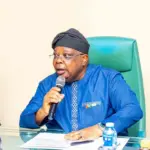

Speaking on Wednesday at the Abuja School of Social and Political Thought’s National Action Plan for Electoral Reform Dialogue, Jonathan emphasized the necessity of structural adjustments to strengthen the country’s democratic procedures.
Jonathan, through Ann Iyonu, Executive Director of the Goodluck Jonathan Foundation, recognized that although Nigeria has made strides since reverting to democracy in 1999, there are still many problems with the electoral process.
Although Nigeria has made considerable strides since regaining democratic governance, we must admit that there are still many obstacles facing our election system. He asserted that if we genuinely believe in democracy, we must have the guts to change the system to better represent popular will and the values of accountability, justice, and inclusion.
The first of Jonathan’s many important reforms was the establishment of an independent Office of the Registrar of Political Parties, which would be in charge of maintaining discipline and democracy inside the parties.
Parties are the cornerstone of any democracy, but in our situation, they are now susceptible to instability and opportunism.
The process of elected people leaving the party they were elected to, frequently without ideological explanation or accountability to the voters, is known as “cross-cupping,” and it has become increasingly prevalent in recent years.
The creation of an independent Office of the Registrar of Political Parties, tasked with overseeing party activities, encouraging internal democracy, and upholding party discipline, should be a top priority in order to address this.
Noting that this approach has been successful in nations like Kenya and Malawi, Jonathan went on to say that the registrar should have the “authority to declare the seat of any defector vacant.”
“This reform would uphold the idea that the people, not individual aspirations, own the electoral mandate,” he stated.
In addition, the former president advocated for an independent panel to propose and screen candidates for the position of chairman of the Independent National Electoral Commission.
The impartiality and proficiency of the independent National Electoral Commission, or INEC, are critical to the legitimacy of elections.
The appropriateness of the INEC chairman appointment procedure has been the subject of numerous ongoing inquiries.
By creating an impartial screening and nomination process with participation from the court, academics, trade unions, professional associations, and civil society, Nigeria can, in my opinion, further enhance the procedure.
Jonathan continued, “This reform will increase the legitimacy of INEC’s decisions, foster public trust in the organization, and lessen perceptions of bias.”
He also emphasized how crucial it is to settle all post-election problems prior to the swearing-in of elected leaders, contending that unresolved court matters undermine public confidence and disrupt governance.
“When candidates with unresolved election cases take office and are later removed by the courts, it causes confusion and threatens governance.” This damages the legitimacy of the election process and the office’s authority,” he stated.
In order to save money and increase efficiency, he proposed simplifying the legal system by “reducing the number of courts handling electoral cases,” especially for presidential and gubernatorial elections.
Jonathan said, “Justice postponed in elections is justice denied, not only for the candidates but also for the electorate.”
Jonathan emphasized in his closing remarks that electoral reforms are not intended to favor any one group but are necessary to strengthen democracy.
“Democracy is more than just voting.” It is about establishing institutions, encouraging responsibility, and defending citizens’ rights.
“We are not talking about partisan measures today. They have a sense of patriotism. They are intended to strengthen Nigeria, not to help any particular group,” he said.