Though her heart pounded with excitement and subdued rebellion, she felt the weight of tradition, ancestral whispers resonating in the rustling of her wrapper. The air was alive with expectancy all around her, with voices eager to call her wife and drums ready to pound. This was more than just a marriage; it was the link between her history and future, the symphony of her people.
Long before she came out here, the day had begun. A few weeks prior, the family of her future husband had shown up at her house with gifts in elaborate boxes, baskets of kola nuts, poultry, and palm wine. It was a complex dance of respect, compromise, and community that was both solemn and lively. As the elders negotiated a symbolic bride price, each item—goats, kola nuts, and occasionally even livestock—had a symbolic value that was greater than its actual value. Their words were measured, remorseful, but resolute.
Then came the night that would be remembered for generations—when she, looking stunning in her vibrant clothing, joined her cousins and friends to perform the bride-to-be dance. A calabash was delicately placed in her hands, and her feet were ceremoniously cleaned, seemingly to rid them of all the opposites of fortune. She broke it on the floor while everyone watched. Her own future was written in this ancient omen, and the number of shards predicted the promise of offspring.
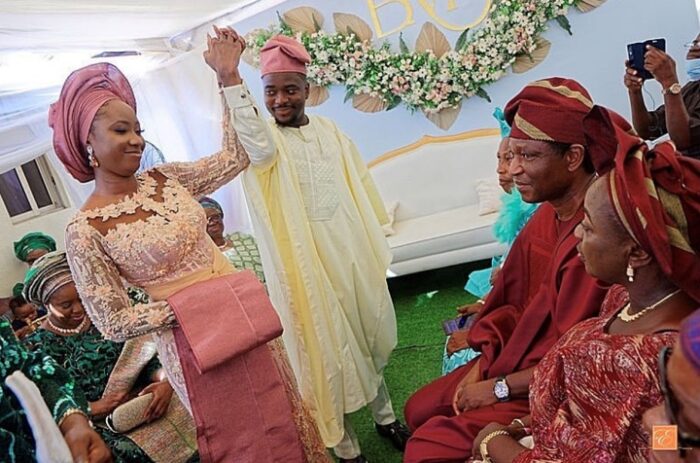
And the moment everyone had been waiting for—the breathtaking wine-carrying ceremony—arrived just as the moon rose. With a boiling glow in her bosom, she navigated the crowd while holding a cup of palm wine. She handed the cup to her groom after searching for him in a pointed game. The drums thundered as soon as their palms touched. They looked at each other. The entire group burst into song, blessings, and laughing as they got up after kneeling before her father and asking for their blessing. The crowd’s thumping rhythm welcomed them as they did so.
Literally, money poured down on them. Guests offered notes that floated in the air like butterflies, a brilliant expression of goodwill and abundance, as well as joy and prayer. For a little moment, the world turned into lovely paper, with each note carrying love as much as money. It felt wild and bubbly.
The custom of placing presents at the bride’s feet shone just as brilliantly in different locations. Her companion in a different area received boxes of jewelry, lace, cosmetics, shoes, and other recently bought items, all of which were glistening with meaning: honor, provision, and a pledge of care. An expression of reverence conveyed by physical affection.
However, there was a subtle tension behind the radiance. There was an expectation behind every extravagant gesture and custom rooted in group pride: to preserve heritage, to have children, to manage this union without losing oneself. In addition to clothing and jewelry, the bride brought pressures, stories, and hopes. She was praised and watched at the same time, and her decisions were subtly connected to the tales of her ancestors.
She felt more radiant than ever, completely alive in that courtyard. In addition to blossoming in a thousand potential futures—some anticipated, others boldly her own—tradition around her like a comforting mantle. Despite being sculpted by countless hands, she felt that this union was hers. Together with a partner who had untangled his own historical threads to create a new tapestry with her, she was going into a common future that was radiated by every prayer, blessing, and smile that went beyond her own.
A bride wrapped in color, tradition, and possibilities, she saw her reflection in a polished brass platter in the silence following the celebration. She softly let out a breath that contained every song she had ever sang, every kola nut she had ever cracked, and every dance move she had ever performed. She continued it—not mindlessly, but voluntarily, proudly, and with a purpose.
This was her story: a contemporary woman walking into a promise both old and fresh while being nurtured in the customs of her ancestors. And just as she had, tradition softened and changed somewhere in that tangle of identity and tradition.