Nigeria’s economy may be far larger than official projections suggest, with one financial expert telling lawmakers it could be worth as much as $3 trillion, triple the federal government’s $1 trillion target for 2030.
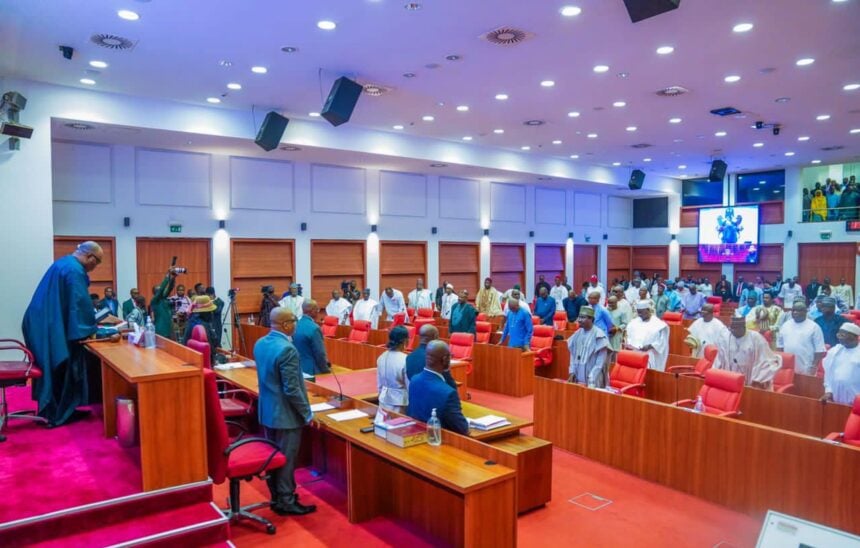
The argument was presented on Monday during a public hearing on the proposed 2026 budget, organized by the Senate Committee on Appropriations in Abuja.
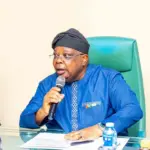
Adetilewa Adebajo, CEO of Lagos-based CFG Advisory, told senators that Nigeria’s economic potential is being weighed down by heavy borrowing and persistent deficit spending.
“Nigeria is not a $1 trillion economy, but a $3 trillion economy,” Adebajo said, pointing to the country’s vast natural resources, including its standing as one of the world’s leading exporters of rare earth minerals.
The federal government has proposed a ₦58.47 trillion budget for 2026. Of that figure, ₦25.27 trillion is expected to be financed through borrowing, while ₦5.9 trillion is allocated to servicing existing debt.
Adebajo warned that borrowing on such a scale could put pressure on Nigeria’s financial markets and limit economic growth.
“The government plans to borrow about ₦1 trillion monthly from the capital market; that’s ₦12 trillion a year. How then will it finance a ₦25 trillion deficit?” he asked.
He also questioned continued reliance on foreign loans, noting that the government raised ₦14 trillion from the domestic market last year alone.
Rather than increasing debt, Adebajo urged stronger revenue oversight, realistic projections, and tighter controls to prevent leakages, particularly in the extractive sector.
“We must ensure the country earns appropriate value from its natural resources,” he said, warning that foreign companies often extract significant value while Nigeria captures limited returns.
He stressed that revenue-generating agencies should be held accountable for meeting targets based on realistic data, not optimistic projections.
Senate Committee Chairman Adeola Solomon Olamilekan acknowledged concerns about rising debt but said completely avoiding borrowing was not feasible.
He argued that some of Nigeria’s debt burden dates back decades, including obligations from military-era administrations, and maintained that current governments have focused on repayment and restructuring.
Olamilekan described Nigeria’s fiscal situation, which he said reflects a ₦150 trillion deficit against ₦300 trillion in projected revenue as challenging but manageable.
While confirming that loans would still be used to support the 2026 budget, he said the government intends to reduce borrowing over time by exploring asset sales, optimizing Joint Venture holdings, and relying more on non-debt financing tools.
He also pledged reforms to prevent overlapping budgets, which in recent years saw multiple main and supplementary budgets running simultaneously.
“That will not happen again,” he said. “The implementation of the 2026 budget will end by December 31, 2026.”
The discussion underscores a broader debate about Nigeria’s economic future: whether structural reforms and better revenue management can unlock deeper value, or whether mounting debt could constrain long-term growth.
As Africa’s largest economy, Nigeria faces the difficult task of balancing fiscal discipline with development needs, all while navigating currency volatility, global uncertainty, and pressure to deliver results at home.
The 2026 budget may prove to be a defining test of that balance.