Nigerians woke up to see Detty December trending for all the wrong reasons.
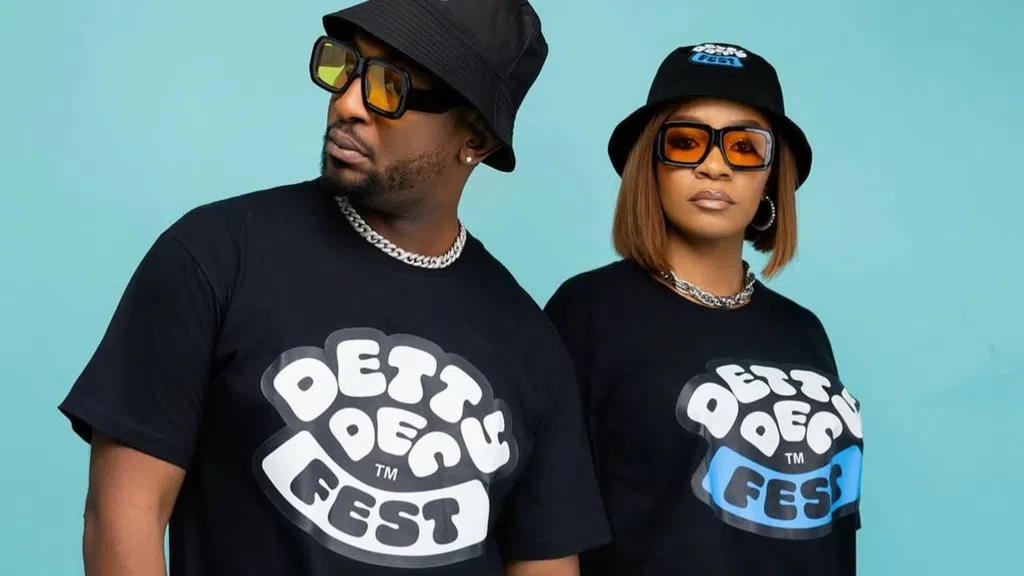
A morning post from Livespot360( the media company run by entertainment couple Darey and Deola Art-Alade), announced a new event: Detty December Fest, a month-long Lagos celebration of nightlife and tourism.
But buried in the announcement was a small line that changed everything: the phrase “Detty December” had been trademarked.
Within hours, the internet was in flames. What began as excitement turned into cultural outrage, and a national debate about who owns the right to Nigerian slang, and by extension, its culture.
According to public records, the couple had quietly trademarked Detty December in 2019, long before this year’s event. But the public only just found out.
“Next thing, someone will trademark Owambe,” one user wrote on X (formerly Twitter). Another added: “They want to own vibes now?”
In Nigeria, Detty December isn’t just a tagline. It’s a season. A mood. A collective exhale after a long year.
It’s concerts that go till dawn, returnees (“IJGBs”) landing with dollars and stories, weddings every weekend, and Lagos traffic that moves only when the DJ does.
The term “detty” Nigerian slang for “let loose” or “enjoy to the fullest” exploded in 2016, when Mr Eazi promoted his Lagos concert using the hashtag #DettyDecember. He even joked later that he “invented it” and “made a mil off it,” though his own trademark didn’t extend to Nigeria.
That left a gap, and Livespot360 filled it
From a business standpoint, Darey and Deola did nothing wrong. Trademarks are designed to protect intellectual property. They make sure no one else profits off a name you built.
But Nigerians aren’t questioning the law, they’re questioning the line between protection and appropriation. “Trademarking Detty December feels like bottling joy,” said pop culture writer Nneka Okafor. “It’s not a brand; it’s a movement.”
Still, others defended the Art-Alades’ move. “Culture is currency,” one entrepreneur tweeted. “If you don’t own it, someone else will.”
In Nigeria, the question lands closer to home: can collective culture be copyrighted?
Nigeria’s creative economy thrives on street language and shared invention: words like Sapa, Odogwu, No Wahala. They move from slang to song to brand. But once monetized, they become vulnerable to ownership claims. Trademarking such phrases raises a deeper moral question: If everyone built it, should anyone own it?
Because while paperwork can protect a name, it can’t trademark belonging
Despite the backlash, Detty December Fest will go on, from December 6 to 31, promising live performances, nightlife experiences, and tourism-driven entertainment.
Whether Nigerians will boycott or show up anyway remains to be seen. But the uproar has sparked a wider reckoning about how modern African culture is commodified, repackaged, and sold sometimes back to the people who created it.
As one viral post summed it up: “They may own the name, but we own the season.”