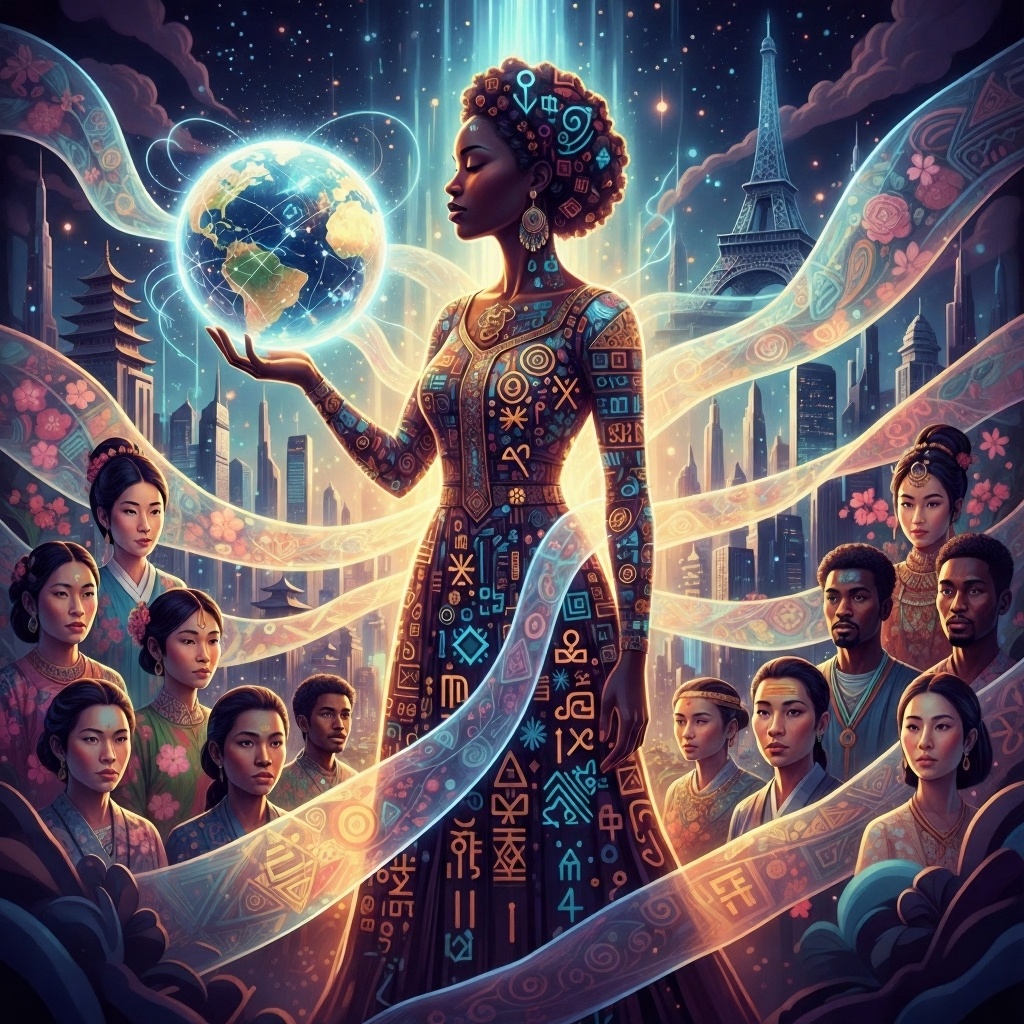
In today’s interconnected world, borders are slowly fading economically, digitally, and culturally. Music, fashion, language, and art travel faster than ever before, blending into a rich global mix. Yet, amid this flow of influences, the question of cultural identity becomes more pressing: Who are we when everything begins to look and sound the same? Cultural identity is not just about heritage or ancestry, it’s the compass that guides self-expression and creativity. As nations and individuals navigate globalization, those who preserve and reinterpret their roots tend to stand out, not fade away.
Across Africa, Asia, and Latin America, the wave of global uniformity has been met with a creative countercurrent; artists and thinkers reclaiming their roots as a source of originality. Nigerian fashion designers, for instance, are reimagining aso-oke and adire for international runways; musicians like Burna Boy and Tems infuse Afrobeats with traditional rhythms while carrying ancestral pride into global stages. This resurgence shows that cultural authenticity has become the new currency of creativity. The more connected the world becomes, the more people crave originality and originality often lives in heritage.
But cultural identity is not just an artistic tool; it’s a psychological anchor. When communities lose touch with their stories, languages, and rituals, they risk losing confidence and direction. This is why preserving traditions through storytelling, education, and festivals matters as much as innovation. Language, for example, carries worldview. To speak Yoruba, Igbo, Hausa, or Tiv is not just to communicate; it’s to think, feel, and relate to the world through the lens of ancestors. When younger generations grow up without these roots, they often feel displaced even while being globally informed.
Still, preserving culture does not mean resisting progress. The most powerful expressions of identity today are hybrid where tradition meets technology. From digital exhibitions of indigenous art to AI-powered translations of folklore, the future of cultural preservation lies in creative adaptation. Countries like Japan and India have mastered this balance, blending centuries-old customs with cutting-edge innovation. Africa, too, stands at that crossroads, and how it embraces this fusion will determine not just how it is seen but how it sees itself.
Ultimately, cultural identity in a globalized world is an act of resistance and rebirth. It’s the refusal to be invisible in a crowd of sameness. It’s the courage to say, “This is who I am, and this is how my story shapes the world.” As global culture becomes increasingly mixed, the most powerful voices will not be those that echo others, but those that echo their ancestors. In holding on to our roots, we don’t just preserve history we plant the seeds for a creative, confident, and connected future.