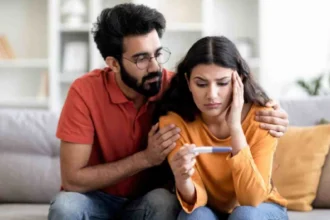

Tunde thought Amina was too sentimental and frequently “overreacted” to things, whereas Amina thought Tunde had become distant and uninterested in her feelings. Arguments were more frequent, and silence grew. One evening, during a particularly intense dispute, Amina asked, “Do you even care how I feel?” Tunde wasn’t sure how to respond, not because he didn’t care, but rather because he hadn’t completely understood her feelings.
Here’s where empathy is useful.
Empathy is the capacity to comprehend and experience another person’s emotions. Seeing the world through your partner’s eyes, putting yourself in their position, and allowing that understanding to inform your response is more important than simply listening to them express feelings of exhaustion, frustration, or sadness. The oil that keeps the love engine in a marriage running smoothly is empathy. Even the strongest attraction may wither away without it due to miscommunication and emotional detachment.
In a marriage, empathy is more than just a compliment or a kind remark. It entails paying attention to what your partner is saying and not just waiting for your chance to speak. Even if they haven’t spoken, it entails being able to tell when something is wrong. It entails deciding to react to your spouse’s challenging day with kindness rather than condemnation. These tiny gestures of emotional awareness lay the groundwork for safety and trust.
Consider a wife returning home following a demanding workday. She lets out a big sigh and tosses her bag onto the couch. Her spouse says nonchalantly, “What’s wrong now?” while engrossed in his phone. Contrast that with an empathetic response: When he sees the tired expression on her face, he puts his phone down and asks, “Hard day? Would you rather rest for a while or discuss it? The second answer makes room for connection while acknowledging her emotional state. Empathy promotes this type of emotional safety.
In the process of resolving conflicts, empathy is also essential. It’s common for couples to disagree. However, the state of the relationship is frequently determined by how you resolve such conflicts. Instead of arguing to win, an understanding partner argues to understand. Rather than asking, “Why are you making a big deal out of this?” they ask, “Why did this hurt you?” They seek answers, not merely approval.
This was eventually discovered by Tunde. He discovered that a large portion of Amina’s annoyance was caused by her feeling emotionally invisible rather than the problems themselves after attending a marital program that covered emotional intelligence. Even though he didn’t entirely agree with her feelings, he started to listen more intently, ask more questions, and make space for them. Amina felt safer and more appreciated as a result, and their relationship started to improve.
Empathy also has the potent effect of softening judgment. Two distinct lives—different upbringings, personalities, beliefs, and habits—come together in marriage. It’s simple to evaluate your mate through your own prism if you lack empathy. Why do people respond in this manner? Why don’t they simply move on? However, empathy encourages inquiry rather than condemnation. It enables you to view your partner as a person to understand rather than as a problem to solve.
Being empathetic does not entail putting up with mistreatment or surrendering your voice. It’s about respecting your personal boundaries while meeting your spouse where they are in need. Mutual caring, not one-sided sacrifice, is the goal. It calls for patience, emotional maturity, and occasionally the ability to unlearn behaviors we acquired from upbringings that didn’t model healthy emotional connection.
Empathy in marriage can feel countercultural in a society that frequently exalts independence and self-centeredness. In actuality, however, love is meaningless without empathy. The ability to make your spouse feel seen, heard, and understood is what sustains a marriage over time, even though passion and attraction may change.
Amina once said to a friend, “It wasn’t the big gestures that saved our marriage—it was the quiet moments when Tunde finally stopped trying to be ‘right’ and just started trying to see me, or when he chose to sit with me in my sadness instead of fixing it.”
Ultimately, empathy is a daily decision and a habit that can be developed; it is not a talent only possessed by therapists or emotionally expressive individuals. Furthermore, marriage is arguably the most essential kind of love we can give because two lives are so intertwined.