
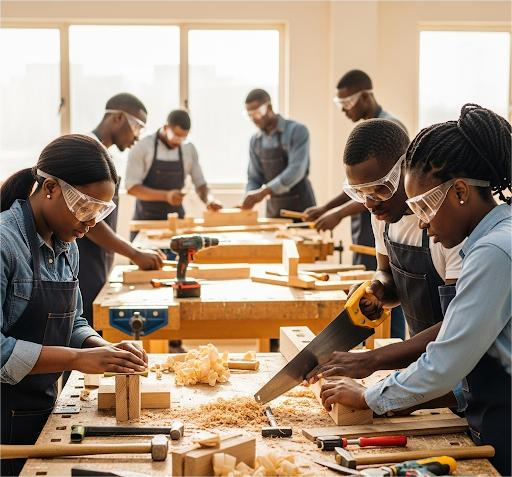
The rhythmic sound of hammer and chisel has always been part of Africa’s story. From the intricate stools of the Ashanti to the carved doors of the Yoruba, carpentry has long been both a trade and an art. Now, Segesse College of Traditional Carpentry (SCTC) has carved its own history. The institution, proudly the first of its kind in Africa, recently graduated its pioneer set of 25 students, young men and women who represent a bridge between tradition and modern innovation.
What makes this moment remarkable is not merely the number of graduates, but the vision it represents. SCTC was founded to preserve Africa’s rich heritage of woodcraft while equipping a new generation with 21st-century techniques. For centuries, carpentry in Africa was handed down informally, skills passed from father to son, master to apprentice. But in today’s rapidly changing world, where mass production often overshadows craft, this college offers a formal, structured space to keep the artistry alive while ensuring it competes with global standards.
The graduates’ journey was not without sacrifice. Many of them left their villages and families to embrace this opportunity, investing long months of practice, theory, and discipline. They learned not only to shape wood but to shape character through patience, precision, and resilience. For them, carpentry was no longer just a means of survival but a platform for dignity. One graduate described it best: “Every stroke of the saw taught me to cut away doubt. Every nail I drove reminded me to hold things together, even myself.”
The ceremony itself was a testimony to community. Local elders attended, recognizing their traditions in the work of the graduates, while government representatives spoke of carpentry as a driver of job creation and sustainable development. There was pride in every handshake, applause in every announcement, and hope in every tear shed. This was more than a graduation, it was a cultural affirmation that Africa’s heritage can thrive in modern times.
As SCTC’s first 25 graduates step into the world, they carry more than certificates. They carry the weight of possibility that a young continent can draw strength from its roots while building doors, tables, and bridges for the future. In their calloused hands lies a story of endurance and beauty: that wood, like humanity, can be rough at first glance, but with patience, vision, and care, can be shaped into something extraordinary.