The sky has not stopped weeping. For days now, the heavens have opened above Nigeria, soaking the earth with a relentlessness that has turned roads into rivers and homes into islands of despair. On August 6, 2025, the Federal Ministry of Environment issued a dire flood warning to 19 states, identifying 76 local government areas at risk of life-threatening inundation. From Gombe in the northeast to Ogun in the southwest, families are scrambling to move valuables, wade through waterlogged streets, and find higher ground. For millions of Nigerians, the rainy season has never felt so merciless, so intimate. This isn’t just bad weather. It is a human emergency, a national reckoning with the consequences of poor planning, climate change, and broken systems.
In some of the worst-hit areas, the damage is already done. Mokwa, Niger State, still reels from the July floods that took over 100 lives, washed away entire communities, and left more than 3,000 homes flattened. Children are missing. Elderly people were swept away as bridges collapsed under the force of surging rivers. “I lost my house, my shop, everything,” says Aisha, a trader and single mother in Niger. “Now I’m sleeping on a school floor with my children and no idea what happens next.” Her voice trembles not just from exhaustion, but from something more haunting. She, like so many others, is now suspended in a limbo between loss and survival.
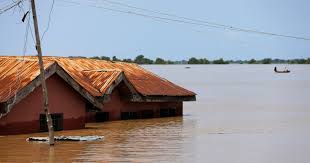
In Ogun State, heavy rain has submerged the Redemption City axis of the Lagos-Ibadan Expressway. Hundreds of homes have flooded, and residents are moving about in makeshift boats. The elderly are being carried across waters that now lap at their windows. Lagos has not been spared either. In communities like Ikorodu and Ajegunle, residents report being trapped in their homes for hours, with waist-deep water making escape impossible. Cars are now ruins. Furniture floats. Life slows to a dangerous crawl. These are not isolated incidents. They are part of a pattern, a terrifying new normal in which poor urban infrastructure, unregulated development, and blocked drainage systems turn rainfall into ruin.
The federal government has responded with emergency measures: ₦3 billion each to all 36 states and the Federal Capital Territory, ₦10 billion to NEMA, and extra support for ministries handling humanitarian relief. Temporary shelters are being erected, especially in flood-prone states like Anambra, Delta, and Rivers. Yet, as families sit in overcrowded school buildings, waiting for the water to recede, questions remain: Why does this happen every year? Where is the long-term solution? For many citizens, the government’s response feels too slow, too reactive. “We need drainage. We need planning. We need help before the rain starts, not after our roofs are gone,” says Daniel, a youth leader in Gombe.
But even in crisis, Nigerians are finding ways to hold each other up. In the flooded alleys of Delta, strangers carry elderly neighbors on their backs. In Plateau, children form human chains to help each other cross muddy torrents. Religious centers have opened their doors to the displaced. Local WhatsApp groups are being used to share alerts, organize evacuations, and raise money for dry food and clean water. These acts of community resistance may not stop the rain, but they keep hope alive. They remind us that while the government may be overwhelmed, the people remain undaunted. The floodwaters may rise, but so too does a quiet, collective will to survive, and to demand better.
As Nigeria continues to battle rising tides both literal and systemic, this year’s floods should serve as more than a seasonal tragedy. They are a wake-up call. Climate change is no longer a distant theory. It is in our homes, in our markets, in the cries of mothers who must watch their children sleep in wet clothes. If the system continues to treat each flood as a surprise, it is the people who will keep paying the price. And they are paying, in memory, in money, in the very soil being washed from under their feet. But if the state chooses to listen, to act proactively, and to center its policies around vulnerable communities, then perhaps the next rainy season won’t come with so much dread. Perhaps, just perhaps, the rain can fall and we won’t have to fall with it.