
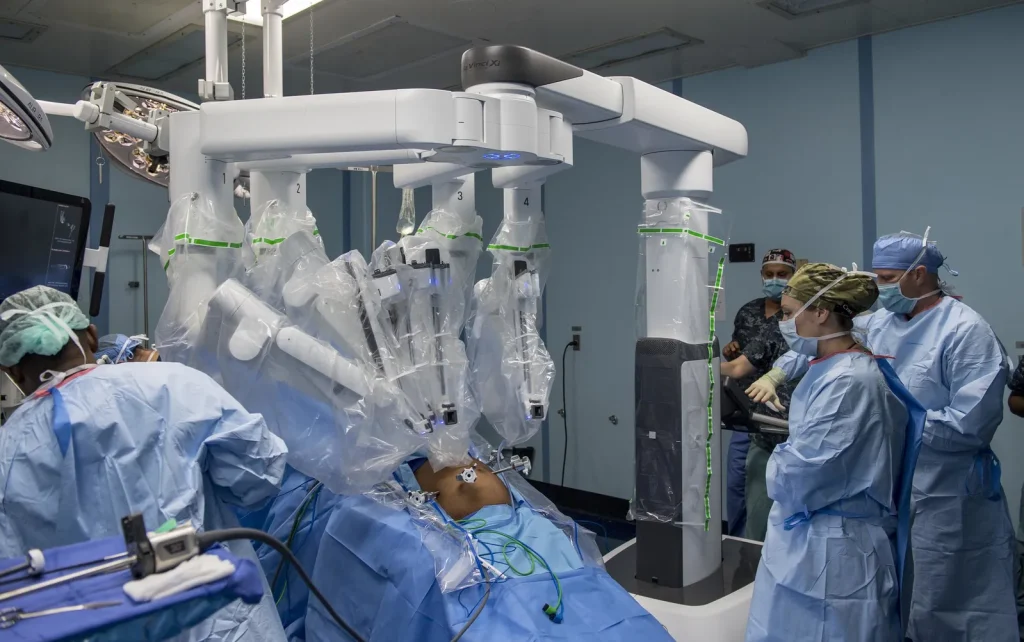
Key aspects of robotics include increased precision and control, reduced human error, minimally invasive procedures, and laparoscopic surgery.
Robotic systems, such as the da Vinci Surgical System, provide surgeons with enhanced dexterity and range of motion, making precise movements difficult with human hands alone. They also reduce the risk of human error by eliminating hand tremors and providing a stable platform for steady movements during delicate procedures like cardiac or neurological surgeries.
Minimally invasive procedures involve smaller incisions, leading to faster recovery times, reduced pain, and lower infection risk for patients. Robotic systems are used in various surgical fields, including urology, cardiology, gynecology, orthopedics, and joint replacement surgeries.
Surgeon fatigue is reduced due to ergonomic advantages, allowing surgeons to operate from a seated console while controlling robotic instruments. Robotic surgery also leads to shorter recovery times and shorter hospital stays, as patients experience quicker healing and fewer complications compared to traditional open surgery.
The future of robotics in surgery includes AI integration, which could enhance surgical planning, real-time decision-making, and predictive outcomes. AI could eventually assist in semi-autonomous surgeries, where robots perform portions of the procedure under human supervision. Robotic systems also enable remote surgery, allowing surgeons to operate on patients from distant locations using robotics and high-speed communication networks.
However, challenges and limitations remain. High costs, specialized training for surgeons, and limited availability of robotic surgery make them less accessible to smaller hospitals or regions with limited healthcare budgets. As technology continues to advance, the integration of AI and remote surgery will likely further expand the possibilities and accessibility of robotic surgery, making it an integral part of modern healthcare.